Is this the right tool for your job?
✕CHOOSE A DIFFERENT TOOL WHEN
- Not the apex specialist. The line’s true-apex work — bottoming three-plane pockets — is the full-point 02700’s alone; this tip is clipped short of it on purpose.
- Not a scraper or demolition blade. Raking out failure, lifting tape, popping texture: stiff-blade work. This blade conforms; it does not dig.
- Not the corner workhorse. Production inside-corner footage belongs to the 4″ joint-knife method and the folded corner finishers; this knife exists for the footage they cannot land on.
- Not a mortar tool. Brick joints and repointing are the masonry pointing trowels’ trade (18100/18110). The §1 fork is the whole answer.
- Not a flat-wall finisher. On open board a converging blade prints its taper; field patches and skim work belong to the putty knives and joint knives.
Jobs this tool does
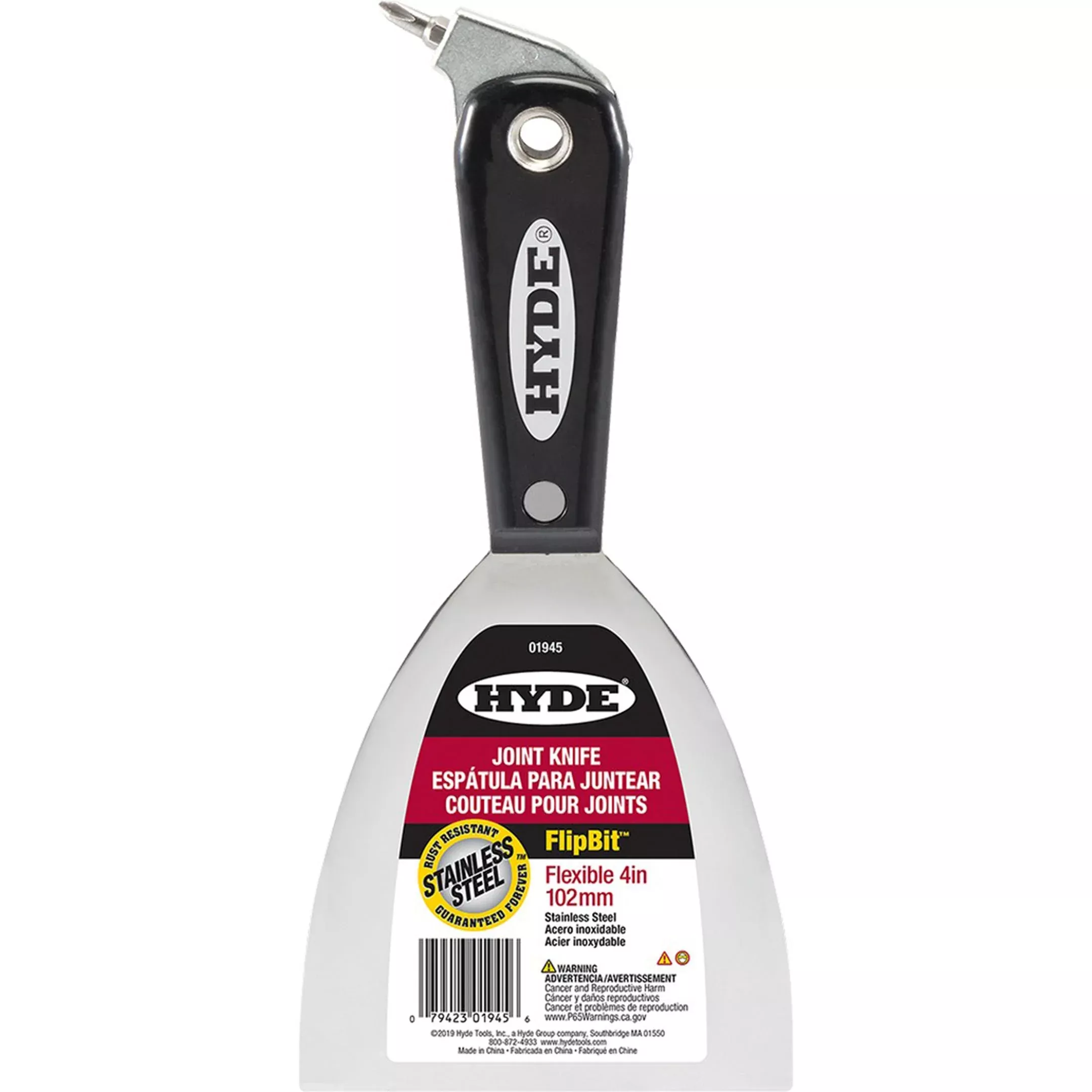
EXACT JOB METHODS FOR HYDE №02701✓ Job guideHow to Coat Compound Behind ObstructionsOPEN JOB GUIDE →✓ Job guideHow to Detail-Patch Tight SpotsOPEN JOB GUIDE →✓ Job guideHow to Finish a Drywall Corner Apex JunctionOPEN JOB GUIDE →✓ Job guideHow to Tape and Finish Drywall Corners in Tight QuartersOPEN JOB GUIDE →
For these jobs—use this instead
THE JOB, THE REASON, AND THE BETTER TOOL✕ True-apex corner pocketsThe line’s true-apex work — bottoming three-plane pockets — is the full-point 02700’s alone; this tip is clipped short of it on purpose. BETTER TOOL Black & Silver® Triangle Drywall 02700 →✕ Brick joints and repointingBrick joints and repointing are the masonry pointing trowels’ trade (18100/18110). The §1 fork is the whole answer. BETTER TOOL MAXXGRIP® 5-1/2” Pointing Trowel 18100 →
How the pros run it
01
What the clip changes at the wall
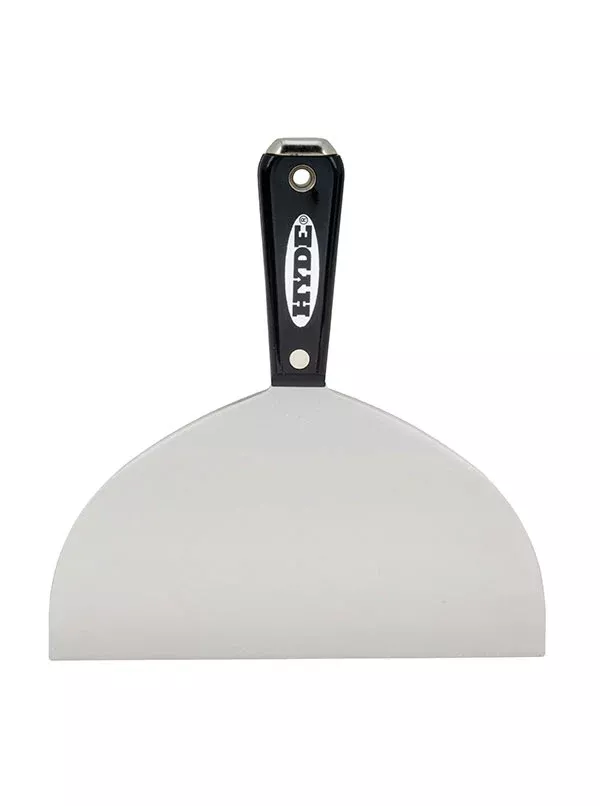
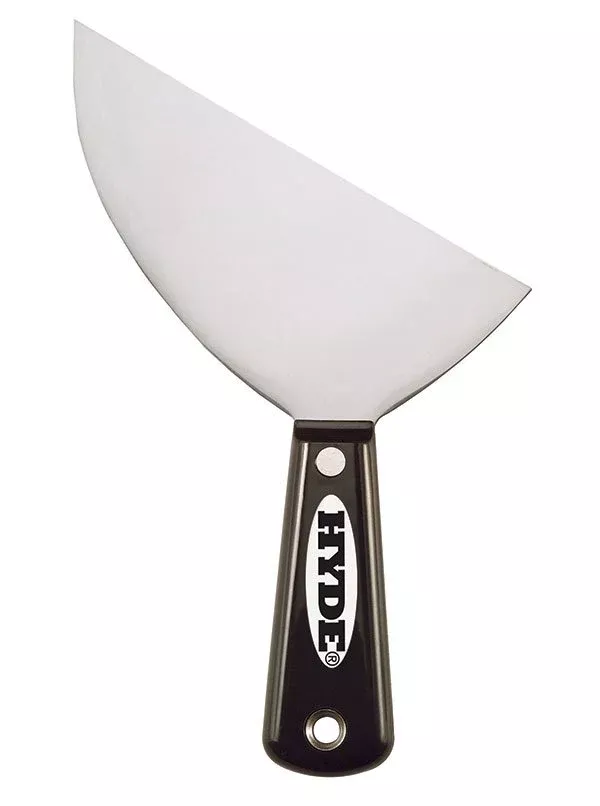
The end of this blade is an edge, not a point — laid flat, it wipes right through its own tip. A full-point triangle cannot do that: carried to a spike, its apex always finishes a flat stroke unloaded and off the work. That end-edge is why the 02701 can finish at full extension in a blind slot, and the trade-off is fixed at manufacture: no true apex entry, ever. Choose strokes accordingly — run the end-edge flat where the work ends square, and leave three-plane terminations to the sibling.
02
The pressure map still applies
Clip or no clip, a narrow end concentrates force. Loaded strokes belong on the wide half of the blade; the leading third places material and otherwise rides light. Driven hard, even a truncated end prints — a short straight dent instead of a divot, no easier to bury.
03
Flexibility is the job description
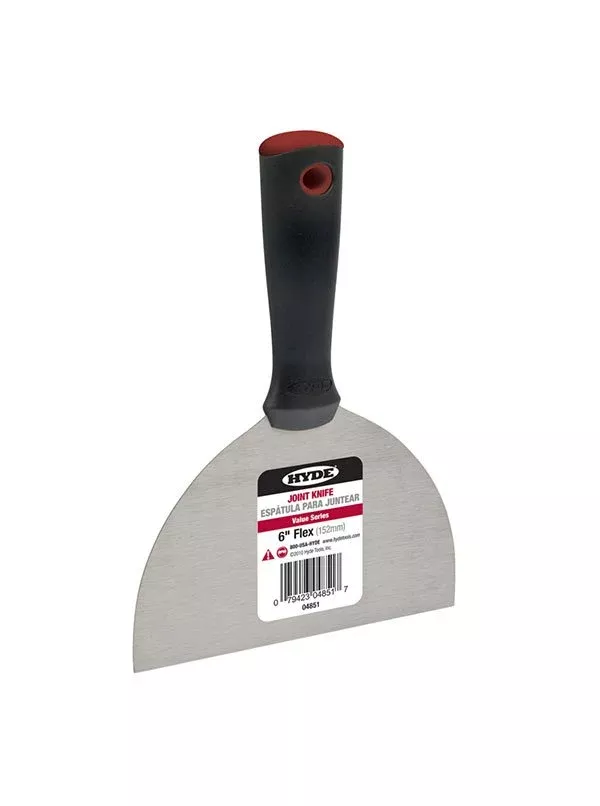
The package’s selection attribute — Flexible — files this blade under application, the fill side of the trade’s fill/scrape split: it bows under fingertip pressure to press, wipe, and feather. Never pry with it; six inches of flexible steel side-loaded in a slot is how blades come back bent, and bent is how application blades die.
04
Steel
Joint compound is water, and high carbon steel remembers water. A blade wiped clean and dried at the end of the pan session stays black and silver; one left mudded comes back freckled with rust bloom. The ritual costs ten seconds and is not optional with this steel.