
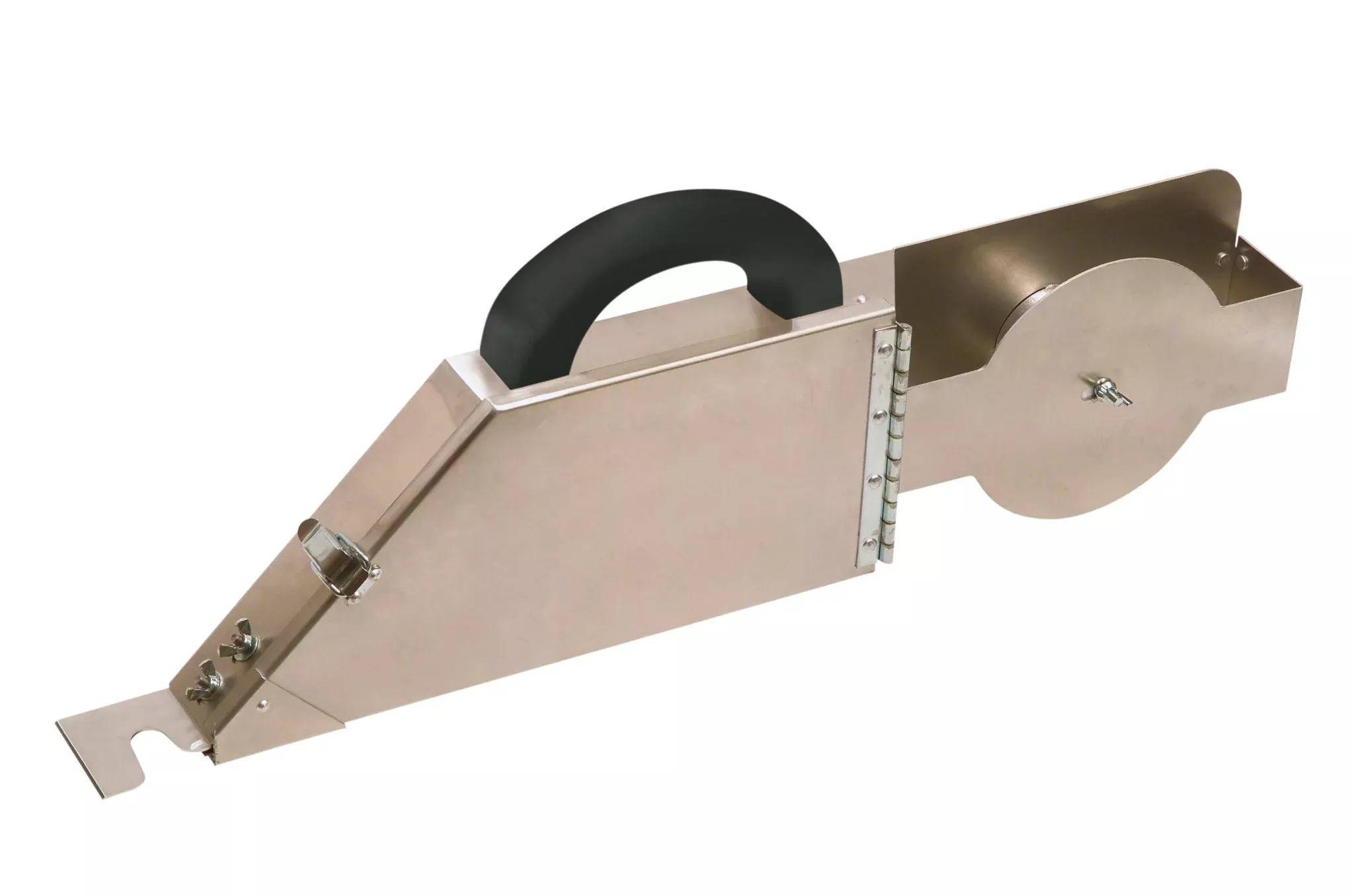
Is this the right tool for your job?
✓CHOOSE THIS WHEN
- The documented job is “Tape Inside Corners with a Banjo — The Complete Step-by-Step Guide”.
- Lightweight and Quick-Load Design: The banjo taper is lightweight and features a quick-load mechanism, allowing for fast and efficient pre-mudding of drywall tape.
- 2-Quart Compound Compartment: The easy-to-fill compartment holds up to 2 quarts of compound, reducing the need for frequent refills and enhancing your workflow.
- Large Roll Compartment: Accommodates up to 500 feet of standard drywall tape, ensuring you have plenty of tape on hand for large projects.
✕CHOOSE A DIFFERENT TOOL WHEN
- Loading, tuning, and washing a hopper to deliver four feet of tape is the wrong trade; that job belongs to the pan-and-knife rung.
- Self-adhesive mesh.
- Mesh needs no bed coat — it sticks dry and takes its mud afterward — so running it through a compound chamber defeats the mesh (mud fouls its adhesive) and the banjo (its one trick, wasted on tape that didn’t want it).
- Mesh from the belt is the 09090’s cleanest work and has no place in this tool.
- The 09077 places tape; it never presses it.
Jobs this tool does
EXACT JOB METHODS FOR HYDE №09077✓ Job guideChoose Your Taping Method — Hand, Banjo, or AutomaticOPEN JOB GUIDE →✓ Job guideClean and Store a Banjo After Mud WorkOPEN JOB GUIDE →✓ Job guideTape Inside Corners with a BanjoOPEN JOB GUIDE →✓ Job guideThin and Load Compound for a BanjoOPEN JOB GUIDE →
For these jobs—use this instead
THE JOB, THE REASON, AND THE BETTER TOOL✕ Belt-fed mesh workMesh from the belt is the 09090’s cleanest work and has no place in this tool. BETTER TOOL Drywall Tape Dispenser 09090 →
How the pros run it
01
The pull is the craft
Steady arm speed, nose under a foot off the wall, tacking hand working just behind the landing point. Sag means pull slightly firmer or step quicker; wet-stage wrinkles mean you stretched paper that is now relaxing. The dam is the brain. Quarter-turn adjustments, always judged against the back of a test foot of ribbon, re-read as the head of mud drops. The load is the ergonomics. Two quarts aboard is several pounds on one wrist (no claimed weight; 4); match the fill to the work — full for wall runs, a working load for overhead — and let the claimed balance do its job. The strap is right-handed. Set it once, snug, so it carries the tool’s weight through the forearm instead of the grip (right-hand-only per the claim, 5; reversibility unstated). The off hand is never idle. Tacking, tearing, creasing corners — a banjo is a one-hand tool only in the carrying sense.