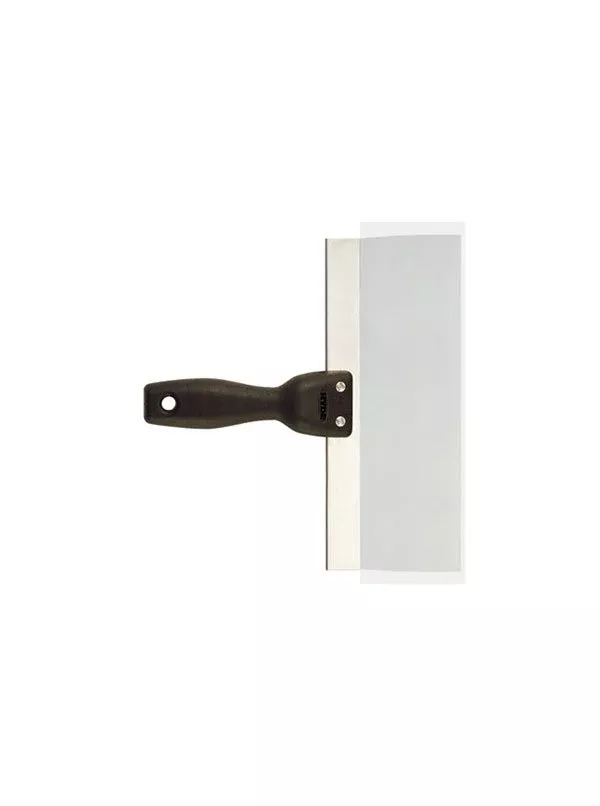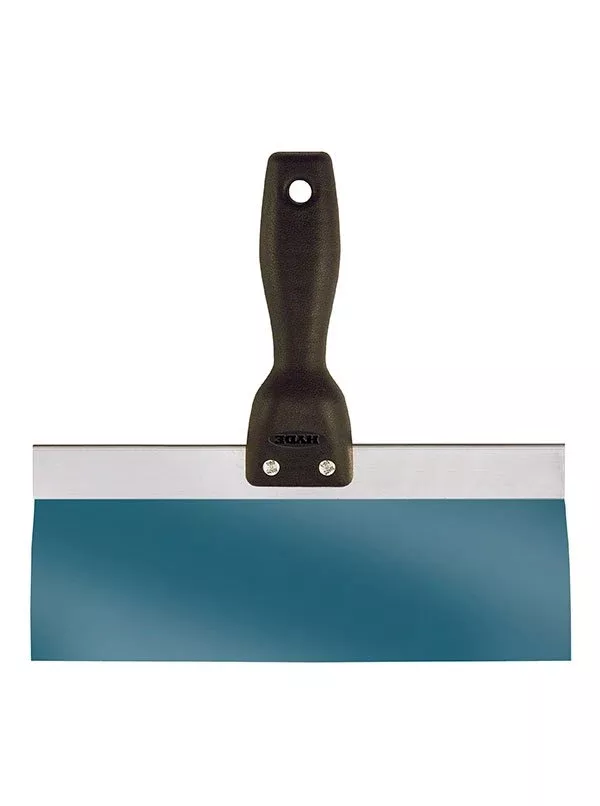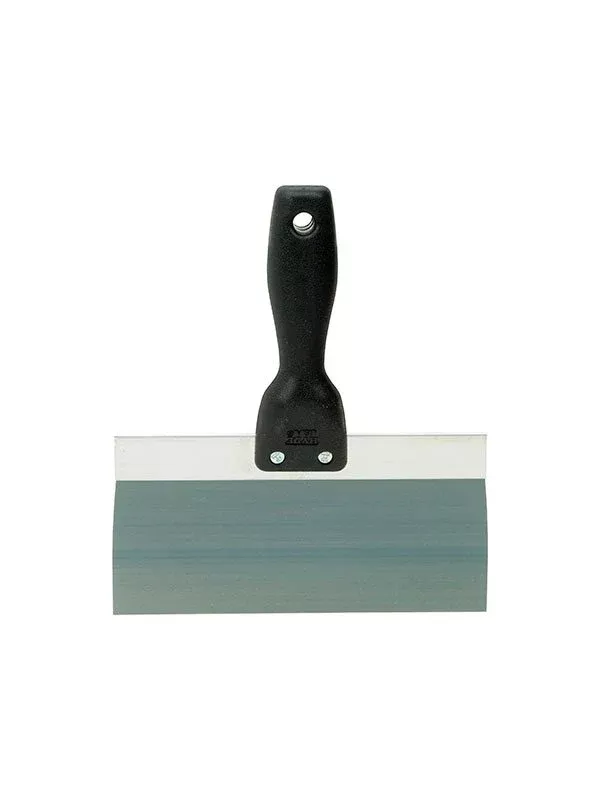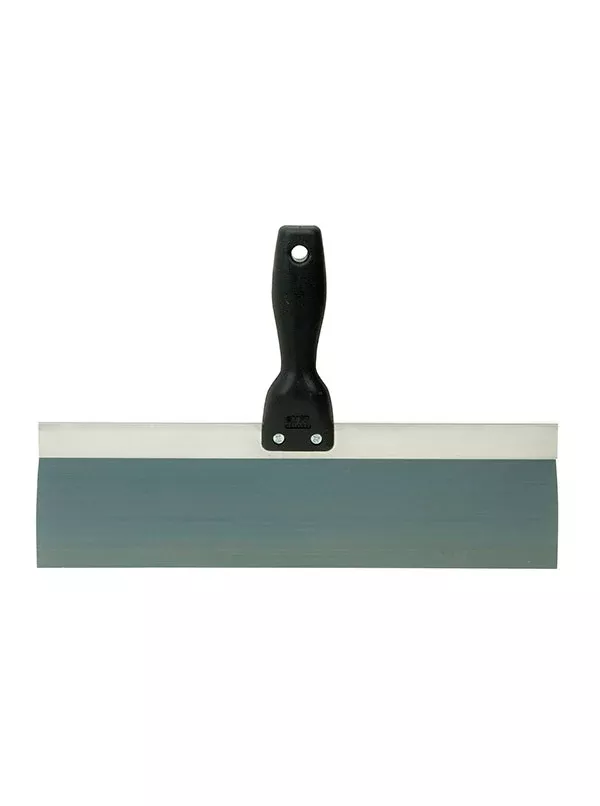

Is this the right tool for your job?
✓CHOOSE THIS WHEN
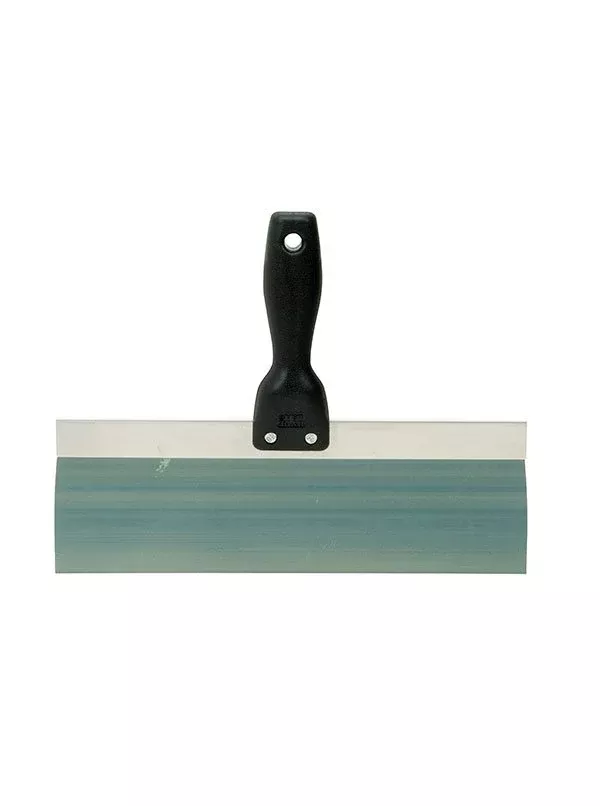
- Angled Handle Design: Helps differentiating between imbedding tape and the smoothing compound process.
- Lightweight Design : Each knife is 23% lighter than conventional taping knives, reducing hand fatigue during extended use.
- Multi-Functional : Ideal for not only drywall taping and finishing but also as an effective smoothing tool and wallcovering trim tool.
✕CHOOSE A DIFFERENT TOOL WHEN
- Embedding paper tape.
- This is the load-bearing boundary.
- You bed and embed tape with a 6″ joint knife ([01840] stainless, [02850] carbon) — a blade-in-hand tool whose in-line tang lets your wrist drive pressure onto the tape’s centerline.
- The 09211’s mounted, offset handle can’t put that centered pressure on tape the same way; buy the joint knife for the tape coat and keep the 09211 for the passes that come after.
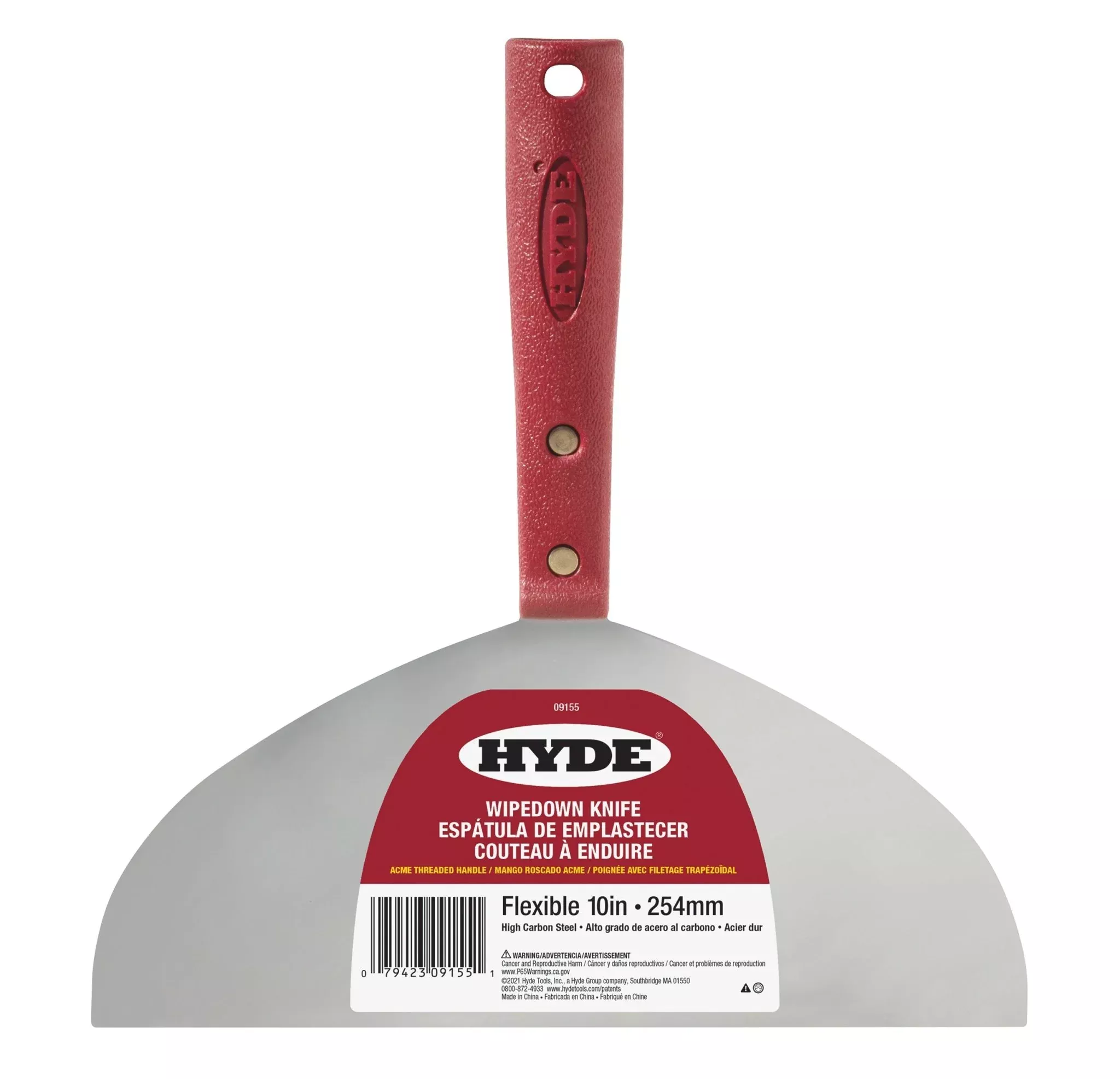
- Wide seam feathering. Six inches feathers a screw spot and a small patch, not a butt joint or a wide fill; that starts at 8″ [09212] and climbs to 12″–14″ for skim and butt work.
For these jobs—use this instead
THE JOB, THE REASON, AND THE BETTER TOOL✕ Wide seam featheringSix inches feathers a screw spot and a small patch, not a butt joint or a wide fill; that starts at 8″ [09212] and climbs to 12″–14″ for skim and butt work. BETTER TOOL Lightweight Blue Steel Taping Knife, 8” 09212 →✕ Bedding and embedding tapeA blade-in-hand tool whose in-line tang lets your wrist drive pressure onto the tape’s centerline. BETTER TOOL Black & Silver® Flexible SS Joint 01840 →
How the pros run it
01
Let the angled handle teach the two strokes
The handle’s cant is Hyde’s answer to a real problem — embedding pressure and smoothing pressure feel different, and mixing them muddies a coat. The angle biases your grip so the two motions register differently in your hand; work with it rather than gripping it like a straight handle.
02
Feather by bow, not by scraping
Pressure at the handle’s center bows the blade so the middle rides a hair proud — that leaves the joint slightly crowned to sand flat. Bias pressure to one edge and that edge feathers to zero. The blue steel is chosen because it bows into that live shape “just right”; a stiffer blade won’t.
03
Wipe the blade dry
The aluminum back is non-rusting, but the blue-steel blade is not — wash it and dry it after water-based compound, or it pits. This is the trade-off blue steel asks for in exchange for its feel; the stainless Value knives skip the ritual but start at 8″, so at six inches there is no rust-free alternative in this series.
04
Wipe on the pan rim every return
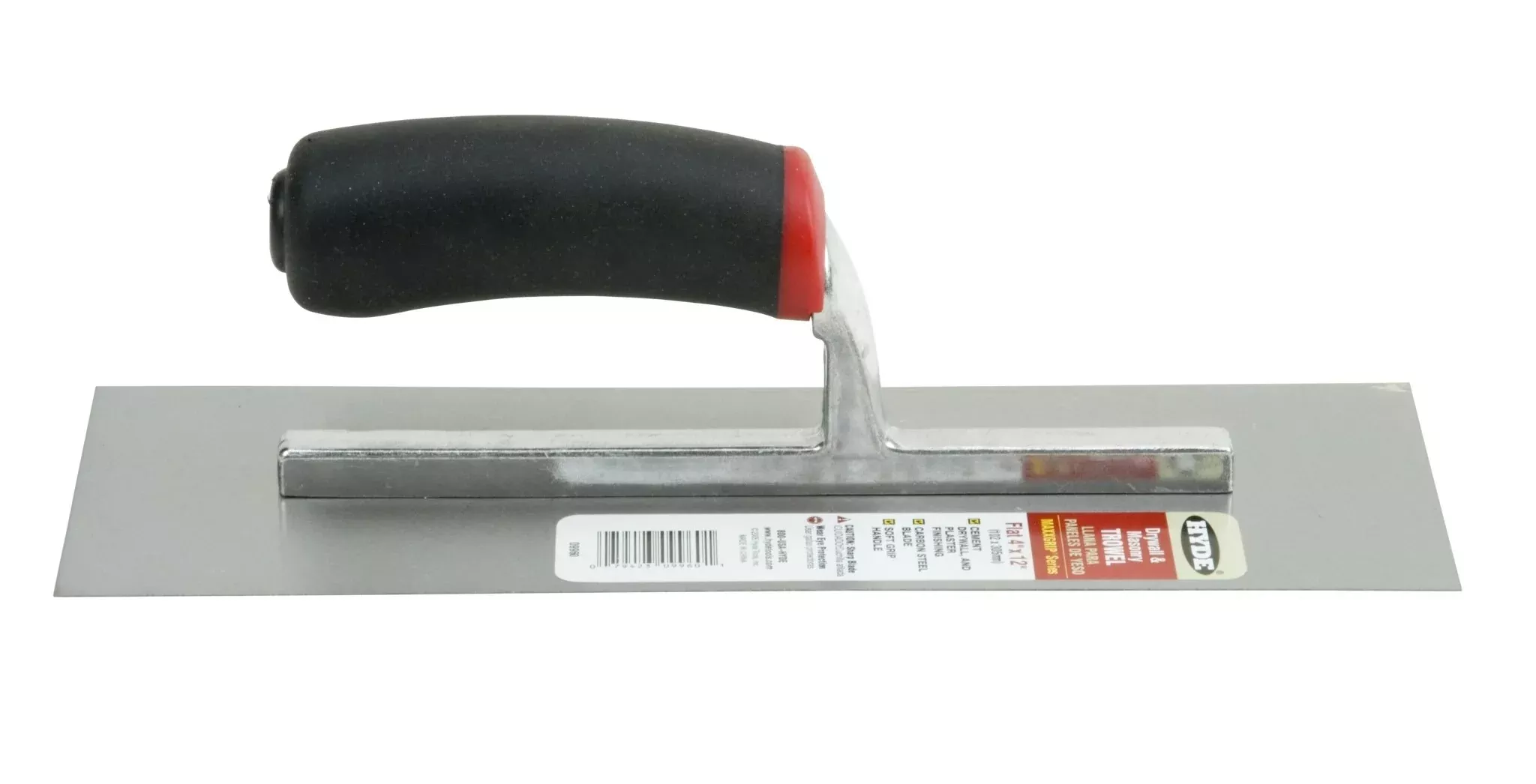
([09060]/[09072]-class) — the light body makes this effortless, which is the point of the 23% weight saving over a long day.