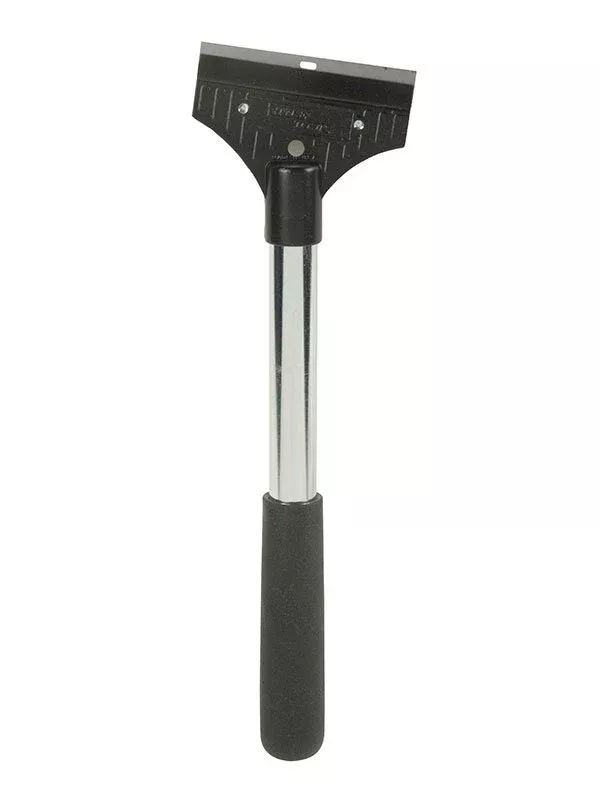
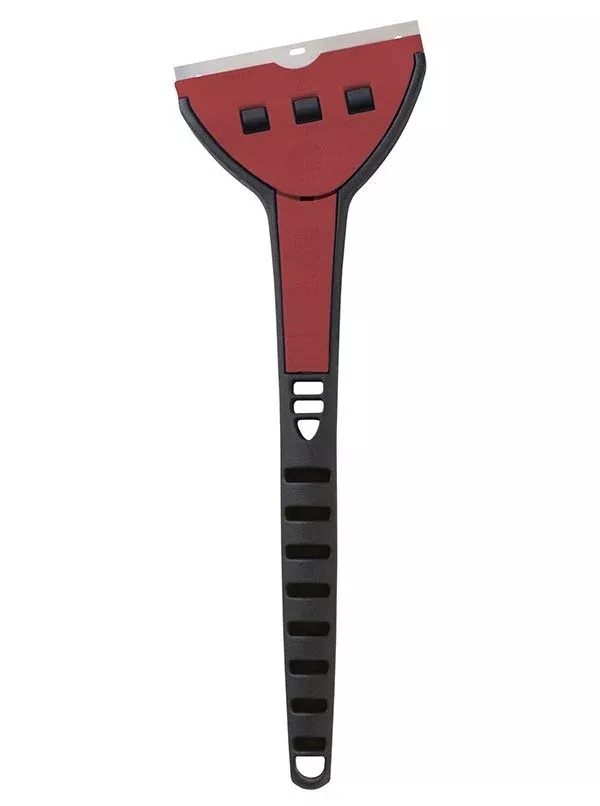
Is this the right tool for your job?
✕CHOOSE A DIFFERENT TOOL WHEN
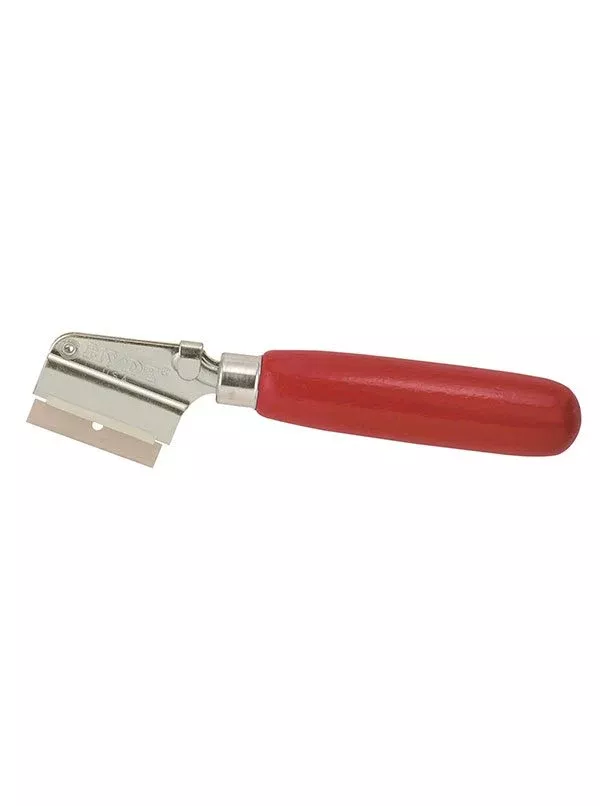
- Narrow work — piers, runs between casings, above backsplashes — where 4 inches overhangs the lane onto dry paper; that is the 3-1/4″ 33100’s assignment.
- Finish borders — the final inches at trim, inside corners, and outlet boxes belong to the 2″ stiff putty knife, per the strip guide’s division of labor.
- Dry stripping — no soak, no shaver; a fresh carbon edge on dry drywall face is a wall repair generator.
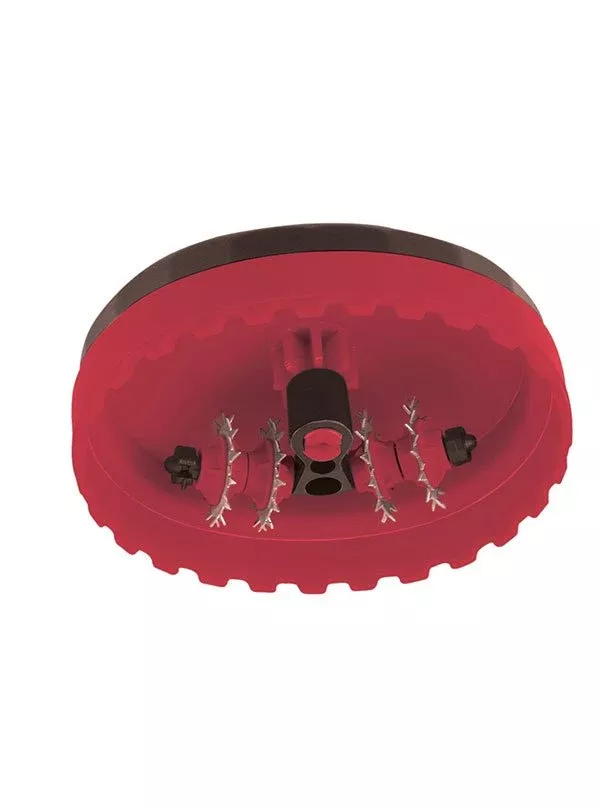
- Perforation — it cannot put water behind a vinyl face; the 33210 exists for exactly that, upstream.
- And it is not a heavy demolition scraper — floor mastic, thinset, and exterior paint fields belong to other blade classes in other lines.
Jobs this tool does
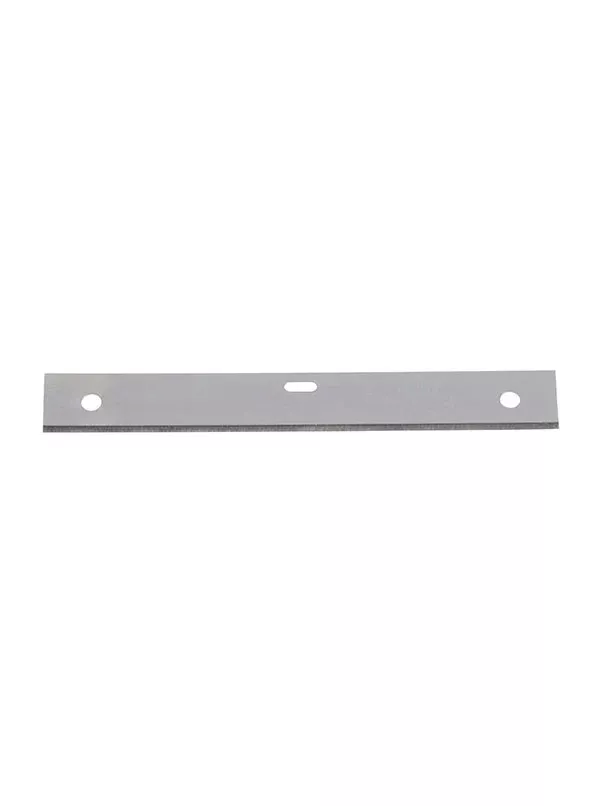
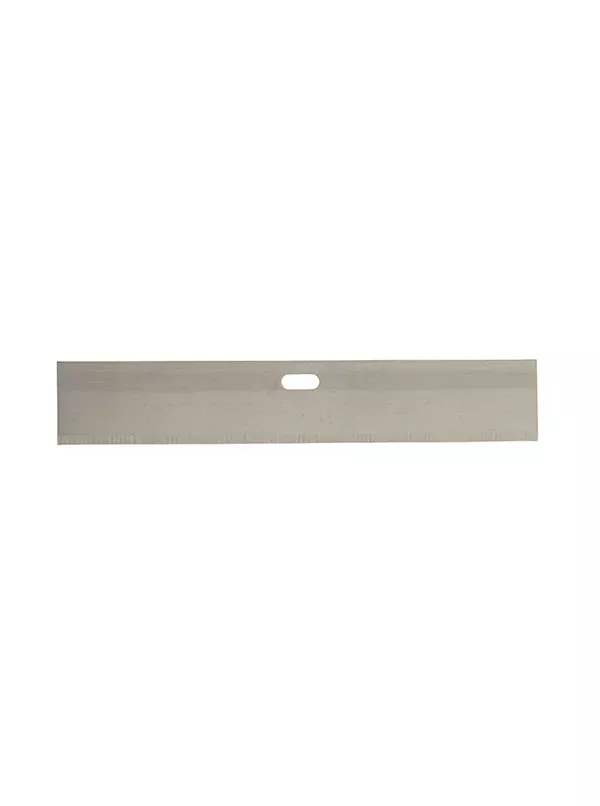
EXACT JOB METHODS FOR HYDE №33120✓ Job guideChange Wallpaper Shaver BladesOPEN JOB GUIDE →
For these jobs—use this instead
THE JOB, THE REASON, AND THE BETTER TOOL✕ Narrow workPiers, runs between casings, above backsplashes — where 4 inches overhangs the lane onto dry paper; that is the 3-1/4″ 33100’s assignment. BETTER TOOL Metal Wallpaper Shaver, 3-1/4” 33100 →✕ PerforationIt cannot put water behind a vinyl face; the 33210 exists for exactly that, upstream. BETTER TOOL Wallpaper Scoring Tool 33210 →
How the pros run it
01
Thumb off the button in motion
change blades with the head at rest, never mid-carry; the button is a bench control, not a trigger. Two clicks, then stroke: seat the blade until the double lock engages fully — a half-seated blade chatters like a dull one and lies about the cause. Let the head lean: the claimed leverage geometry means the tool works at its own attack; steepening your wrists to muscle a dry patch is how walls get gouged — answer resistance with water. Overlap everything: lane gaps hide under wet sheen and surface later as paste stripes under primer. Wet work, dry storage: carbon blades forgive everything except being put away wet.