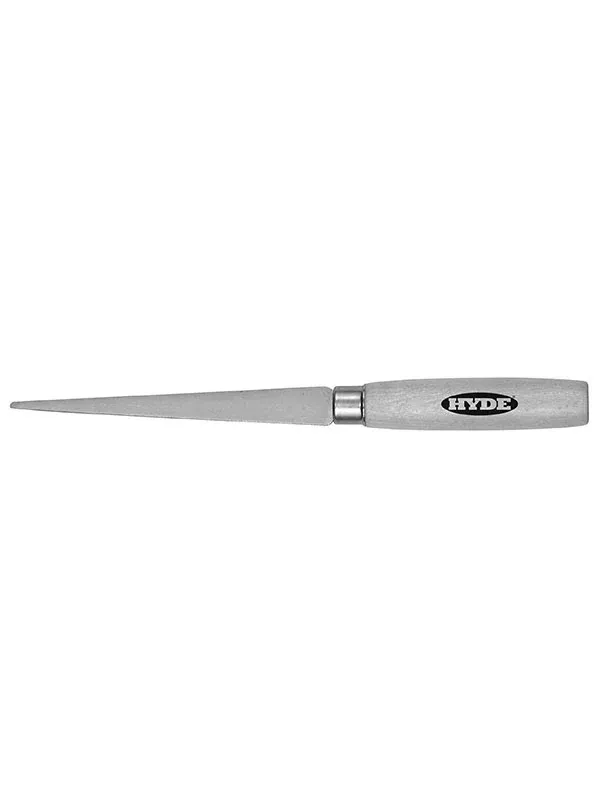
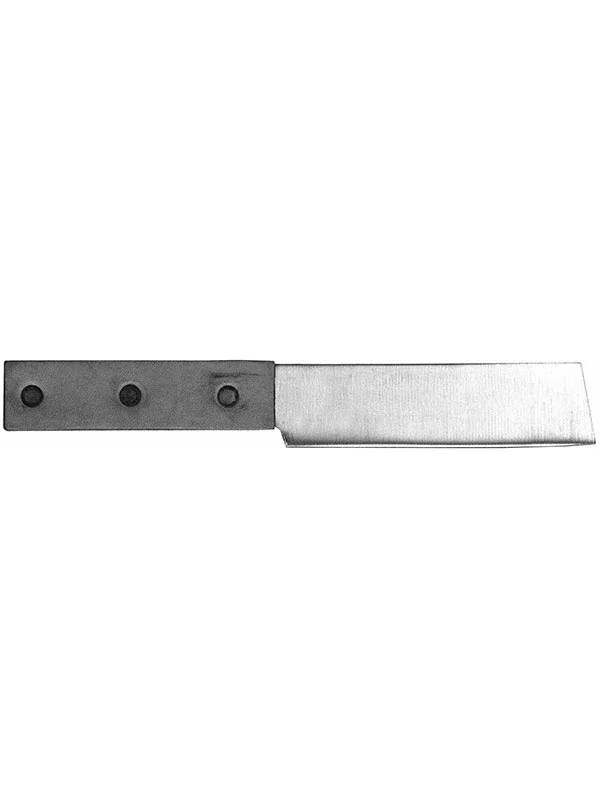
Is this the right tool for your job?
✕CHOOSE A DIFFERENT TOOL WHEN
- Not a finish tool of any kind: it cannot bevel new putty (the flexible putty knife’s job, one line over), cannot pare a clean surface, and has no business near work you’ll show anyone before it’s painted.
- Not a chisel: no flat reference back, no fine bevel, no paring control — it replaces the chisel only in the job that destroys chisels.
- Not a carving knife — the sloyds hold that ground, and their handles would split under one session of this knife’s daily life.
- Not a cold chisel: putty, wood, and hidden sprigs are its diet, not masonry, bolts, or plate.
- And not a pry bar or a full froe — struck straight through the work is its design load; levered sideways is nobody’s.
Jobs this tool does
EXACT JOB METHODS FOR HYDE №40210✓ Job guideMaintain Carbon-Steel Trade Knife EdgesOPEN JOB GUIDE →✓ Job guideSplit Kindling with a Hacking KnifeOPEN JOB GUIDE →
How the pros run it
01
The hammer supplies force; the knife supplies placement
Set the edge exactly, then strike — never chase accuracy mid-blow. Short taps beat big swings: control scales with strike count, not strike size. Mind the exit: a struck blade moves until something stops it; know what’s beyond the cut before the hammer lands. Steel hammer, square contact: glancing blows deflect the blade and mushroom the spine unevenly. Eyes always: steel-on-steel chips are the struck tool’s signature injury and the cheapest one to prevent.