Is this the right tool for your job?
✓CHOOSE THIS WHEN
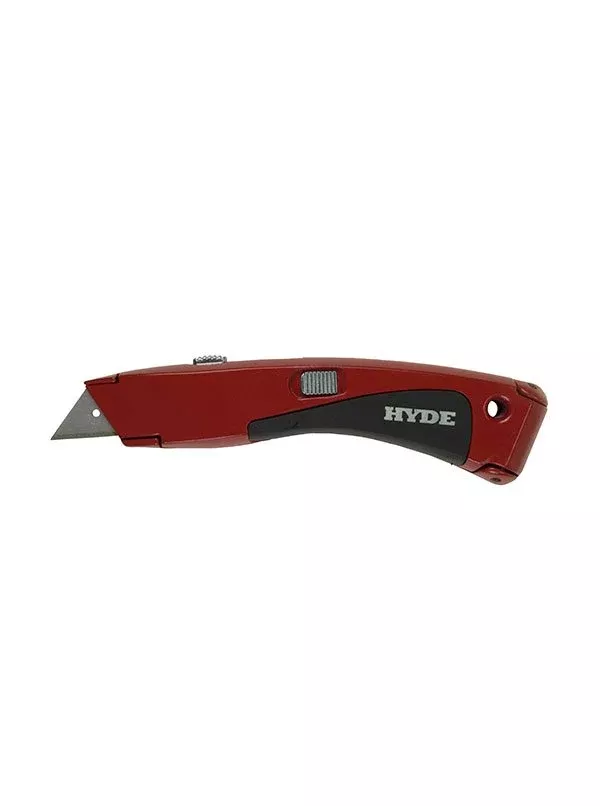
- Four Blade Positions: Adjustable blade depths for various cutting needs.
- Top-Slide, Push-Button Adjustment: Allows for precise blade positioning with a simple, tool-free mechanism.
- Overlap Nose: Provides extra support for the blade, enhancing cutting stability.
✕CHOOSE A DIFFERENT TOOL WHEN
- It is not a trade cutting knife.
- Leather, reinforced belting, sole stock, thick bun foam, and gasket rubber are jobs for a ground, sharpenable heritage blade — the square points and skivers — whose dedicated geometry and length this short replaceable blade cannot match.
- It is not a precision flash-trimmer for molded parts (that is a V-trim knife).
- It is not a pry bar, a screwdriver, or a paint-can opener, and the retract slide is exactly the part that a career of that abuse destroys.
- And it is not a self-retracting safety knife: the blade stays where you set it until you move it, which is a feature for cutting and a liability where policy demands the edge disappear the instant it is released — that is the Switchblade family’s job.
Jobs this tool does
EXACT JOB METHODS FOR HYDE №42081✓ Job guideHow to Choose a Maintained Blade or a Replaceable-Blade KnifeOPEN JOB GUIDE →✓ Job guideHow to Specify and Make General Utility Cuts in the TradesOPEN JOB GUIDE →✓ Job guideHow to Control High-Frequency Blade Changes on Production CuttingOPEN JOB GUIDE →
How the pros run it
01
Depth is a tool, not a default
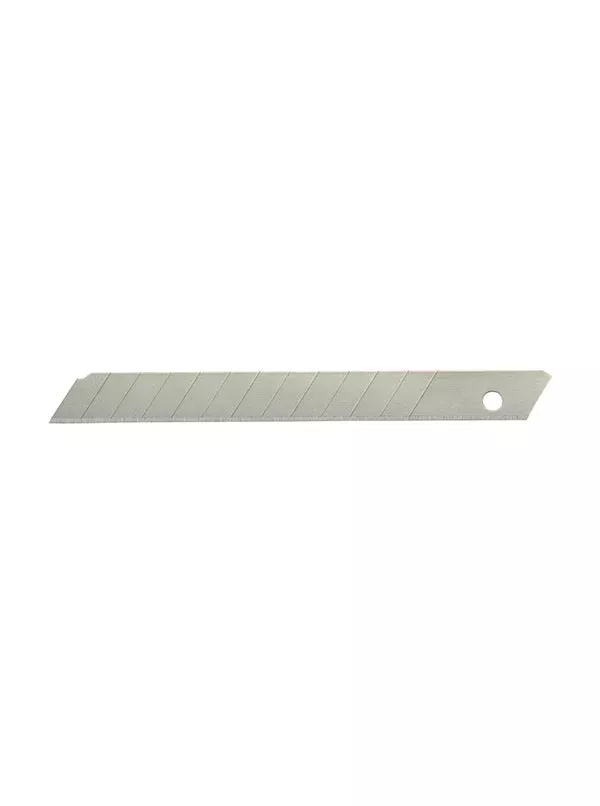
The single most common utility-knife mistake is running the blade fully out for every cut. Expose only as much edge as the material is thick: a short blade is stiffer, safer, and less likely to bind or snap. The 42081’s four stops exist so you can match depth to the job instead of over-extending. Change at first drag. A utility blade is a consumable; the instant it starts to tear rather than slice, retract and flip it to the fresh corner, then replace when both corners are gone — you and the work are safer with a sharp edge than a forced one. Blade support. Keep the overlap nose documented against the work when side-loading the blade in a straightedge cut. Grip. The MAXXGRIP surface is there for wet and gloved hands; let it do the work rather than clamping — a light, controlled hold tracks a line better than a fist. Feed it the right blade. Standard pointed blades (42100 / 42150 / 42101) for general work; round-tip blades (42117 / 42118) where a puncture would ruin goods or draw blood.