
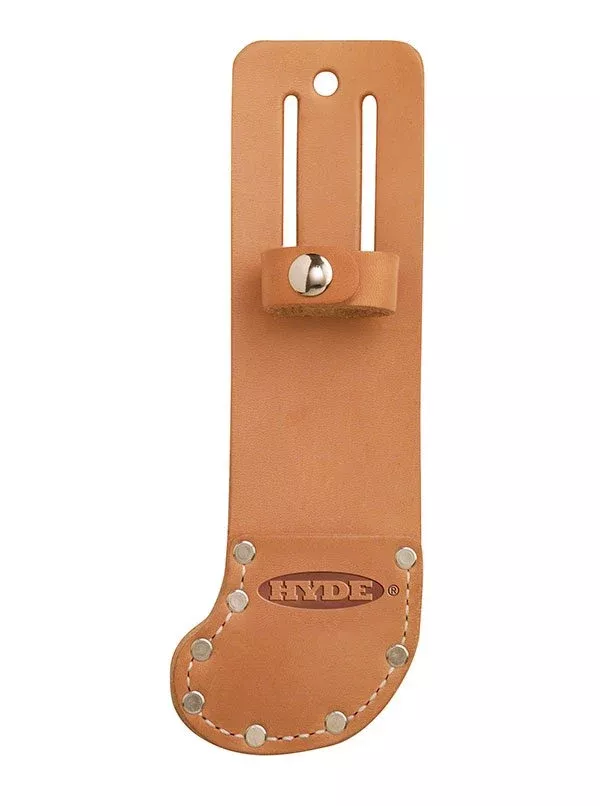
Is this the right tool for your job?
✕CHOOSE A DIFFERENT TOOL WHEN
- It is not a sheath for straight blades.
- A straight utility knife rides in the 42520 (or the angle-head 42525); a long straight ground heritage blade — a square point, skiver, or mill knife — rides in the enclosing 56500 / 56505 sheaths rated to 6″.
- Dropping a straight knife into a curved hook sheath leaves it loose and unretained.
- And the snap strap notwithstanding, it is a leather belt sheath, not a locking hard case — it captures and carries the hook knife, it does not armor it.
Jobs this tool does
EXACT JOB METHODS FOR HYDE №42700✓ Job guideHow to Carry a Hook Knife SafelyOPEN JOB GUIDE →
For these jobs—use this instead
THE JOB, THE REASON, AND THE BETTER TOOL✕ Straight-blade and heritage carryA square point, skiver, or mill knife — rides in the enclosing 56500 / 56505 sheaths rated to 6″. BETTER TOOL General Purpose Knife Sheath 42520 →
How the pros run it
01
Snap it every time
The retaining strap is the safety feature — a hooked blade that isn’t snapped in can swing out; make closing the snap part of holstering, not an afterthought. Verify the seat by feel. Because hook knives vary, confirm the specific knife drops into the curve and the strap actually captures it before you trust the sheath in motion (see the fitment note below). Condition the leather. Flooring work is wet and abrasive; wipe the sheath down, let it dry, and dress it occasionally so the leather and the snap stay serviceable. Carry the hook edge aware — a hook cuts on the inside of the curve, so orient the sheath so a draw brings the hook up and away from your body.