Is this the right tool for your job?
✕CHOOSE A DIFFERENT TOOL WHEN
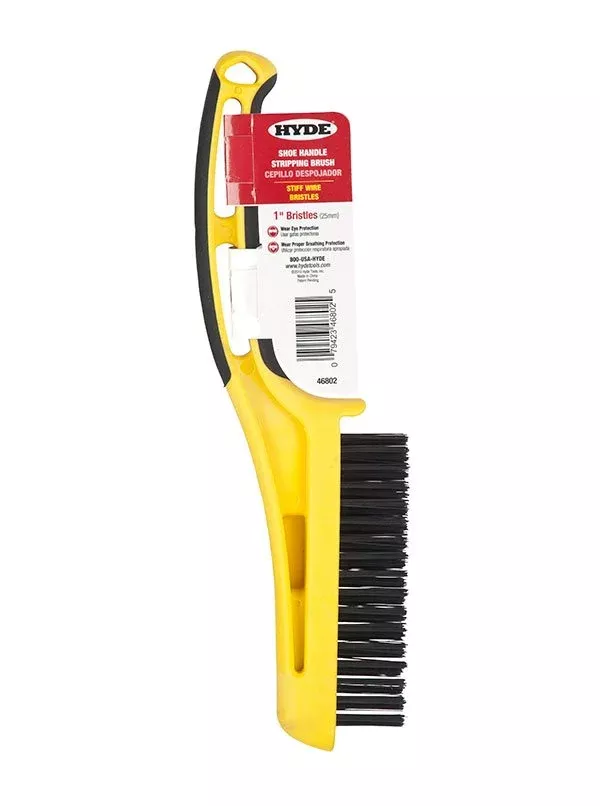
- Rust, scale, and hard deposits. Brass is too soft — it will wear away against heavy rust and lose. That’s carbon-brush work on mild steel (46802 and up), or the stainless 46800 on stainless and aluminum.
- Fast, heavy stripping of open fields. The fine, soft fill is a detail and finesse tool; a broad, flat surface strips faster with a wider, stiffer brush.
- Any job where wear matters more than gentleness. If you don’t need brass’s softness or its non-sparking property, a steel brush cuts faster and lasts longer — brass is a deliberate choice for surface protection and spark safety, not a general-duty upgrade.
Jobs this tool does
EXACT JOB METHODS FOR HYDE №46801✓ Job guideHow to Maintain Wire Brushes — Inspect, Clean, Segregate, Store, and Retire ThemOPEN JOB GUIDE →✓ Job guideHow to Clean in Spark-Controlled and Zero-Metal EnvironmentsOPEN JOB GUIDE →
For these jobs—use this instead
THE JOB, THE REASON, AND THE BETTER TOOL✕ Rust, scale, and hard depositsBrass is too soft — it will wear away against heavy rust and lose. That’s carbon-brush work on mild steel (46802 and up), or the stainless 46800 on stainless and aluminum. BETTER TOOL 1-1/4″ Wire Bristle Scrub Brush 46802 →
How the pros run it
01
Let the flex conform
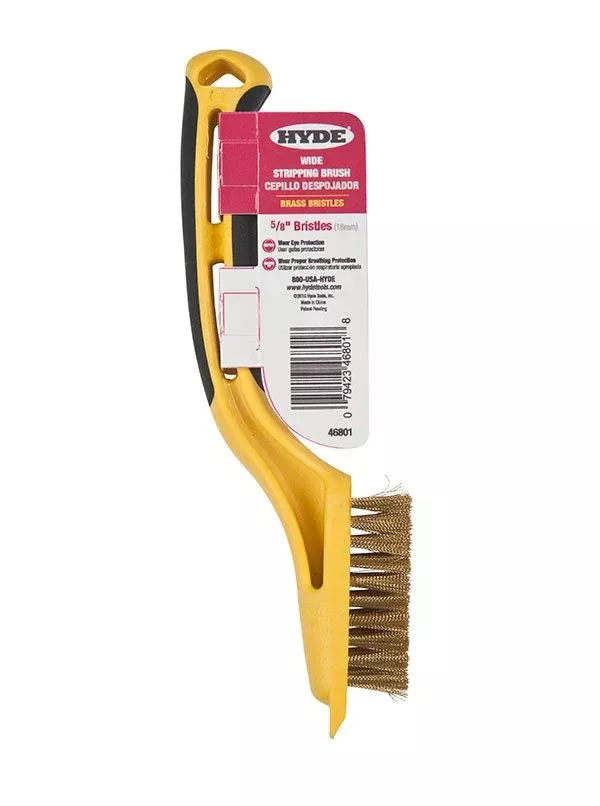
The reason to buy brass fine wire is that it reaches into detail — guide it along the profile and let the springy tips work the softened material out, rather than pressing the block flat. Keep the chemistry wet. As a stripper-scrub tool it works with the chemical, not instead of it; the stripper softens the coating and the brush lifts it. Go easy — brass is consumable. Moderate pressure both protects the surface and makes the soft fill last; leaning hard just wears the brass and can splay it without cutting any faster. Use the shoe handle to keep knuckles off the moulding. Match brass to the metal: it should be equal to or softer than the surface — that’s the guarantee it won’t scratch. Rinse after wet work; brass won’t rust, but stripper residue left in the fill hardens it.