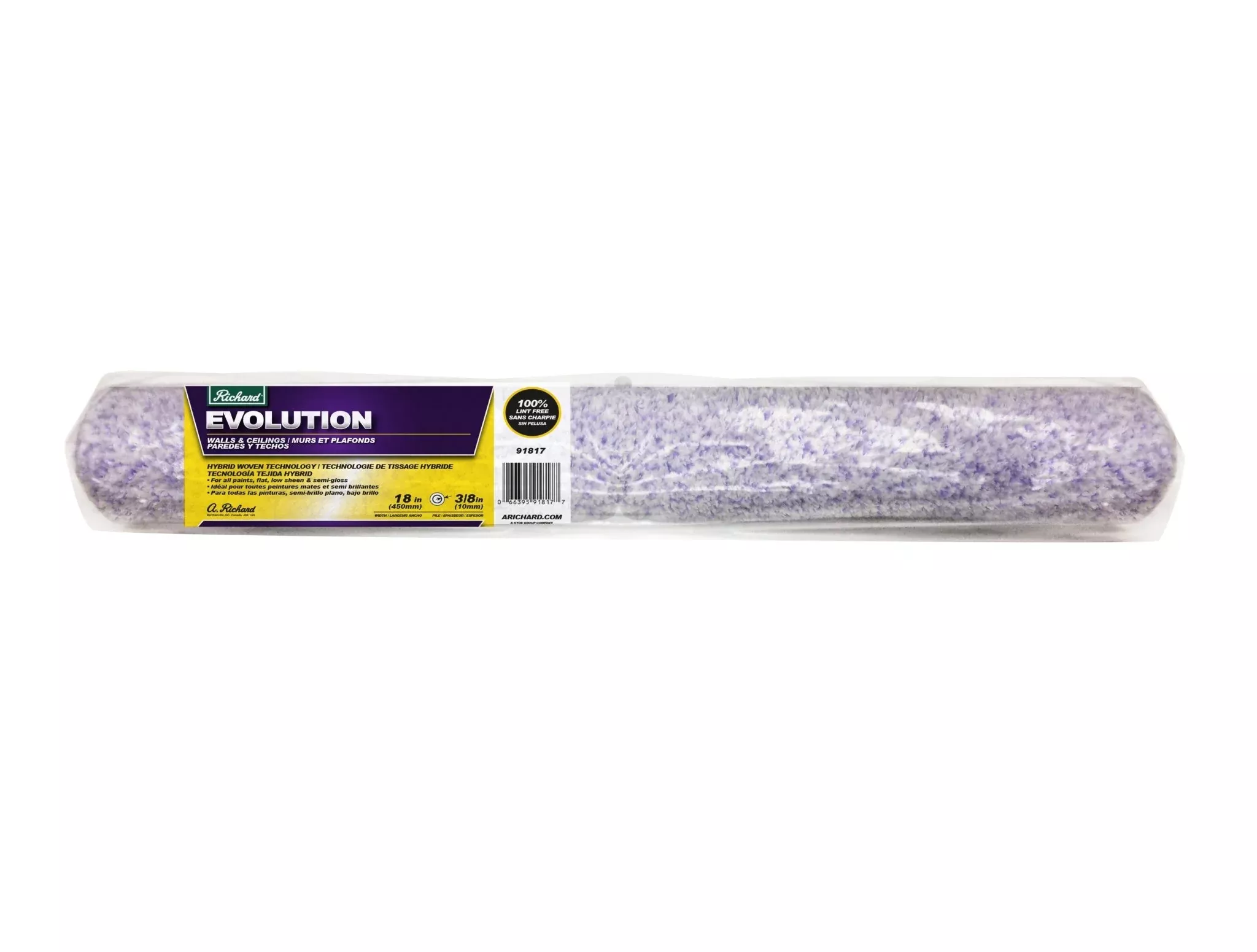
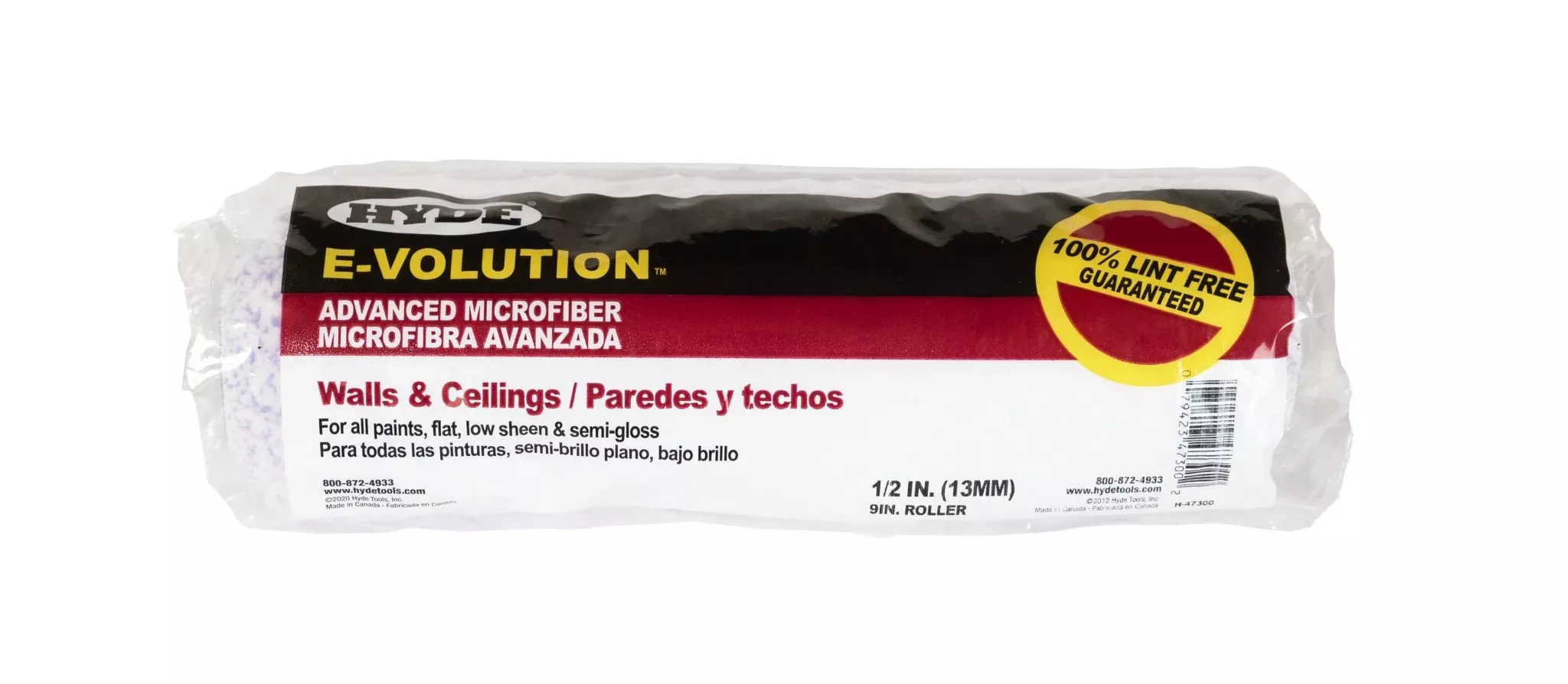
Is this the right tool for your job?
✓CHOOSE THIS WHEN
- The documented job is “How to Paint an Existing Textured Wall (Orange Peel or Knockdown)”.
✕CHOOSE A DIFFERENT TOOL WHEN
- Smooth and lightly-textured walls — on smooth or orange-peel surfaces the 5/8″ over-textures and can flood; drop to 3/8″ (47302) for smooth walls or 1/2″ (47300) for light texture.
- Doors and cabinets — far too much nap and film for finish work; that’s the 1/4″ (47309).
- Masonry, brick faces, coarse stucco, cinder block — the E-volution family record is explicit that aggressive rough surfaces “snag, fray, and quickly tear up the delicate microfiber filaments”; genuinely abrasive masonry is polyester’s job (Lamb Pro 47365/47366), never microfiber, even though those surfaces want a long nap.
- The 5/8″ is where you begin to feel that boundary — it is the medium-texture tool, not a rough-masonry tool.
- Epoxy floors — lint-free-plus-chemistry is the woven family’s job (Woven-Ultra).
Jobs this tool does
EXACT JOB METHODS FOR HYDE №47304✓ Job guideHow to Paint an Existing Textured Wall (Orange Peel or Knockdown)OPEN JOB GUIDE →
For these jobs—use this instead
THE JOB, THE REASON, AND THE BETTER TOOL✕ Smooth and lightly-textured wallsOn smooth or orange-peel surfaces the 5/8″ over-textures and can flood; drop to 3/8″ (47302) for smooth walls or 1/2″ (47300) for light texture. BETTER TOOL 9″ E-Volution, 100% Lint Free 47300 →✕ Doors and cabinetsFar too much nap and film for finish work; that’s the 1/4″ (47309). BETTER TOOL 9″ E-Volution, 100% Lint Free 47309 →✕ Masonry, brick faces, coarse stucco, cinder blockThe E-volution family record is explicit that aggressive rough surfaces “snag, fray, and quickly tear up the delicate microfiber filaments”; genuinely abrasive masonry is polyester’s job (Lamb Pro… BETTER TOOL 9″ Lamb Pro Roller Cover 47365 →
How the pros run it
01
Light hand into texture
Medium texture tempts you to press to “get into it” — don’t; pressing floods the peaks and flings spatter as the longer fibers whip off. A correctly-napped cover works at hand weight, and 5/8″ is the correct nap for medium texture, so let it do the reaching. Budget more paint than a smooth or lightly-textured wall of the same size — deeper valleys have more area. De-lint before the first load (tape-and-rip or wash-and-spin). Pre-dampen for waterborne paint. Inspect in raking light before leaving any textured surface. On textured ceilings, minimize passes to avoid pulling the texture loose. Cleaning takes longer with any microfiber — rinse until clear, spin, stand on end; it reuses well. Methods are owned by the paint a textured wall and paint a ceiling application guides.