Is this the right tool for your job?
✕CHOOSE A DIFFERENT TOOL WHEN
- An inch-deep .072″ blade flexes off line in heavy connective tissue and part-frozen primals, and its shallow depth gives no board clearance for the knuckles on a full-force stroke — the 510 exists because of exactly those two sentences.
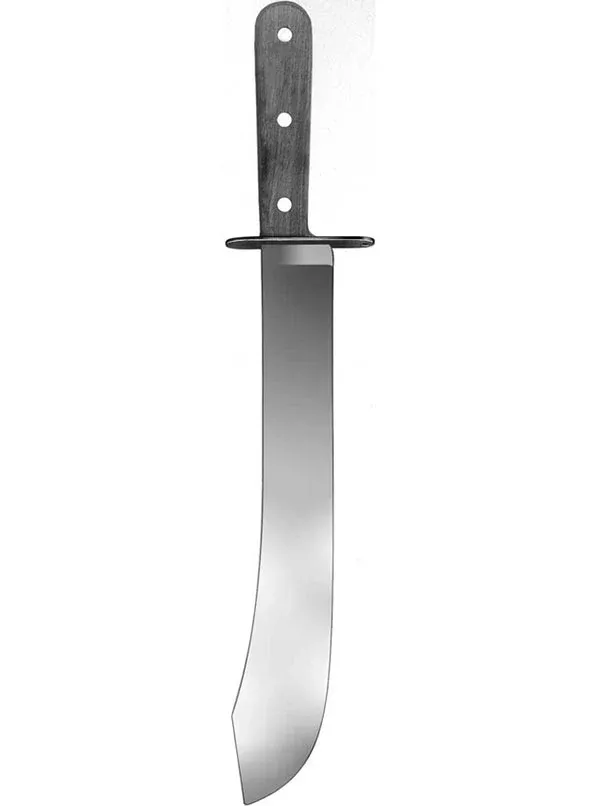
- Long-stroke slabbing through deep material is the 14″ class’s brief (68180 pointed and guarded; 68300 round-tipped and shielded).
- Skinning and boning are other patterns entirely.
- Safety-program stations that require engineered hand or drop protection cannot be answered by any open-pattern knife — that is the 68180 or 68300, by policy rather than preference.
- And the kitchen-cutlery framing is declined on principle: nothing stops a household from using a 508, but this store sells it as what it is — the industrial-gauge original of the pattern, with the ownership model (steel, stone, oil) attached.
Jobs this tool does
EXACT JOB METHODS FOR HYDE №68060✓ Job guideHow to Choose an Open, Guarded, or Round-Tip Safety Knife for a WorkstationOPEN JOB GUIDE →✓ Job guideFarm Slaughter-Day ButcheringOPEN JOB GUIDE →✓ Job guideHow to Pick Butcher-Knife Blade Length by Stroke — From Close Control to One Continuous DrawOPEN JOB GUIDE →✓ Job guideHow to Process Fish in QuantityOPEN JOB GUIDE →
VIEW 5 MORE DOCUMENTED JOBS
✓ Job guideHow to Process Game in Quantity — Intake, Break, Trim, Pack, and Keep Every Animal SeparateOPEN JOB GUIDE → ✓ Job guideHow to Handle a Large Fixed-Blade Knife SafelyOPEN JOB GUIDE → ✓ Job guideHow to Standardize a Plant Knife PatternOPEN JOB GUIDE → ✓ Job guideHow to Steel, Hone, and Maintain a Production KnifeOPEN JOB GUIDE → ✓ Job guideHow to Trim and Portion MeatOPEN JOB GUIDE →
For these jobs—use this instead
THE JOB, THE REASON, AND THE BETTER TOOL✕ Long-stroke deep slabbingLong-stroke slabbing through deep material is the 14″ class’s brief (68180 pointed and guarded; 68300 round-tipped and shielded). BETTER TOOL Butcher Safety Knife (514), 14″ 68180 →✕ Engineered hand and drop protectionThat is the 68180 or 68300, by policy rather than preference. BETTER TOOL Butcher Safety Knife (514), 14″ 68180 →
How the pros run it
01
Handling
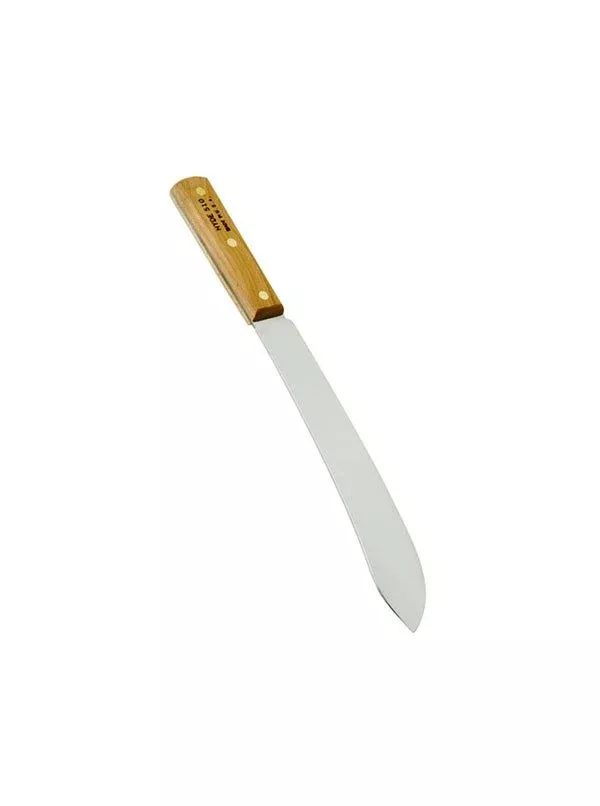
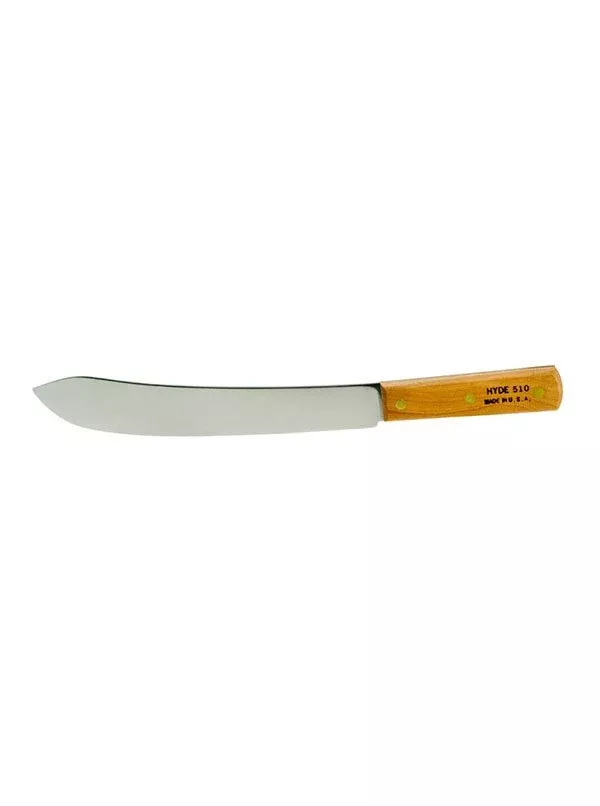
Every stroke travels away from the body and away from the off hand — the first rule in Hyde IBS’s own hand-knife guidance, non-negotiable even at the line’s friendliest size. The off hand’s job is tension and control, never resistance in the blade’s path. The 508 is the open pattern: no guard, nothing between hand and work — which is precisely its virtue, grip freedom. Index finger along the spine for detail passes; full fist on the handle for longer draws; a pinch grip up at the blade for portioning accuracy. The price of that freedom is discipline: a greasy hand slides, and on an unguarded knife nothing stops it. Dry the handle, and move to the guarded 14″ class when the work turns to force.
02
Set-down and carry
Flat, edge away, never buried under product. Pass a knife handle-first, or set it down and let the other hand take it. Bench habits are the only safety hardware an open-pattern knife has.
03
Carbon
High-carbon steel takes and re-takes a keener edge than stainless for the same effort, and asks for maintenance in return. The cycle: steel before each session — light passes per side to realign the edge, not grind it; stone when steeling stops answering — the factory edge arrives “ground and honed,” and a medium-then-fine stone maintains that geometry; wipe dry immediately after wet work; oil before storage. A dulling knife announces itself when the draw starts wanting push, and the answer is always the steel, never more force. On a knife this size the ritual costs a minute a day, and it is the difference between a consumable and a tool your successor inherits.