Is this the right tool for your job?
✓CHOOSE THIS WHEN
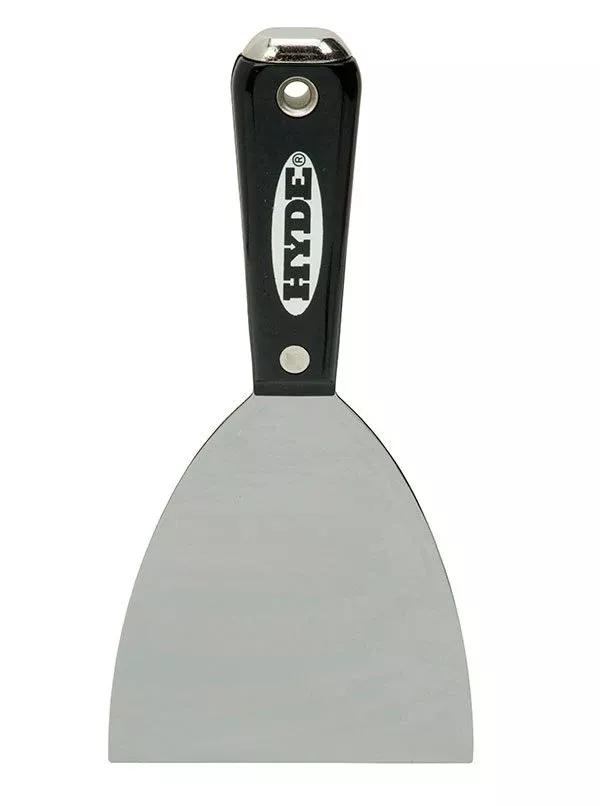
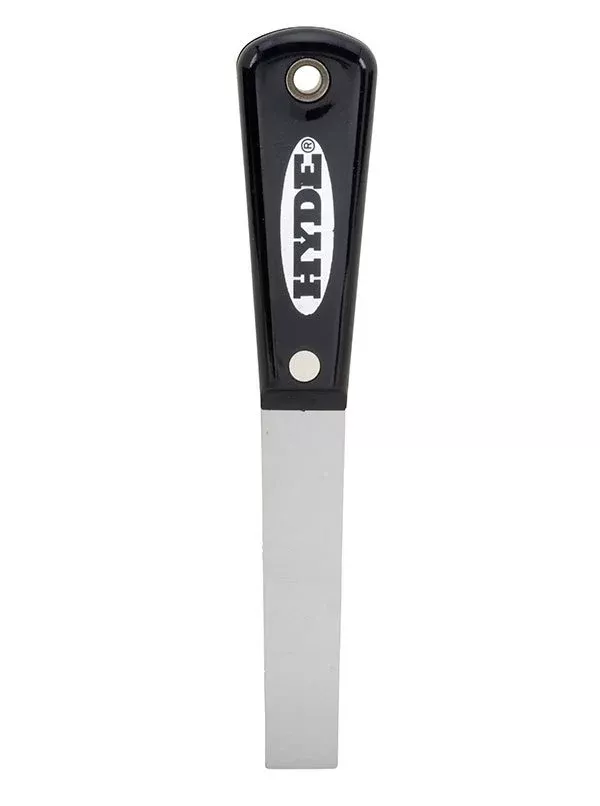
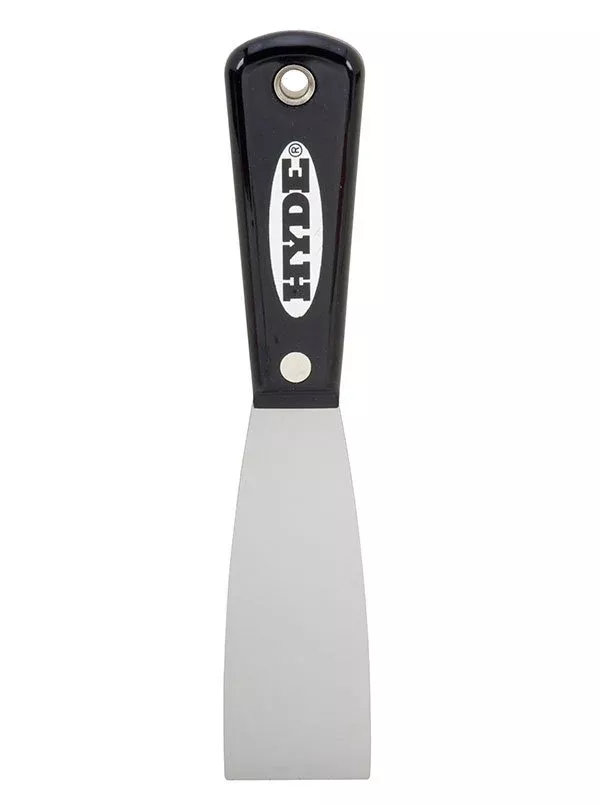
- Flexible Blade: Blade ground to a thinner dimension for 25% more flexibility, suitable for precise application and smoothing tasks.
- High Carbon Steel Blade: Provides strength and durability for heavy-duty use.
- Durable Nylon Handle: Offers a comfortable grip and withstands extensive use.
✕CHOOSE A DIFFERENT TOOL WHEN
- Almost everything except finishing.
- It cannot scrape — the limber blade folds against a paint blister or a stuck drip where a stiff knife would lift it; that is the 02150’s job.
- It cannot press heavy filler into a deep hole or a gouge — it skates over material the standard-flex 02100 packs in; fill first with the 02100, then finish with this.
- It is not a prying, opening, or utility knife — the thin grind that makes it feather is the thin grind that takes a set if you lever with it.
- And it is not a first putty knife: a kit that owns only a SuperFlexx owns the last step of a job and none of the earlier ones.
Jobs this tool does
EXACT JOB METHODS FOR HYDE №02102✓ Job guideHow to Feather the Final Coat Over a Wall PatchOPEN JOB GUIDE →
For these jobs—use this instead
THE JOB, THE REASON, AND THE BETTER TOOL✕ Scraping blisters and stuck dripsThe limber blade folds against a paint blister or a stuck drip where a stiff knife would lift it; that is the 02150’s job. BETTER TOOL Black & Silver® 1-1/2” Stiff Putty 02150 →✕ Packing heavy filler deepIt skates over material the standard-flex 02100 packs in; fill first with the 02100, then finish with this. BETTER TOOL Black & Silver® 1-1/2” Flexible Putty 02100 →
How the pros run it
01
Thin is the rule
This blade rewards a light load and punishes a heavy one — pile compound on it and the limber steel can’t level the mass, it just smears. Low angle, light hand. The flex does the work; let the blade bow and trail rather than forcing it. Pull, don’t push. Finishing passes are drawn outward from the center of the repair so the feather thins toward the edge. Lift off softly. End each pass by lifting the blade gradually, not stopping it dead, or you leave a stop-mark. Keep the edge immaculate. A finishing blade lives and dies by a clean, true edge — the tiniest nick draws a line through every skim; hone the carbon edge back at the first sign of a drag mark. Wipe it dry. Thin carbon rusts as readily as thick carbon; a wet blade left overnight is a spotted blade tomorrow.