Is this the right tool for your job?
✓CHOOSE THIS WHEN
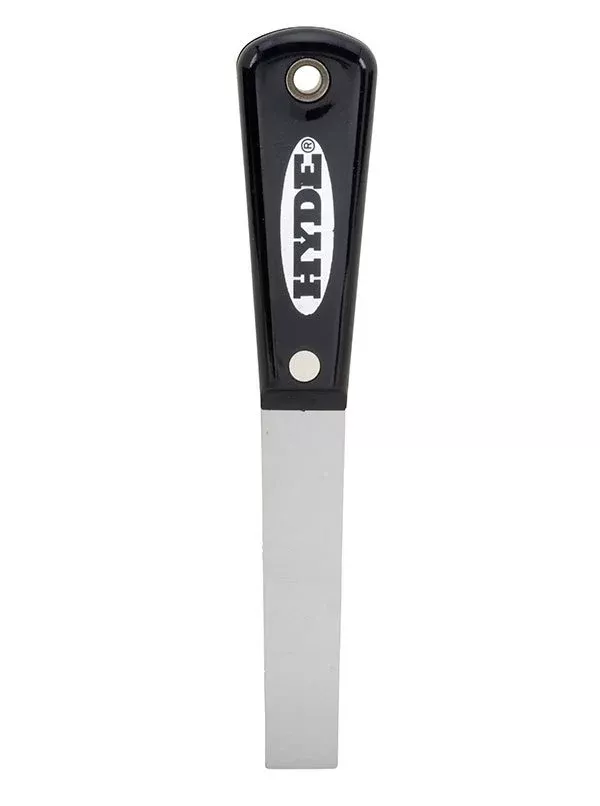
- High Carbon Steel Blade: Offers flexibility and durability for various tasks.
- Full-Tang Blade: Ensures strength and stability during use.
- Durable Nylon Handle: Provides a comfortable grip and long-lasting performance.
✕CHOOSE A DIFFERENT TOOL WHEN
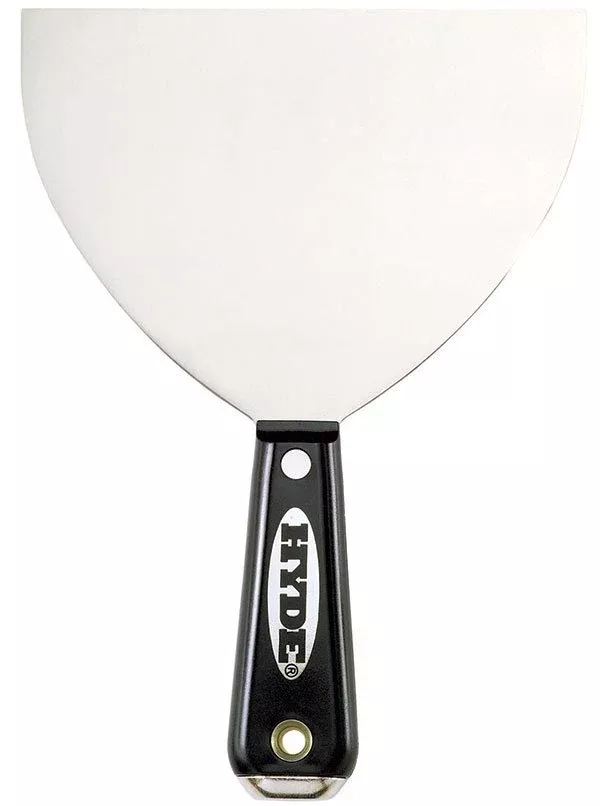
- Field work, wide patches, and any removal.
- The 02005 is a small flexible blade for small, detailed applying.
- It is not a scraper — it bows away from failed paint and old glazing (removal is the stiff scrapers’ job) — and it is the wrong tool to fill a nail-hole grid across an open wall or level a dent, where a 3/4″ blade turns a five-minute job into an afternoon and dives into every low spot instead of screeding across.
- It is also not a pry tool.
- Use it for what it’s uniquely good at — the tight, the small, the shaped — and let the wider flexes carry the field.
Jobs this tool does
EXACT JOB METHODS FOR HYDE №02005✓ Job guideHow to Apply Wood Filler to Furniture, Doors, and Stair PartsOPEN JOB GUIDE →✓ Job guideHow to Fill Nail and Brad Holes in Painted TrimOPEN JOB GUIDE →
How the pros run it
01
Placement, not screeding
the 3/4″ blade is a precision applicator. Load a small amount, press it steep (30–45°) to pack the defect, strike it flush shallow (10–20°). You are dressing one small target at a time, not leveling a field. Follow the profile: on shaped trim let the narrow edge track the curve — it reaches into hollows a wide blade skips. Keep the carbon edge keen: its whole value is a sharp, clean bevel and strike; hone it on a fine stone when it dulls, and it repays you with less sanding on show surfaces. Wipe it dry: carbon rusts if left wet, and a rusting edge streaks light filler and glazing — dry it after water-based work, oil it occasionally. Know when you’ve undersized the blade: if you’re making many passes to cover a broad flat area, you’ve reached for the detail knife where a 1-1/4″ or 1-1/2″ belongs.