Is this the right tool for your job?
✓CHOOSE THIS WHEN
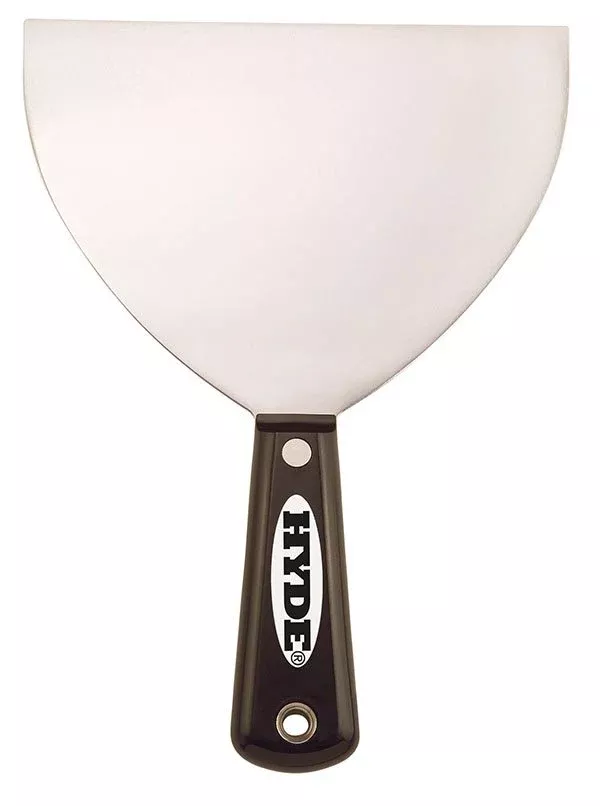
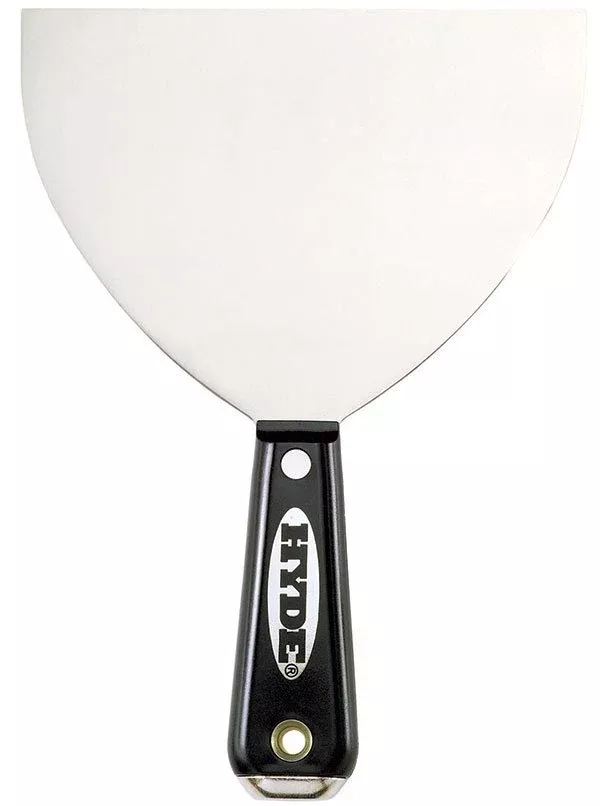
- 6″ Flexible Blade: Extra-flexible design for precise application, smoothing, and feathering of compounds.
- High Carbon Steel Blade: Provides durability and resilience for demanding tasks.
- Durable Nylon Handle: Offers a comfortable grip for extended use.
✕CHOOSE A DIFFERENT TOOL WHEN
- Loading and building compound.
- The extra flex folds under a heavy coat — build seams with standard-flex or wide blades and finish with this.
- Tape wants a firmer blade to press its centerline tight; an over-flexible edge lets it float.
- Any flexible blade skates over hard ridges, and this one more than most — use a stiff chisel-edge tool.
- Being the only knife.
How the pros run it
01
Light hand, long feather
The extra flex rewards a light touch: too much pressure and the over-bowed blade chatters or pulls mud out of the coat. Lay it flat, keep the ribbon thin, and let the bend do the feathering. This is a finesse blade, and it feels wrong the moment you ask it to carry weight.
02
It folds under load — by design
Do not load it heavy. If the blade buckles, you are using it for a build coat; that is the standard-flex or wide-blade job. The 02872’s flex is tuned for the last thin pass, not the first thick one.
03
Carbon: dry it
Full-tang hollow-ground carbon takes a keen edge and rusts. Wash and dry it after use; a pitted edge on a feather blade prints straight into the finish (steel maintenance, trade reference). The rust-proof extra-flex option at this width is the stainless 06857.
04
The Hammer Head is a real feature here
Unlike a bare finishing blade, this one seats fasteners with its own butt — learn the blade-butt-blade rotation so a stray screw never interrupts the feather.