Is this the right tool for your job?
✓CHOOSE THIS WHEN
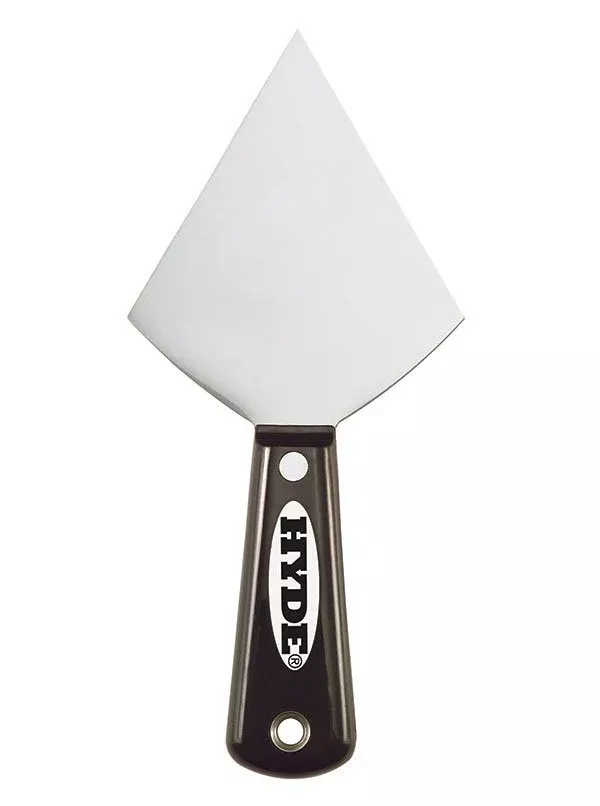
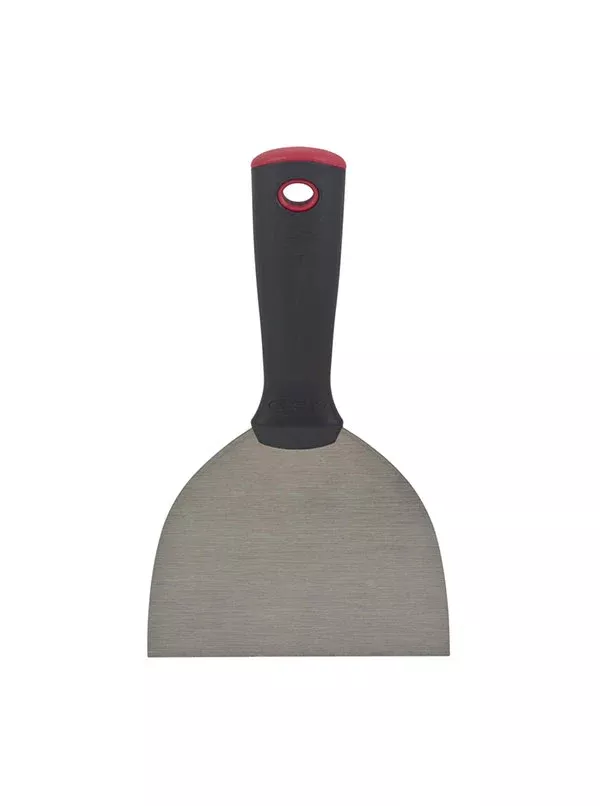
- High Carbon Steel Blade: Provides strength and flexibility for precise application and smoothing.
- Ideal Flex Point: Allows for effective spreading of putty or joint compound.
- Full-Tang Blade: Ensures durability and stability during use.
✕CHOOSE A DIFFERENT TOOL WHEN
- Far too wide to keep pressure on the tape centerline — bed with 4″–6″, fill and skim with this.
- Setting fasteners.
- No Hammer Head; that is the 02890.
- A flexible finishing blade folds against hard ridges — use a stiff chisel-edge knife between coats.
- being used as a taping knife.
For these jobs—use this instead
THE JOB, THE REASON, AND THE BETTER TOOL✕ Setting fasteners with the handleNo Hammer Head; that is the 02890. BETTER TOOL Black & Silver® Flexible HH Joint 02890 →
How the pros run it
01
Felt bow, not blind push
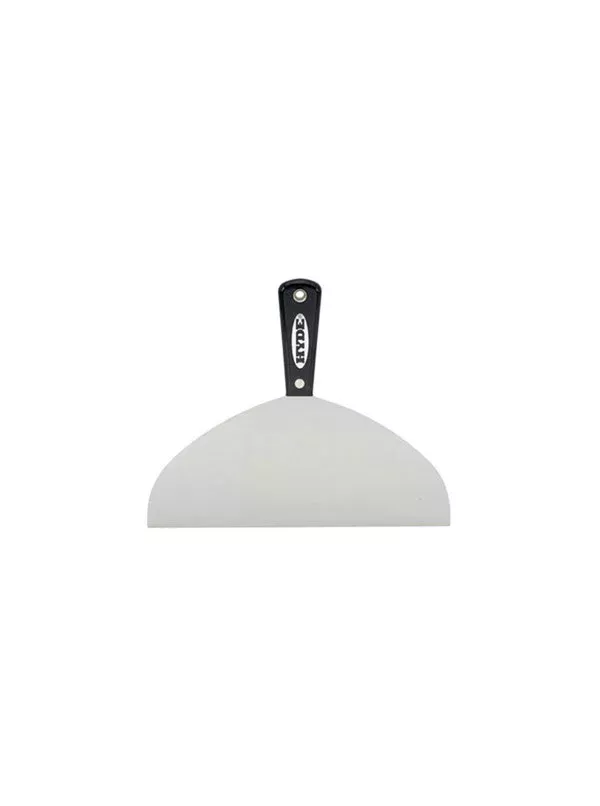
The whole value of a full-tang wide blade is that you steer it by feel. Center-handle pressure bows the middle proud to leave a sandable crown; rolling pressure onto a corner feathers that side to zero. Because you feel the mud through the tang, you can vary that bow mid-pass to chase a wall in and out of plane — something a mounted-handle taping knife does not tell your hand.
02
Ten inches wants a real pan
Load and wipe from a pan whose rim clears the blade — the 12″ heli-arc stainless pan ([09012], ~13-3/4″ rim) wipes a 10″ knife cleanly; a short tray fouls the corners.
03
Carbon is a dry-it blade
Keener and more tunable than stainless, and it rusts. Wash and dry it every day; a pitted feathering edge on a wide blade ruins a wide pass (trade reference). The rust-proof alternative at this width is the stainless Pro/Full-metal side of the line.