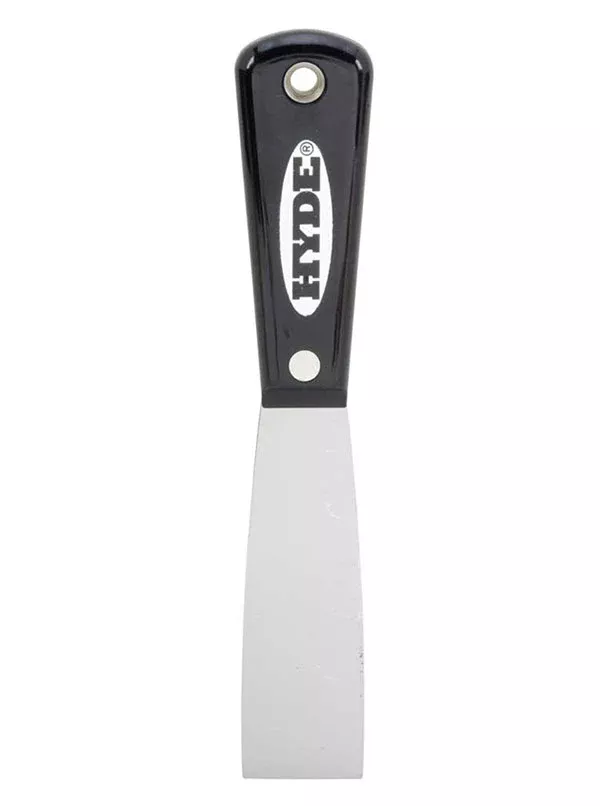
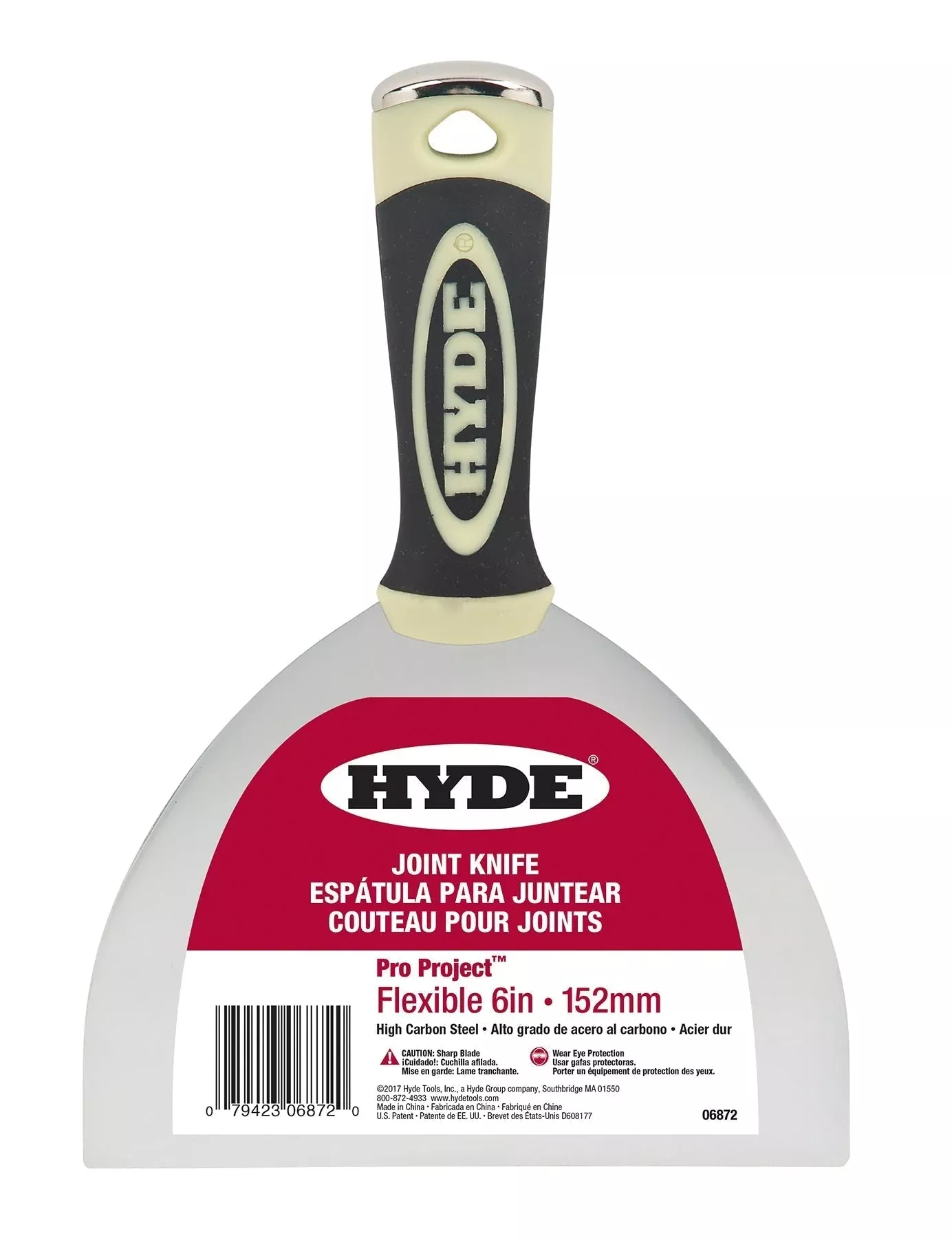
Is this the right tool for your job?
✓CHOOSE THIS WHEN
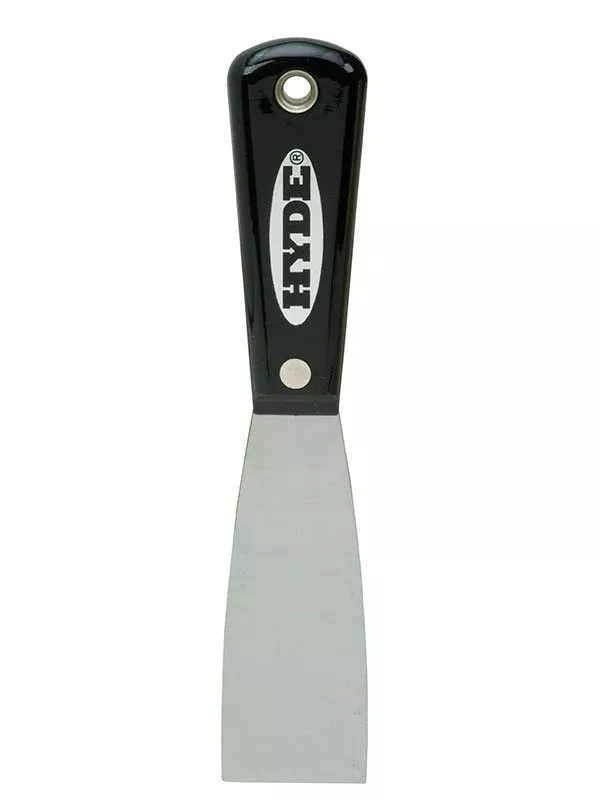
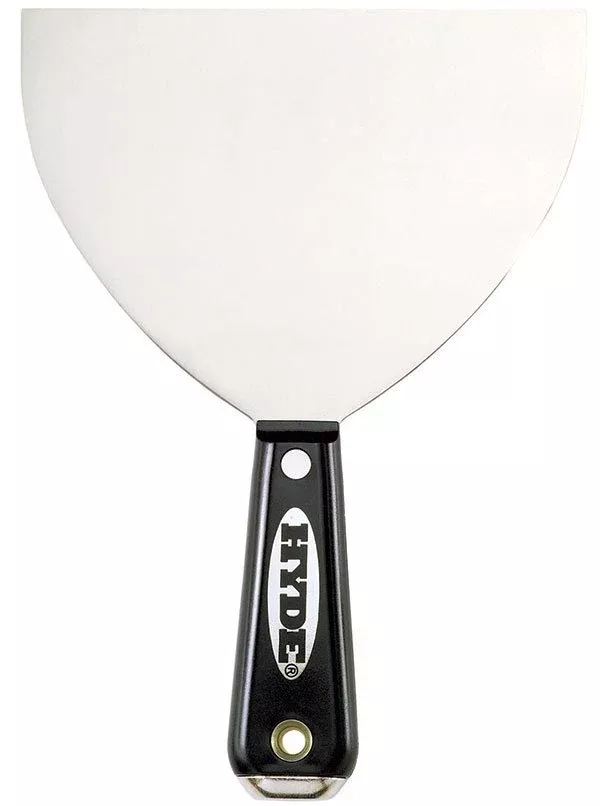
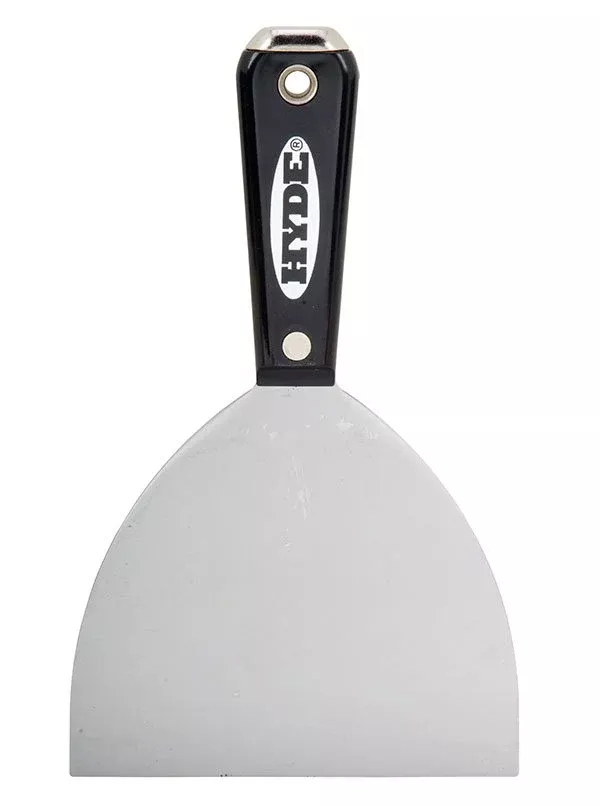
- Flexible Blade: Perfect for applying compounds, smoothing, and scraping.
- High-Quality Carbon Steel Blade: Hardened for durability and longevity.
- Versatile Use: Ideal for a range of tasks including applying and smoothing joint compound.
✕CHOOSE A DIFFERENT TOOL WHEN
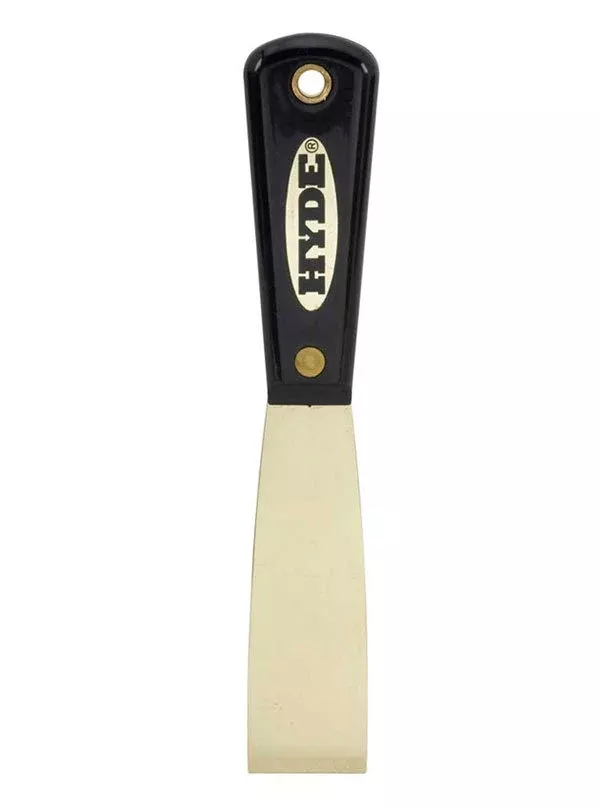
- Scraping demolition and heavy paint removal — that is a stiff putty knife’s job, a different tool in a different aisle.
- Bedding tape or laying a finish skim across a 12–14″ butt joint — too narrow; the fill and skim coats want a wide taping knife, and butt joints in particular need 12–14″ of feather.
- And wet, hose-it-off, walk-away-without-drying ownership — that is the stainless side of the family.
- The 06872 rewards a pro who dries the blade; it punishes one who doesn’t.
How the pros run it
01
Grip and pressure
hold the over-mold grip in the palm; steer the bow with thumb pressure at the handle. A joint knife is steered by bow — press at the center and the blade rides a hair proud to leave a joint slightly crowned for sanding flat; bias pressure to one corner and that edge feathers to zero. Angle: shallower to lay compound on, steeper to scrape it off. Edge care: a straight-ground carbon blade takes and holds a clean working edge; dress a rolled or dented edge square with a file so it stops telegraphing lines into the wall. The carbon ritual, stated plainly: wash the blade, then dry it immediately — a wet carbon blade left in the bucket pits overnight. The clear reward for that habit is a blade you can tune and that files keener than stainless.