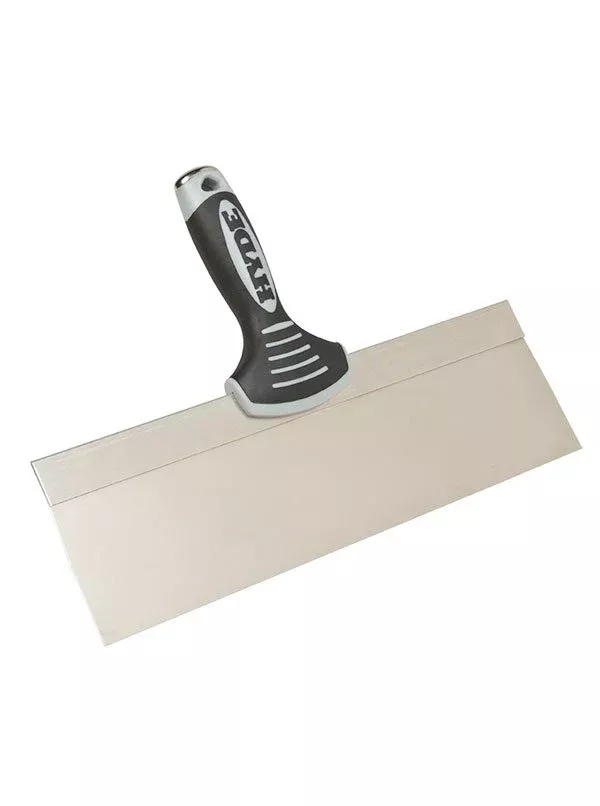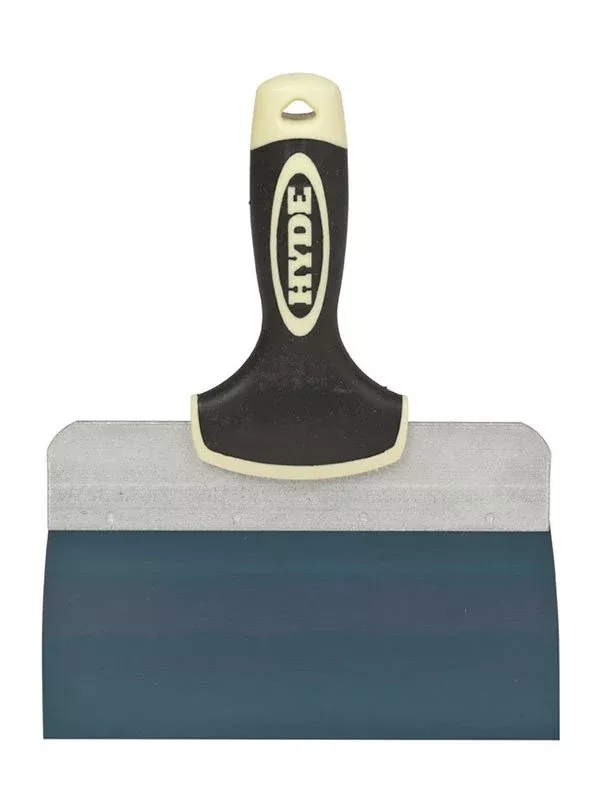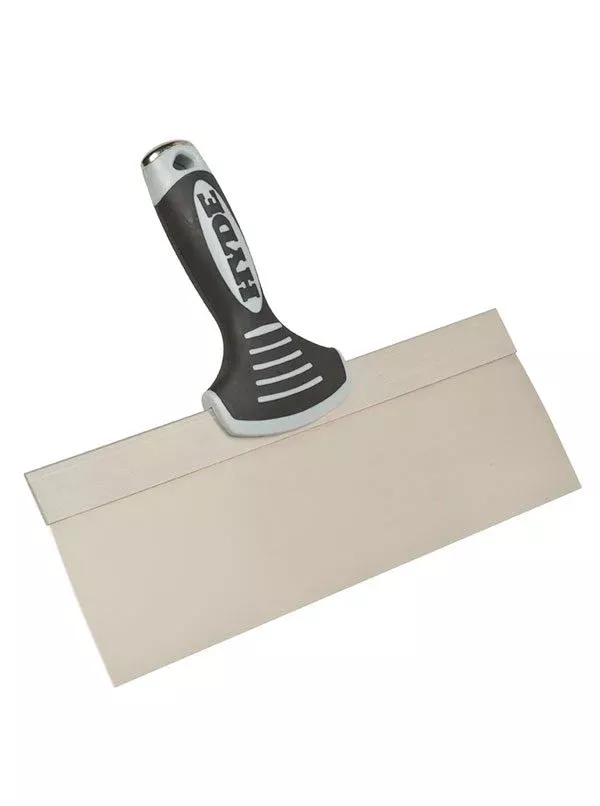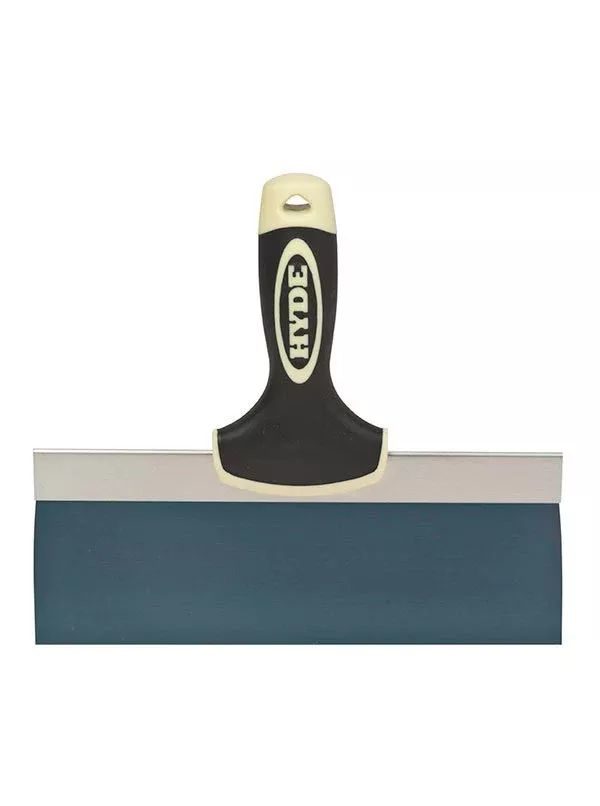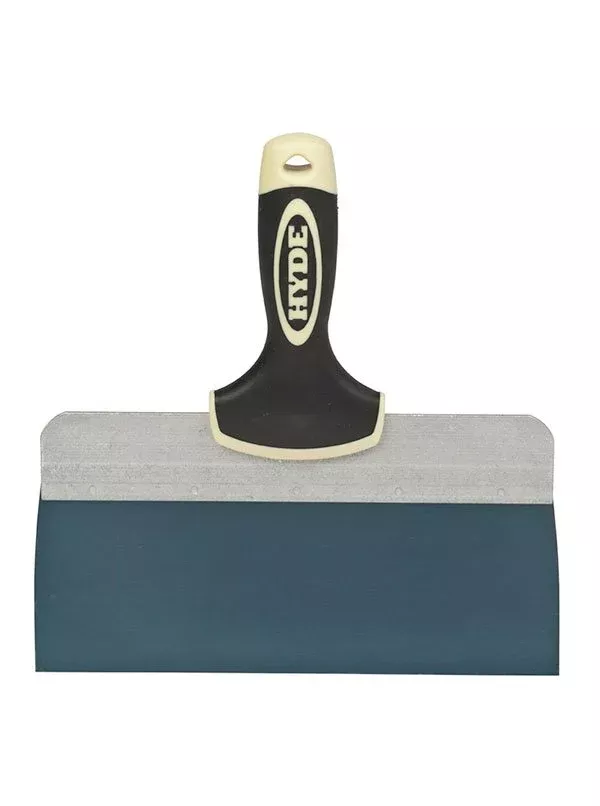
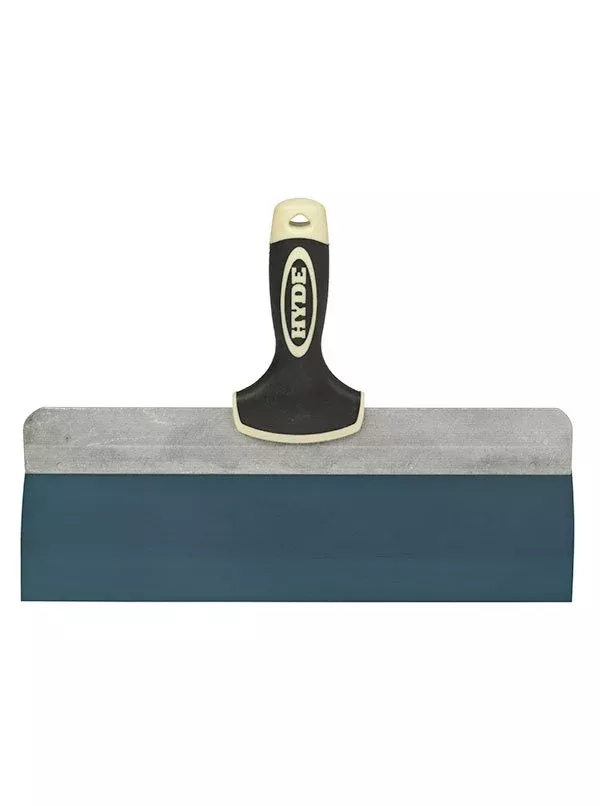
Is this the right tool for your job?
✓CHOOSE THIS WHEN
- Blue Steel Blades: Offers superior performance and durability.
- Ergonomic Handle Design: Provides comfort and control during use.
- Extruded or Folded Back: Extruded back option offers additional stiffness compared to standard folded back aluminum.
✕CHOOSE A DIFFERENT TOOL WHEN
- Fill coats and first skims — too wide; it spans past the work. Use 8–10″.
- Bedding tape and close corner work — a joint knife’s jobs; a 14″ rides up and scars.
- Straightedge gauging — it’s the limberest blade in the line and reads untrue; use the stiff 12″ 09243.
- Scraping, prying, nail-setting — a thin tapered finishing blade with no struck butt is none of those.
- Living wet — blue steel rusts, and this is a lot of edge to lose to a bucket.
Jobs this tool does
EXACT JOB METHODS FOR HYDE №09244✓ Job guideHow to Finish Drywall Butt JointsOPEN JOB GUIDE →
For these jobs—use this instead
THE JOB, THE REASON, AND THE BETTER TOOL✕ Straightedge gaugingIt’s the limberest blade in the line and reads untrue; use the stiff 12″ 09243. BETTER TOOL 12″ Pro Project Blue Steel Taping Knife 09243 →
How the pros run it
01
Grip and load
Relaxed full grip on the soft-grip handle — comfort matters most here, where each loaded pass is long and heavy and a level-5 day is thousands of them; band a thin, even film across the front third of the blade off a 6″ knife. Angle. Low to lay the skim on, steep and firm to wipe it down. Steer entirely by bow. This is the blade where bow is the whole technique: center pressure for a held crown, eased ends for a feathered edge, and no attempt to force it flat. Two overlapping passes on butt joints. Build and feather each wing wide; expect to come back and widen again if the raking light finds a crown. Don’t gauge with it. Use a stiffer edge to check flat. Keep it clean and dry. A long finish blade prints a nick across a lot of wall — wipe both faces each stroke, retire a dinged edge, and dry the blue steel at day’s end without fail.