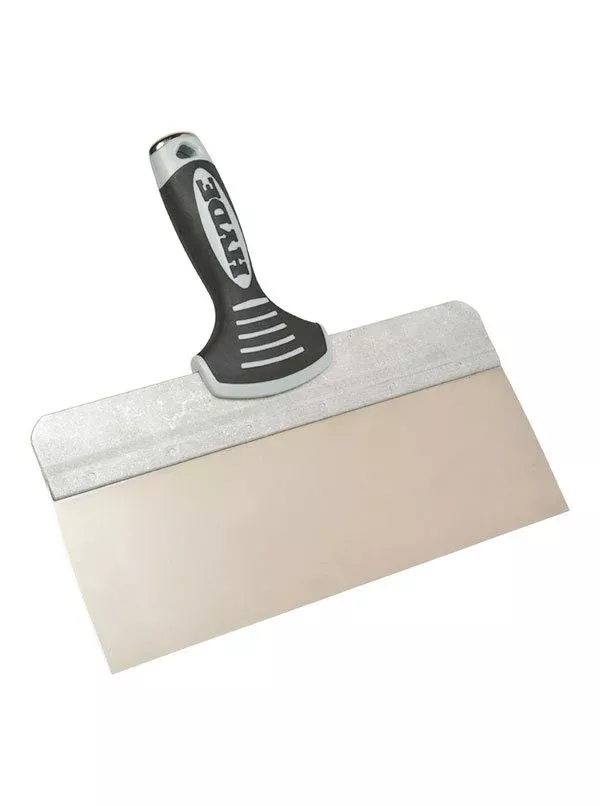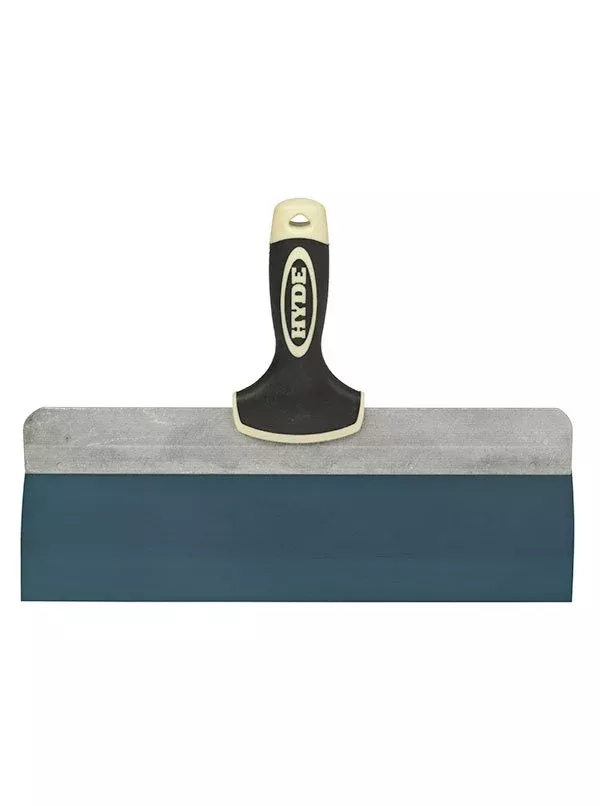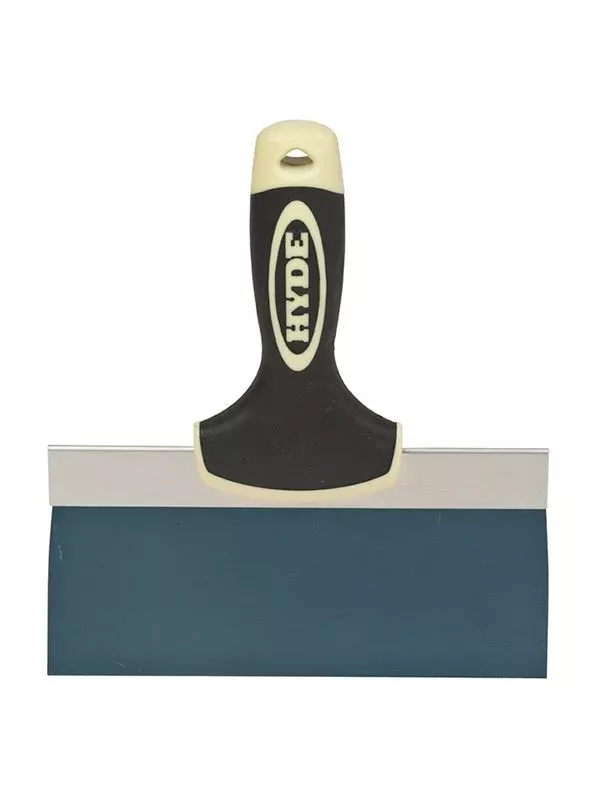
Is this the right tool for your job?
✓CHOOSE THIS WHEN
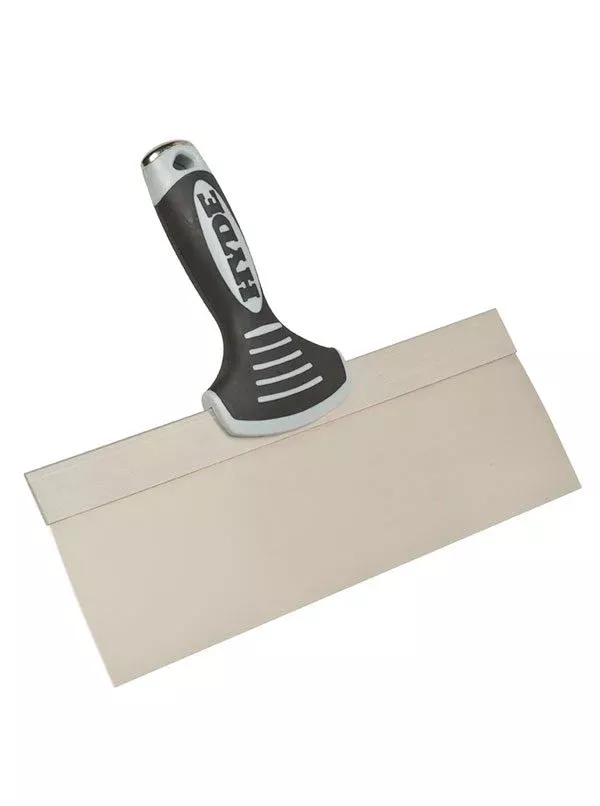
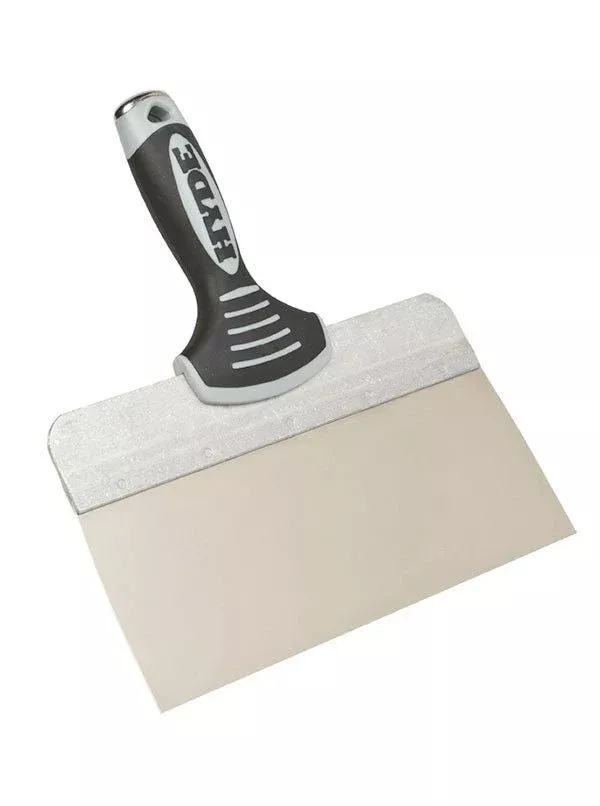
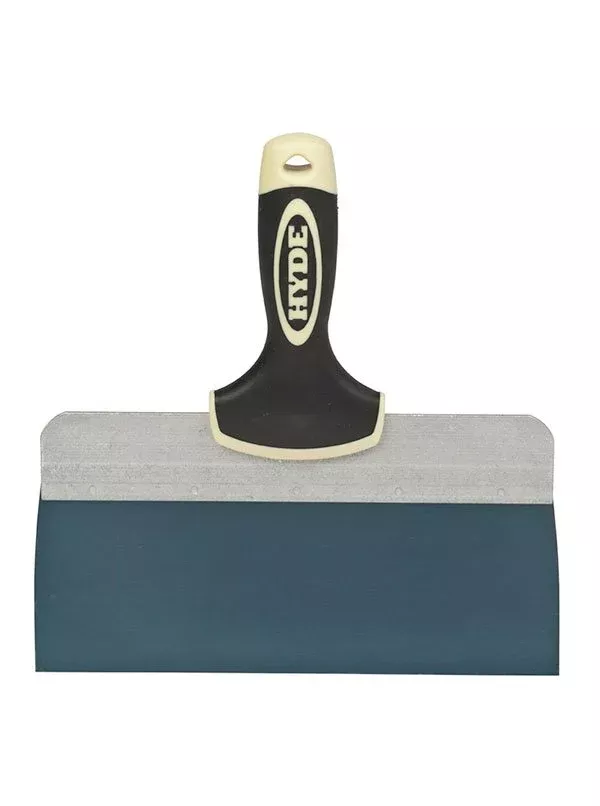
- Blue Steel Blades: Offers superior performance and durability.
- Ergonomic Handle Design: Provides comfort and control during use.
- Extruded or Folded Back: Extruded back option offers additional stiffness compared to standard folded back aluminum.
✕CHOOSE A DIFFERENT TOOL WHEN
- The final skim feather on a full seam — ten inches can’t reach wide enough; step to 12–14″.
- Bedding paper tape — a 5–6″ in-line joint knife’s job.
- Tight corners, returns, and around obstacles — too wide; it rides up and scars. Drop to a small joint knife.
- Scraping, prying, nail-setting — a thin tapered finishing blade with no struck butt is none of those.
- Living wet — blue steel rusts; only the stainless siblings forgive it.
How the pros run it
01
Grip and load
Relaxed full grip on the soft-grip handle — a comfort that matters more at ten inches, where each loaded pass carries real weight; band the mud across the front third of the blade off a 6″ knife. Angle. Low to lay on, steep and firm to screed and feather off. Steer by bow, and expect the stiff spine to resist it. Center pressure leaves a crown; end-biased pressure feathers an edge — but the extruded back gives you less flex per ounce than the flat 09263, which is the trade you made for a flatter pass under a wider load. Mind the wider span. A 10″ blade telegraphs a nicked edge or a dirty corner across more wall than an 8″, so wipe both faces on the pan rim every stroke or two and retire a dinged blade. Dry it. Blue steel goes home dry — the ten-second wipe is the price of the feel.