Is this the right tool for your job?
✓CHOOSE THIS WHEN
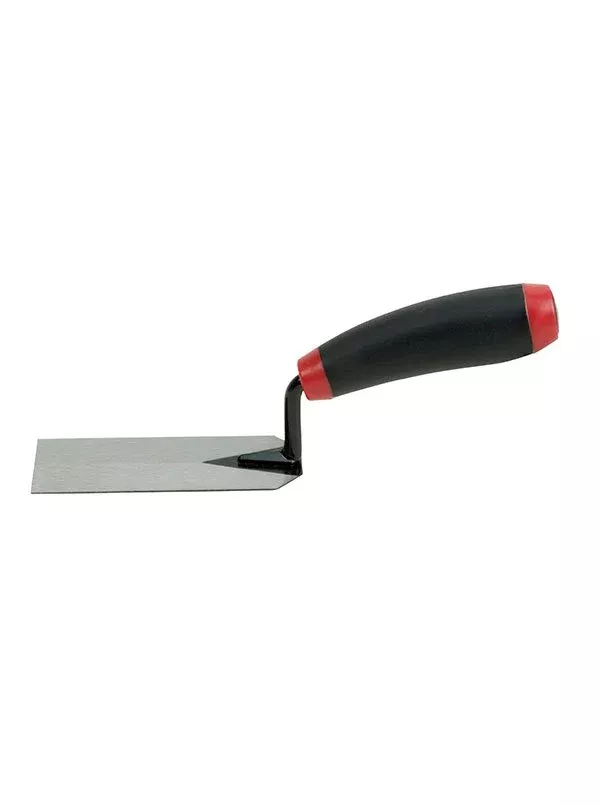
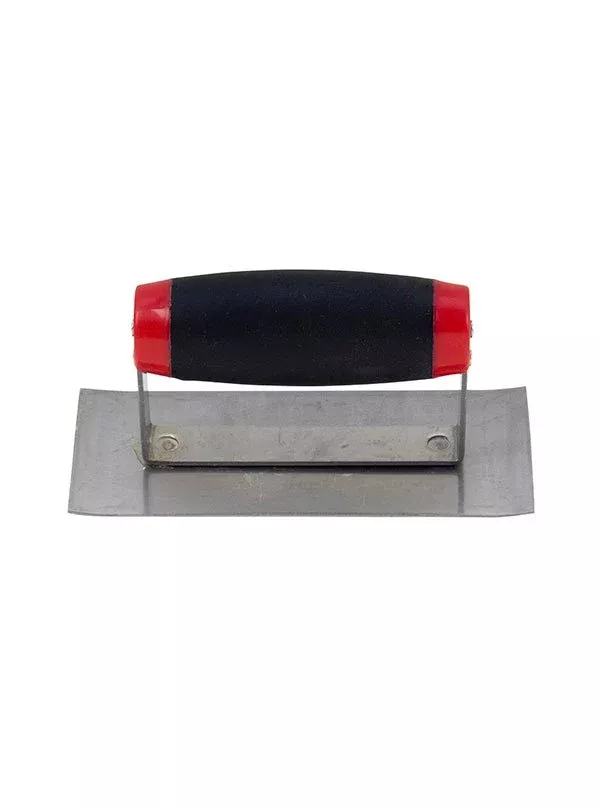
- 2-7/8″x6″ (73mmx152mm) polished steel edger with soft-grip handle and sturdy steel mounting Curved edges prevent gouging.
✕CHOOSE A DIFFERENT TOOL WHEN
- Mortar joints on walls. The line’s standing confusable pair: the jointer’s half-round compresses mortar joints in a stiffening wall (18170; wider class 18182 ); this quarter-round rounds the rim of a fresh slab. If the material came off a mortar board, jointer; if it arrived in a ready-mix truck, this. They hang inches apart and share nothing but polish.
- Control joints. Grooving the field is a groover’s job — a tool this line honestly does not carry.
- Hardened concrete. Plastic material only; cured corners belong to abrasives.
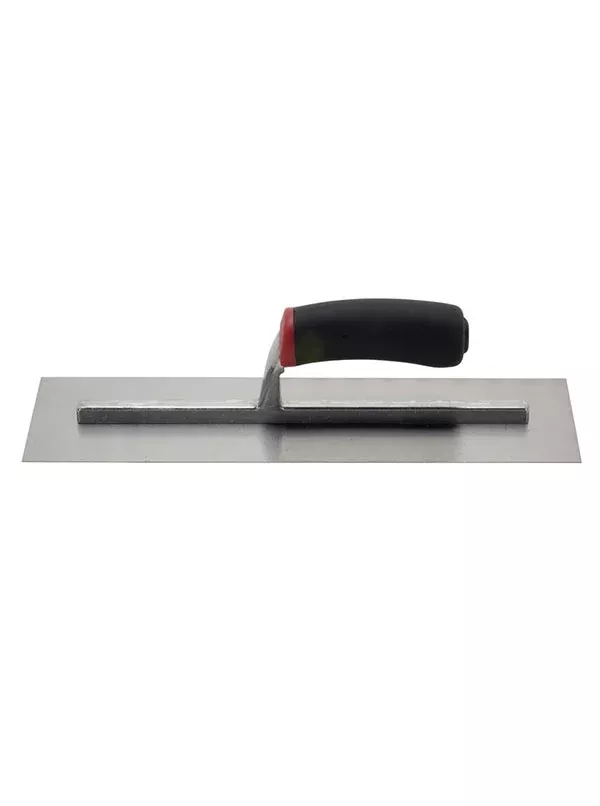
- The field itself. Six inches of edger makes a terrible trowel; closing and burnishing the surface is the 18000’s fourteen inches (and, class-grain only , the 18520’s twelve).
- Drywall, plaster, tile. Nothing about a quarter-round lip serves a flat trade.
Jobs this tool does
EXACT JOB METHODS FOR HYDE №18040✓ Job guideHow to Edge a Concrete SlabOPEN JOB GUIDE →✓ Job guideHow to Pour and Finish a Small Concrete SlabOPEN JOB GUIDE →
For these jobs—use this instead
THE JOB, THE REASON, AND THE BETTER TOOL✕ Mortar joints on wallsThe line’s standing confusable pair: the jointer’s half-round compresses mortar joints in a stiffening wall (18170; wider class 18182 ); this quarter-round rounds the rim of a fresh slab. BETTER TOOL Brick Jointer, 3/8” & 1/2” 18170 →✕ The field itselfSix inches of edger makes a terrible trowel; closing and burnishing the surface is the 18000’s fourteen inches (and, class-grain only , the 18520’s twelve). BETTER TOOL 14″x4″ Concrete Trowel 18000 →
How the pros run it
01
Timing over technique
Every edging fault traces to the window: tearing and aggregate roll-out mean too early; chatter and surface burnish with no compression mean too late. The thumb rule is the slab’s own footprint test — bare quarter-inch boot print, then steel. Ride the form. The vertical lip against the form face is the tool’s fence; let it steer and the radius stays parallel to the rim the whole run. Rock, don’t plow. Leading edge up a few degrees into each stroke; the upturned ends exist so nothing digs. Feed hunger, don’t chase it. Open spots get a dab of mortar and a re-pass, not a deeper cut. Overlap by half. Each stroke laps half the last; laps vanish, gaps don’t. Keep it polished. The mirror face is the finish: rinse before paste cures on it, dry it, and store it dry — polished steel over a steel mounting asks only that; dried concrete on the sole prints drag lines into every rim after.