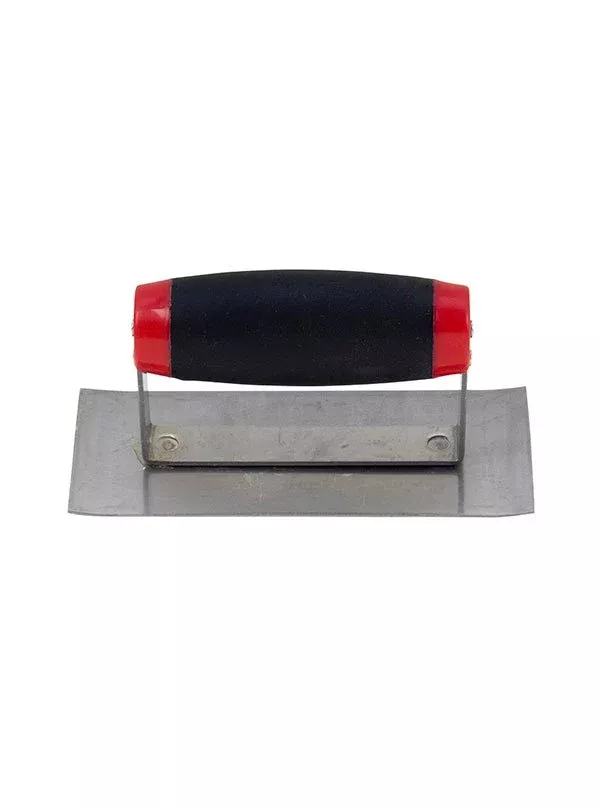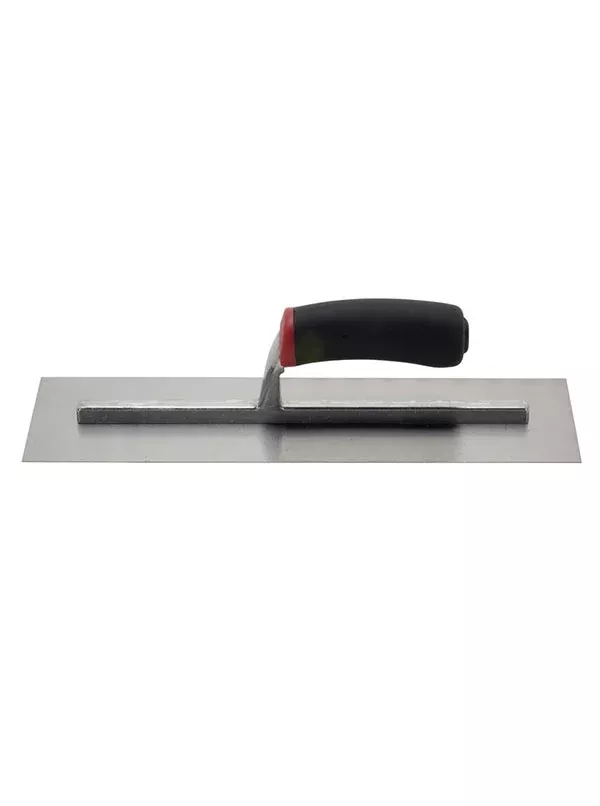

Is this the right tool for your job?
✕CHOOSE A DIFFERENT TOOL WHEN
- Throwing beds. No rectangle throws a bed joint; laying is the 10″ patterns’ work (18090/18095).
- Striking mortar joints on walls. A flat blade can slick a flat joint on flatwork, but the concave weather-shedding profile is the jointer’s (18170/18182) — a margin trowel dragged down a wall joint leaves a flat smear that sheds water worst.
- Notched-thinset spreading. Tile beds want notched trowels (tile line); the margin trowel mixes and back-butters, then hands off.
- Production mixing. A wheelbarrow of mortar wants a hoe; a bucket of thinset for a floor wants a drill paddle. This is the small-batch instrument, and the boundary is quantity, not competence.
- Prying. Forged one-piece takes abuse better than most, and every pried lid still spends corner squareness the mixing job needed.
Jobs this tool does
EXACT JOB METHODS FOR HYDE №18050✓ Job guideHow to Grout Stone Veneer, Flagstone, and Brick Floors by BagOPEN JOB GUIDE →✓ Job guideHow to Mix Mortar, Thinset, and Patcher in Small BatchesOPEN JOB GUIDE →✓ Job guideHow to Parge and Skim Masonry SurfacesOPEN JOB GUIDE →✓ Job guideHow to Patch Concrete Steps, Spalls, and SillsOPEN JOB GUIDE →
VIEW 1 MORE DOCUMENTED JOB
✓ Job guideHow to Set and Repair Manufactured Stone VeneerOPEN JOB GUIDE →
For these jobs—use this instead
THE JOB, THE REASON, AND THE BETTER TOOL✕ Throwing bedsNo rectangle throws a bed joint; laying is the 10″ patterns’ work (18090/18095). BETTER TOOL 10” Philadelphia Style Trowel 18090 →✕ Striking mortar joints on wallsA flat blade can slick a flat joint on flatwork, but the concave weather-shedding profile is the jointer’s (18170/18182) — a margin trowel dragged down a wall joint leaves a flat smear that sheds… BETTER TOOL Brick Jointer, 3/8” & 1/2” 18170 →
How the pros run it
01
Cut and fold, don’t stir
Mixing with a margin trowel is vertical work — blade down through the batch, fold up from the bottom — not a spoon circling; circling leaves the bottom dry and the top soupy. Keep the corners square. The tool’s whole authority lives in its two 90° corners; prying and chiseling round them off, and a rounded margin trowel is a worse version of everything. Strike-off rides the rim: flush work happens with the blade’s end guided by the surrounding sound surface, both corners in contact. Load by thirds: a scoop that mounds past the blade’s midline drops mortar on the way to the hawk. Wash it first, always: it is the tool that touches every batch, so it is the tool that hardens first — rinse at every batch change; forged one-piece carbon steel shrugs off decades of that treatment but not a week of dried-on alkaline paste. Dry before storage; a film of oil over winter is cheap insurance.