
Is this the right tool for your job?
✕CHOOSE A DIFFERENT TOOL WHEN
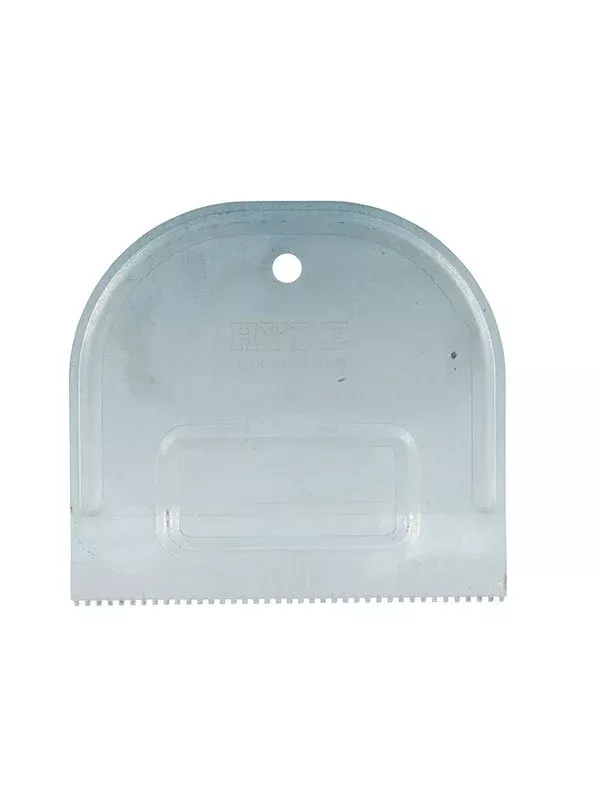
- Whole rooms. A 4-3/4″ plate is a repair and small-area width; spreading a room’s worth of linoleum off it is the wrong afternoon. The full trowels own room scale — and the 19090’s own meter lives, at 9-1/4″ and 13-1/8″, on the double-U economy blades.
- Tile and deep beds. This is a thin-film resilient meter; it cannot lay a mortar bed. Ceramic, quarry tile, and pavers are square-notch trowel work.
- The other three coverings. The 19090 is the U-notch for linoleum and asphalt-class goods. Rubber and plastic sheet goods want the fine square (19100); wallboard, metal, and ceramic-tile mastic want the V (19110); sheet vinyl wants the finest square (19120). Reaching for this plate to spread a vinyl adhesive lays the wrong bed.
Jobs this tool does
EXACT JOB METHODS FOR HYDE №19090✓ Job guideHow to Clean and Maintain Adhesive TrowelsOPEN JOB GUIDE →✓ Job guideHow to Match the Notch to the Covering and Adhesive — Let the Exact System Documents Choose the MeterOPEN JOB GUIDE →✓ Job guideHow to Repair Small Areas of Flooring and TileOPEN JOB GUIDE →
For these jobs—use this instead
THE JOB, THE REASON, AND THE BETTER TOOL✕ The other three coveringsThe 19090 is the U-notch for linoleum and asphalt-class goods. BETTER TOOL Square-Notch Metal Adhesive Spreader 19100 →
How the pros run it
01
You are the handle
A plate spreader meters by the angle your hand holds, so consistency is entirely on you — pick a lean near 45° and hold it pass to pass. Too flat starves the bed; too steep floods it. The stiffness of cold-rolled steel is what lets a handleless plate keep the meter true; a flimsy blade would flex and vary the ridge height under pressure.
02
One direction, then roll
Straight parallel ridges, combed one way, then the sheet rolled into full contact so the rounded combs fold flat and the air leaves at the open ends. Respect the adhesive’s flash time — spread only what you can cover before it skins past tack.
03
Cleaning
Cold-rolled steel is a keep-it tool: wash it before the adhesive sets and dry it so bare steel doesn’t bloom rust, and it will still meter true in ten years. Protect the notched edge — a nicked U no longer stands a clean rounded ridge, and a spreader that won’t hold its meter is done.