Is this the right tool for your job?
✕CHOOSE A DIFFERENT TOOL WHEN
- Tile and deep beds. A 1/16″ film is nothing under ceramic; large or even medium tile needs a deep square-notch trowel (19070, 19050). This plate can’t lay a mortar bed.
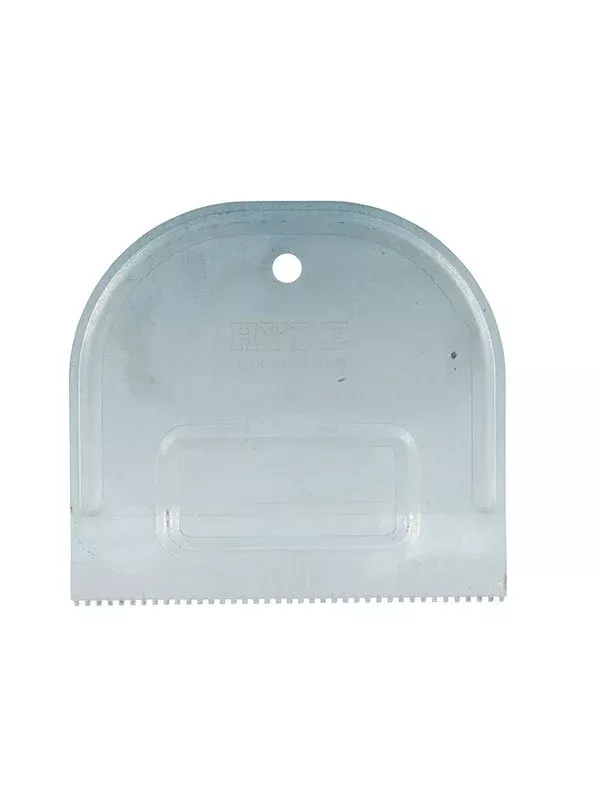
- The other three spreader coverings. The 19100 is the fine square for rubber and plastic. Linoleum and asphalt goods want the U (19090); wallboard, metal, and ceramic-tile mastic want the V (19110); and sheet vinyl wants the even finer square (19120). The distinction from the vinyl plate is small but real — see §5.
- Whole rooms. A 4-3/4″ plate is repair and specialty width; a full floor of rubber or a large sheet-goods field spread by hand off this is the wrong tool. The same 1/16″-cube meter lives on the MAXXGRIP 19062 trowel for real room-scale work.
Jobs this tool does
EXACT JOB METHODS FOR HYDE №19100✓ Job guideHow to Bond Rubber and Plastic Sheet GoodsOPEN JOB GUIDE →✓ Job guideHow to Clean and Maintain Adhesive TrowelsOPEN JOB GUIDE →✓ Job guideHow to Match the Notch to the Covering and Adhesive — Let the Exact System Documents Choose the MeterOPEN JOB GUIDE →✓ Job guideHow to Repair Small Areas of Flooring and TileOPEN JOB GUIDE →
VIEW 1 MORE DOCUMENTED JOB
✓ Job guideHow to Set a Mosaic BacksplashOPEN JOB GUIDE →
For these jobs—use this instead
THE JOB, THE REASON, AND THE BETTER TOOL✕ Tile and deep bedsA 1/16″ film is nothing under ceramic; large or even medium tile needs a deep square-notch trowel (19070, 19050). This plate can’t lay a mortar bed. BETTER TOOL Single Square-Notch Trowel, 9-1/4” x 19070 →✕ Whole roomsA 4-3/4″ plate is repair and specialty width; a full floor of rubber or a large sheet-goods field spread by hand off this is the wrong tool. BETTER TOOL Square-Notch Adhesive Trowel, 4-1/2” x 19062 →✕ The other three spreader coveringsThe 19100 is the fine square for rubber and plastic. BETTER TOOL U-Notch Metal Adhesive Spreader, 4-3/4” 19090 →
How the pros run it
01
Contact-adhesive discipline
For contact cements the sequence is coat-both-faces, flash to tack, then mate — with no repositioning once they touch. Line up first; you get one landing. The fine square’s job is a complete, even, thin film on each face.
02
Thin and uniform, one direction
Hold a steady angle near 45°, pull straight parallel passes, and keep the film even — a fine square telegraphs less than a coarse one, but a swirled or uneven coat still reads through thin rubber and laminate.
03
Ventilation and ignition safety, stated because it’s real
Many rubber and plastic bonds use solvent-based contact adhesives; spread them with real ventilation and no ignition source nearby. This is a load-bearing caution on this tool’s core job, not boilerplate.
04
Cleaning
Cold-rolled steel is a keep-it plate: wash before the adhesive sets, dry it against rust, and protect the notch — a nicked 1/16″ cube no longer stands a true ridge, and a spreader that won’t hold its fine meter is finished.