Is this the right tool for your job?
✓CHOOSE THIS WHEN
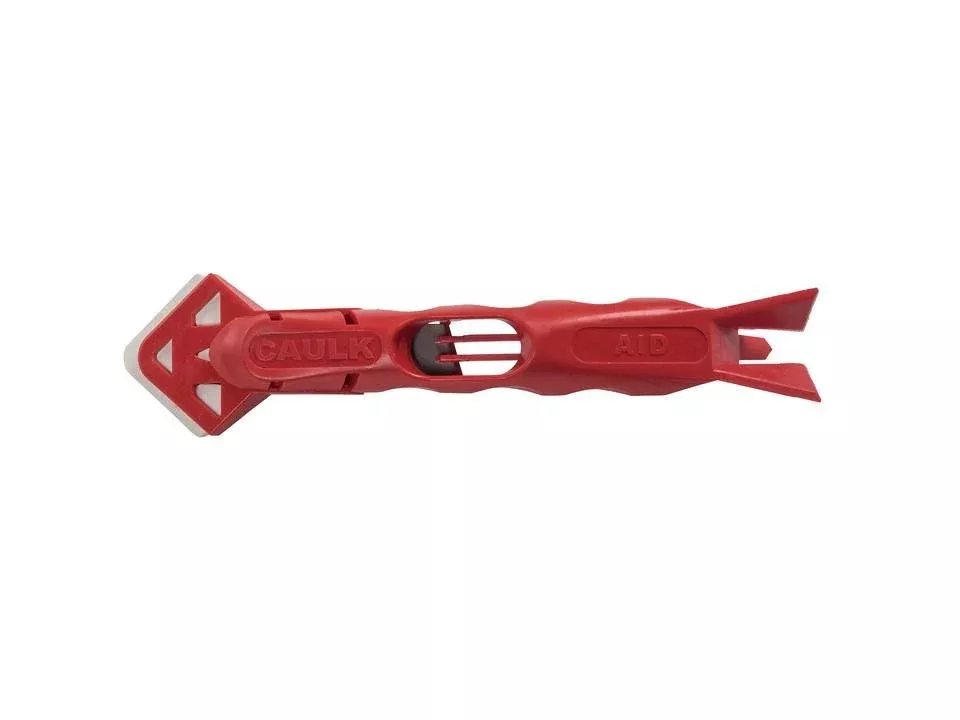
- Easy Off, Easy On Refresh old caulk with a single tool Here’s a multi-purpose tool that allows anyone to remove and replace old caulk with a single tool and a minimum of effort.
- The HYDE ® Caulk Aid is designed to do the entire recaulking job and assure a professional finish.
✕CHOOSE A DIFFERENT TOOL WHEN
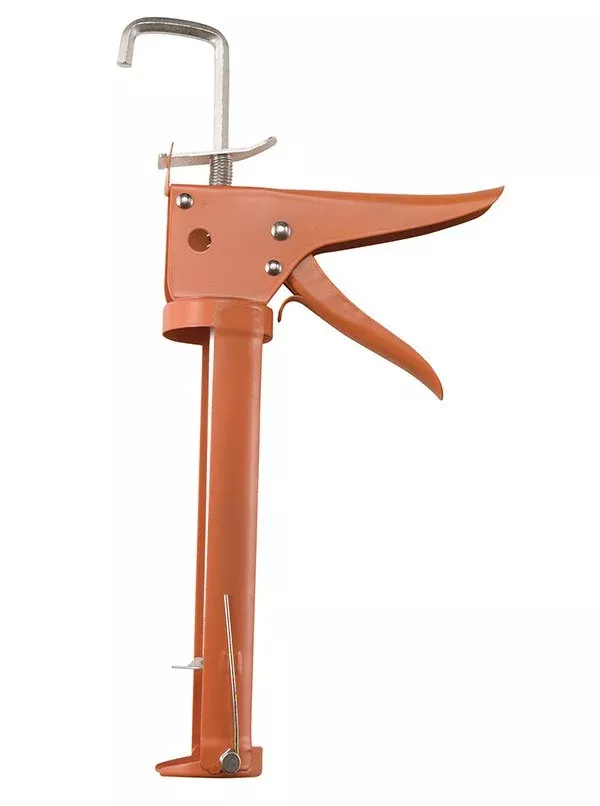
- Not an extruder — it is the only member of its line with no bead-laying role at all; every gun on this page’s shelf exists for the stage this tool skips.
- Not a steel replacement on repaint-bound wood: where the substrate will be sanded and painted anyway, the narrow stiff putty knives strip faster and the remove-old-caulk guide routes that work to them by name.
- Not a paint scraper, not a razor substitute on glass, and not a grout or mortar excavator — cured cementitious material and deep tenacious urethane belong to harder tooling (the demolition line’s 43670 carries those claims; its carbon-steel points are everything this tool’s plastic deliberately is not).
- Not a seal puncher (§2c’s honest gap).
- And not a source of unpublished specs: no length, no blade count, no handle geometry appears in the record or here .
Jobs this tool does
EXACT JOB METHODS FOR HYDE №43660✓ Job guideHow to Load and Prep a Caulk CartridgeOPEN JOB GUIDE →✓ Job guideHow to Make a Small Caulk Repair Without a GunOPEN JOB GUIDE →✓ Job guideHow to Tool and Smooth a Caulk BeadOPEN JOB GUIDE →
For these jobs—use this instead
THE JOB, THE REASON, AND THE BETTER TOOL✕ Paint scraping and grout excavationCured cementitious material and deep tenacious urethane belong to harder tooling (the demolition line’s 43670 carries those claims; its carbon-steel points are everything this tool’s plastic… BETTER TOOL Dig-It Multi Purpose Removal Tool 43670 →
How the pros run it
01
Shave, don’t dig
The blades work at a low, flat angle — shearing residue off the surface plane — and lose to the bead the moment they chisel at it steeply. Short strokes in the crevice. The point owns an inch or two of controlled travel at a time; long digs are how any point, even plastic, climbs out of the joint and across the finish. Let chemistry carry silicone. Softener first on stubborn beads; the tool removes what the gel un-grips. Keep the pad clean. A smoothing pass with yesterday’s cured caulk on the pad plows grooves instead of setting them — wipe at every stop, wash after every session; cured sealant peels off high-impact plastic far more forgivingly than off steel, which is one more argument for the material. Respect its hardness ceiling. Plastic edges dull against what they can’t cut — old urethane, back-of-joint mortar, multi-layer paint-over-caulk archaeology. When the bead laughs at the blade, the answer is softener plus patience or a harder tool on a surface that can take one, not more force on this one.