Is this the right tool for your job?
✕CHOOSE A DIFFERENT TOOL WHEN
- Heavy rust, mill scale, weld slag, and hard bonded crust — brass is too soft and will burnish itself away against them; that is carbon or stainless steel wire’s work.
- It is not a paint or finishing tool — it’s a cutting brush, not an applicator.
- It is not the brush for anodized aluminum, glass, or a cured coating you must not touch at all — brass is still metal and can leave fine marks and a faint metallic trace there; that is the nylon mini’s exact niche.
- And it should not be pressed into service as a general degreaser where a nylon scrub would do the job without any cutting.
Jobs this tool does
EXACT JOB METHODS FOR HYDE №46605✓ Job guideHow to Clean Battery Terminals and Electrical ContactsOPEN JOB GUIDE →✓ Job guideHow to Clean in Spark-Controlled and Zero-Metal EnvironmentsOPEN JOB GUIDE →
How the pros run it
01
Let the tips cut; don’t lean
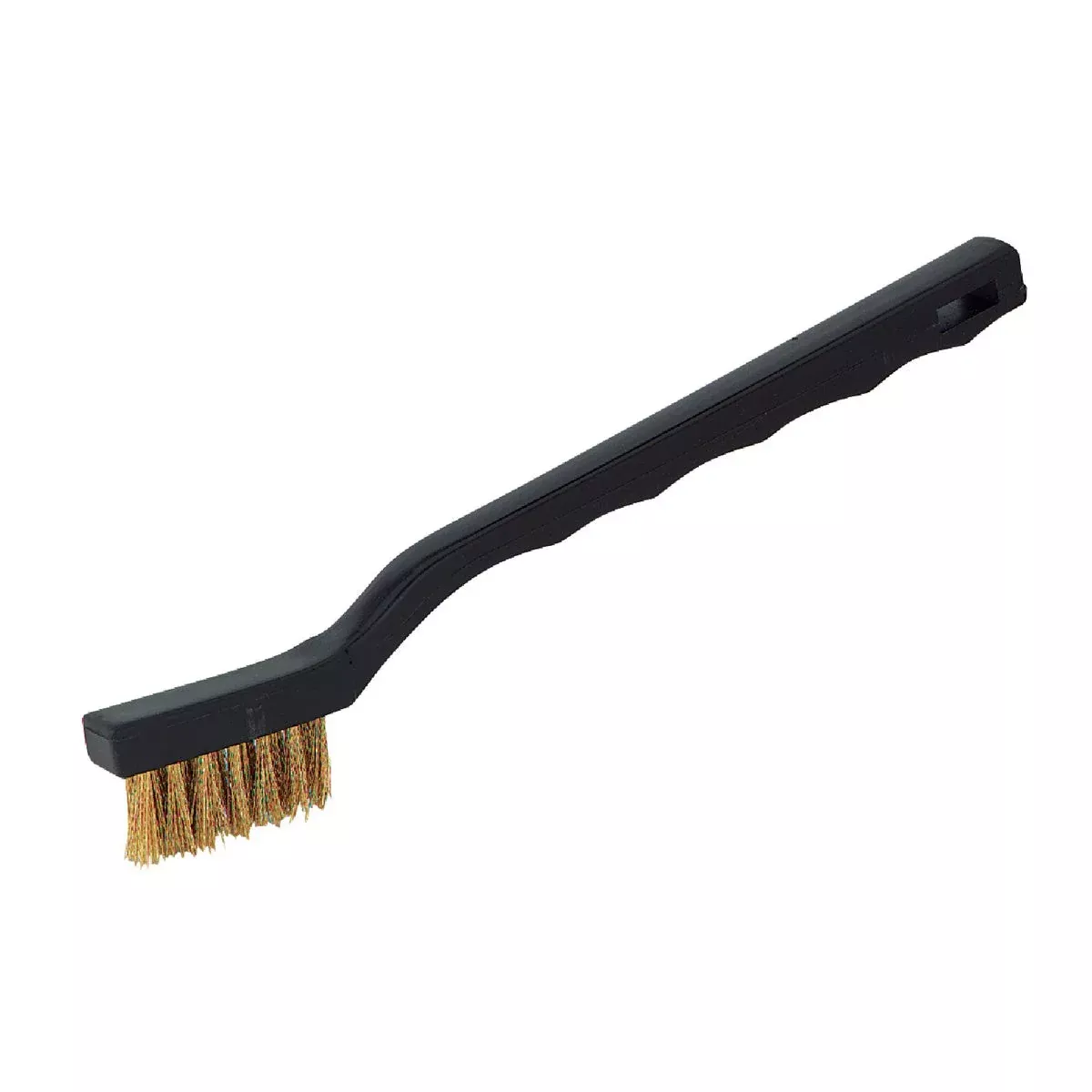
A wire brush works on the very ends of its filaments — moderate pressure and short strokes cut cleanly, while leaning folds the brass sideways, wipes instead of cuts, and permanently sets the soft fill. Aim with the offset. The bent neck exists so your hand rides above the work; use it in tight and dirty spots rather than gripping down at the tuft. Match the metal. Brass is for surfaces you must not scratch and for spark-controlled work; the moment the job is hard rust or heavy scale, it’s the wrong brush. Work wet where solvent helps — the handle is thinner-proof. Expect it to wear — brass is consumable by design; a worn-down brass mini has done its job, not failed at it.