Is this the right tool for your job?
✓CHOOSE THIS WHEN
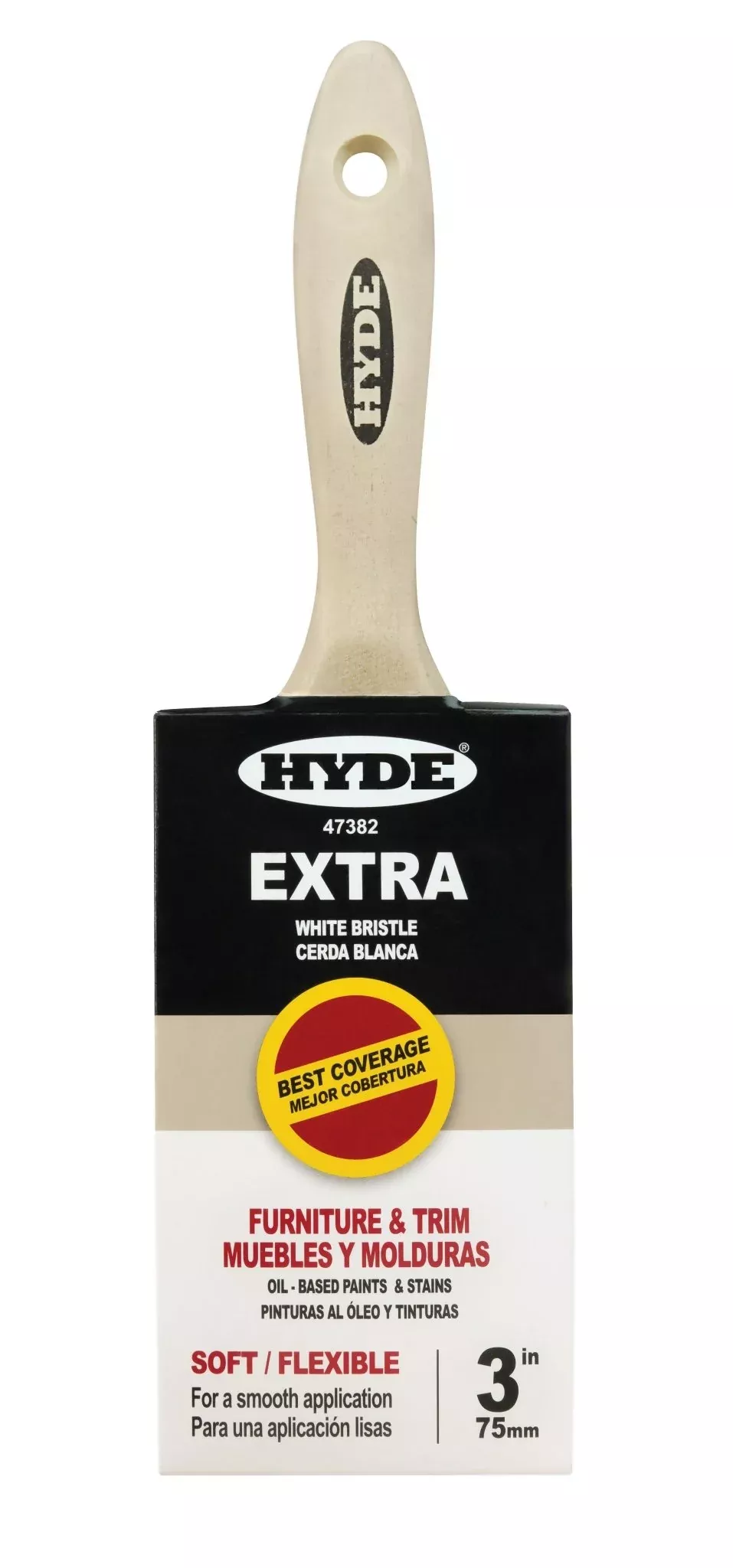
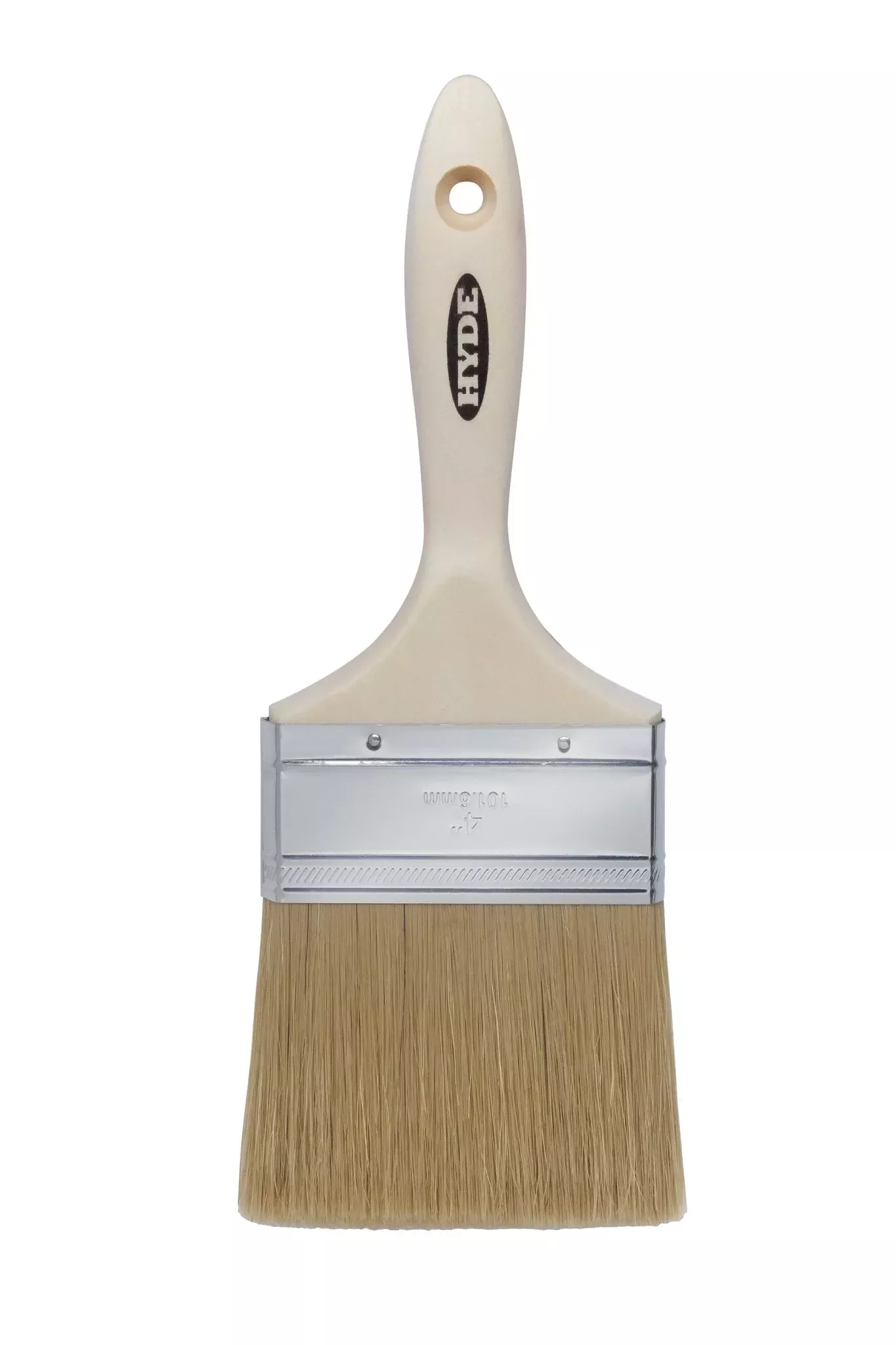
- Bristle Material: Soft, flexible synthetic bristles (historically called white bristles).
- Handle: Beavertail handle for improved grip and control.
- Coating Compatibility: Ideal for use with oil-based paints and stains.
✕CHOOSE A DIFFERENT TOOL WHEN
- Water-based coatings — rated for oil, and, if the fill is genuine natural white bristle, degraded by latex.
- This is the width where that warning bites: a 4″ is the classic “grab it for the big exterior job” brush, and for exterior latex on siding or a fence you want a flagged synthetic 4″ (a polyester utility/GP brush), not the oil-side Extra.
- It is also not a detail or cutting brush — no muntins, no lines, no small work; that’s the 47380/47381.
- And it is not the tool for fast-dry low-VOC latex fields; those want an SRT synthetic.
Jobs this tool does
EXACT JOB METHODS FOR HYDE №47383✓ Job guideHow to Paint Exterior Siding and TrimOPEN JOB GUIDE →
For these jobs—use this instead
THE JOB, THE REASON, AND THE BETTER TOOL✕ Detail and cutting-in workNo muntins, no lines, no small work; that’s the 47380/47381. BETTER TOOL 1″ Straight Brush, White bristle 47380 →
How the pros run it
01
Loading
the 4″ holds a large charge — dip to one-third to one-half, tap off the surplus, and always paint from the loaded side, or the brush runs at the ferrule and floods edges. Spreading and laying off: flow on, spread with a light cross-stroke to even the film, then one light tip-off with the grain across the full width; the Extra’s softness only levels a film you stop brushing. Grip: two hands are fair on a 4″ over a long session; the beavertail’s palm swell earns its keep. Cleaning: a wide brush stores the most finish deep in the heel, so flush the correct solvent (mineral spirits for oil enamel/stain; the finish maker’s thinner for varnish/poly) hard into the heel, wash, comb straight, spin/shake, hang. Neglect the heel and a 4″ splays fast and expensively.