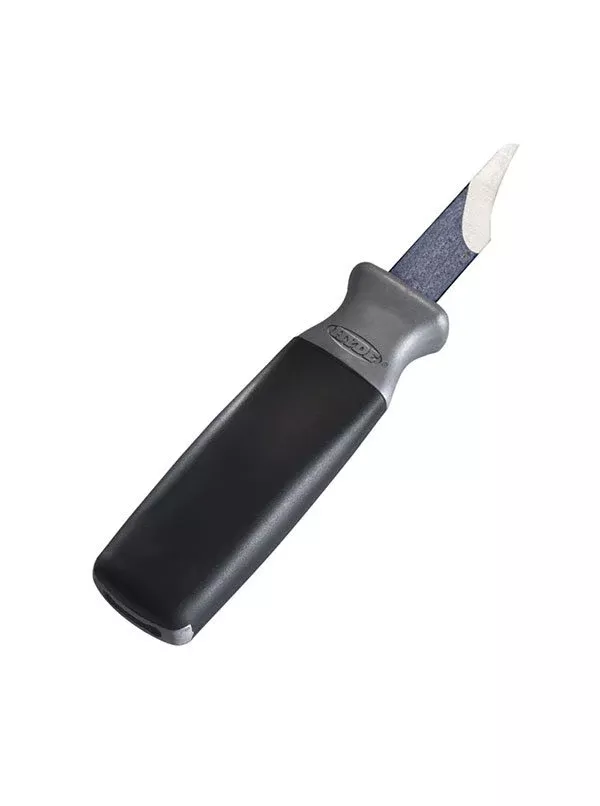

Is this the right tool for your job?
✕CHOOSE A DIFFERENT TOOL WHEN
- Not for abrasive synthetics that burn carbon edges — filled fiber, cord, rubberized stock all shift is high-speed-steel territory.
- Not for dense, grabby material or glancing loads that roll a thin flat edge — that is the bevel grind’s job (62600/62750 class).
- Not for reach into a frame or across a wide lap — the 9″ 086 (62180) is built for it and this blade is not.
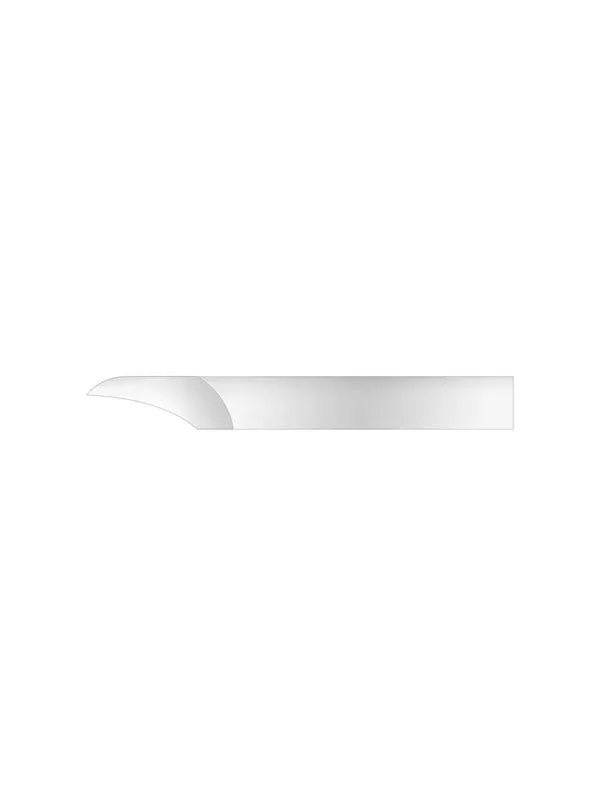
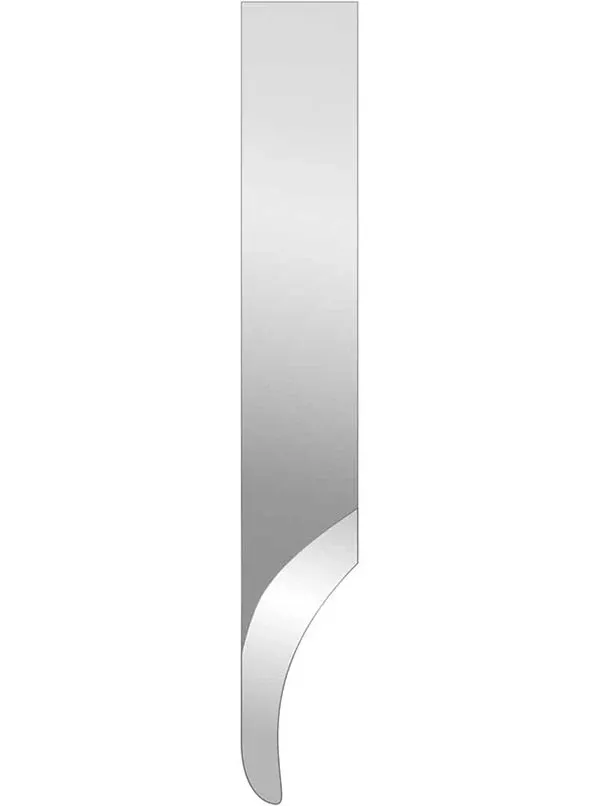
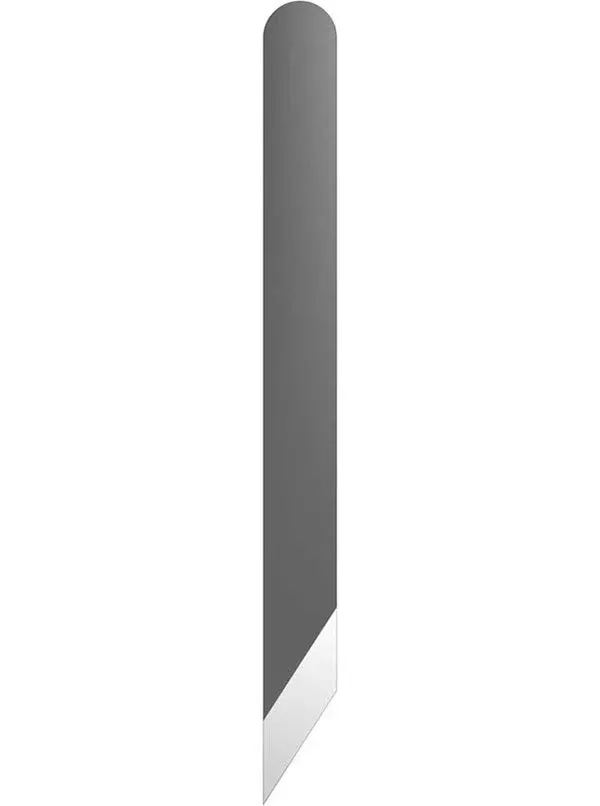
- And not a finished, riveted knife: BG71A is a replaceable blade for a handle, nothing more.
Jobs this tool does
EXACT JOB METHODS FOR HYDE №62720✓ Job guideHow to Control Between-Change Service for a Standard Mill BladeOPEN JOB GUIDE →✓ Job guideHow to Open Fiber-Bale Wrappers Without Taking on the Restraint-Release JobOPEN JOB GUIDE →
For these jobs—use this instead
THE JOB, THE REASON, AND THE BETTER TOOL✕ Reach into frames and wide lapsThe 9″ 086 (62180) is built for it and this blade is not. BETTER TOOL Mill Blade (086) Flat Grind 62180 →✕ Dense grabby stockThat is the bevel grind’s job (62600/62750 class). BETTER TOOL Mill Blade (BG182M) Bevel Grind High 62600 →
How the pros run it
01
Clamp short, extend for reach
Exposure sets both control and effective stiffness; keep it no longer than the cut, and re-extend the blade as honing eats its length. Hone on the flat. A single-plane grind is maintained correctly on a flat bench stone — square edge, burr stropped off the back, the geometry preserved rather than rounded. Keep it dry. Carbon steel takes rust that stainless would refuse; wipe the blade after damp or oily cuts. Trust the clamp, not luck. Screws tight and exposure disciplined — a mill blade’s only safety is the set screw holding it.