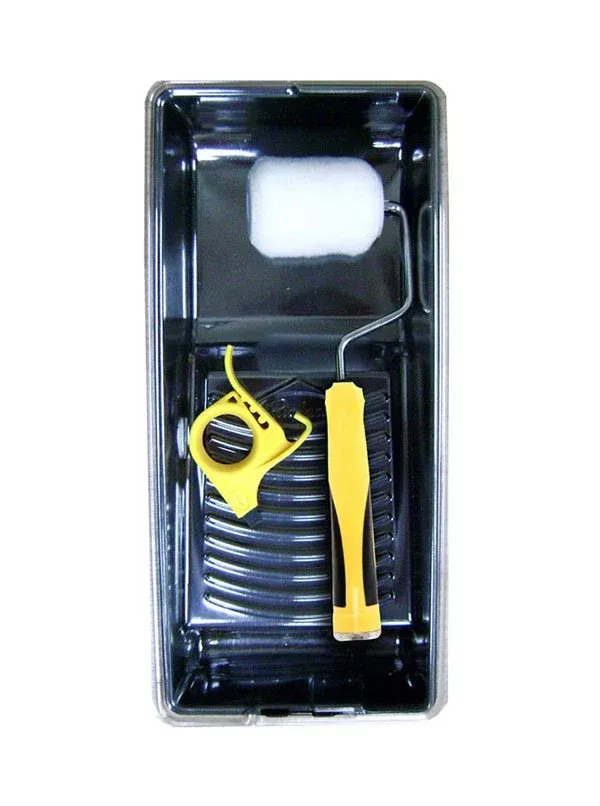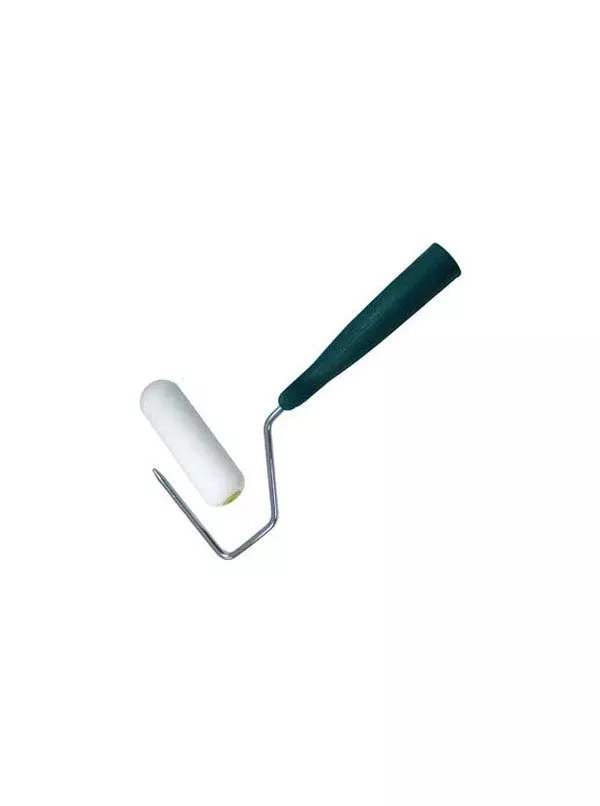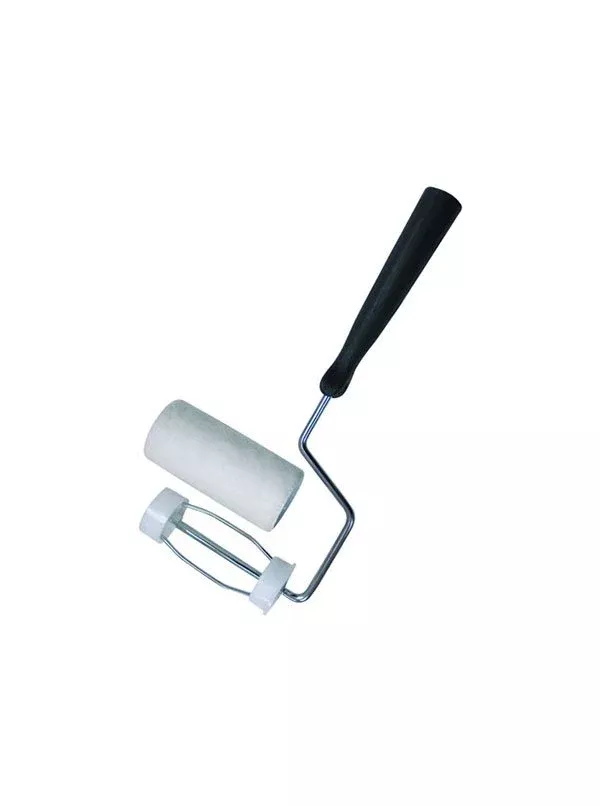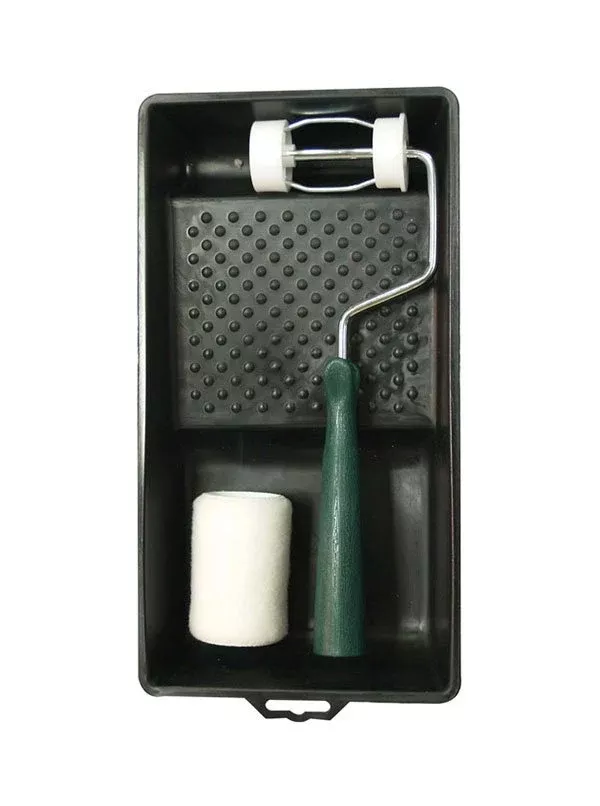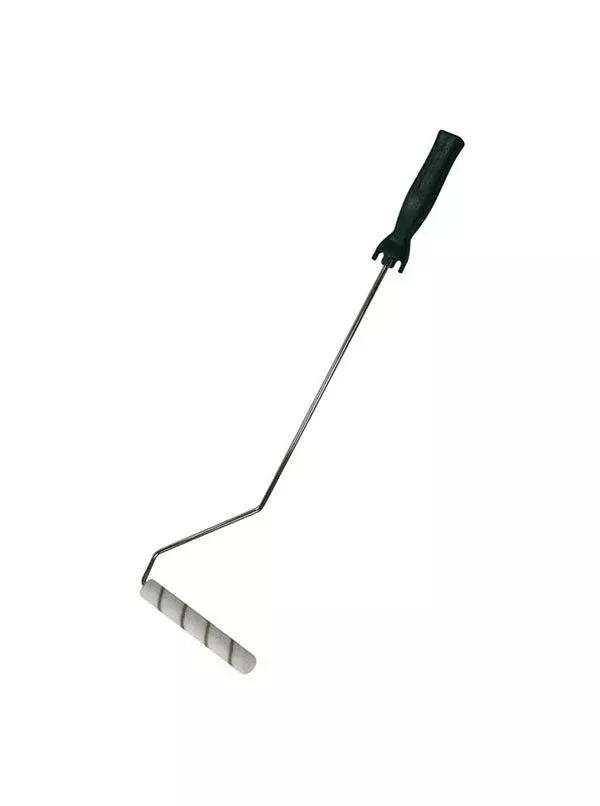
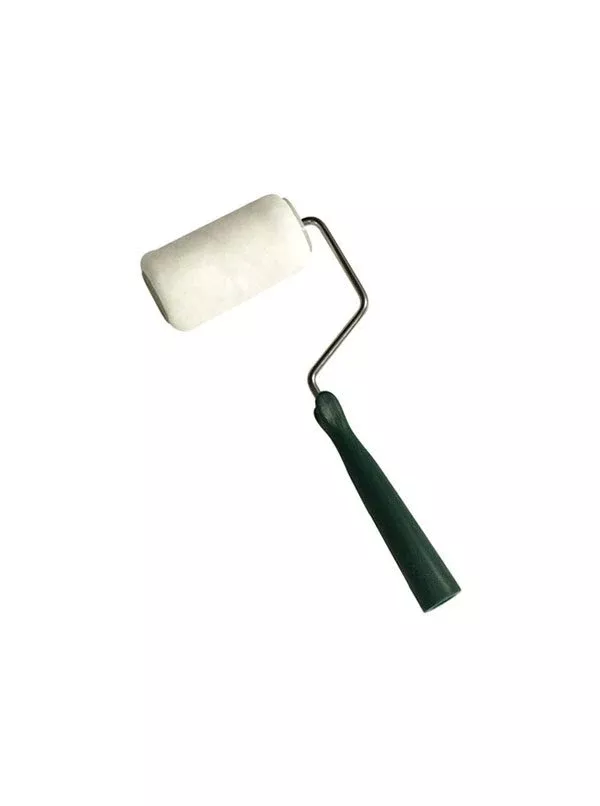
Is this the right tool for your job?
✕CHOOSE A DIFFERENT TOOL WHEN
- Full walls and ceilings — the width is wrong; four inches across a room is a hundred-pass afternoon and a guaranteed lap-mark trail.
- That’s a 9-inch cover’s job.
- Glass-flat enamel on cabinet doors where the finish is read at arm’s length under gloss — 3/8″ leaves more film and more stipple than a mirror-smooth gloss coat wants; step down to a 1/4″ mini (the 94012 is the same cover-and-cage in 1/4″) or a foam mini.
- Rough masonry, stucco, brick, cinder block — the woven pile is too short to reach those valleys and the fine fibers snag and tear on the aggregate; that’s a long-nap Lamb Pro job, not a mini’s.
- And it applies nothing thick — it is a paint roller, not a texture or compound tool.
Jobs this tool does
EXACT JOB METHODS FOR RICHARD №94014✓ Job guideHow to Choose and Set Up a Roller FrameOPEN JOB GUIDE →
For these jobs—use this instead
THE JOB, THE REASON, AND THE BETTER TOOL✕ Glass-flat enamel at arm’s length3/8″ leaves more film and more stipple than a mirror-smooth gloss coat wants; step down to a 1/4″ mini (the 94012 is the same cover-and-cage in 1/4″) or a foam mini. BETTER TOOL 4” roller cover, 1/4” pile with metal 94012 →
How the pros run it
01
Seat the cover fully on the cage
before loading — pushed home against the end bearing so it spins true; a cover mounted proud wobbles and prints an uneven edge. De-lint before the first load: even a lint-free woven cover carries loose fiber from manufacture — wrap it in painter’s tape and peel, or wash and spin it, before it meets paint. Load damp, work light: 3/8″ holds real paint, and the amateur tell is pressing harder to get more out; a correctly loaded cover works at the weight of your hand and floods the surface the moment you lean on it. Lay off one direction: the finish is set by the last pass, not the first. Clean it like you’ll keep it: a woven Pro cover is a wash-and-reuse cover, not a throwaway — scrape the paint back into the can with a curved multi-tool cutout, rinse in warm water until it runs clear, spin, and stand it on end to dry so it never develops a flat spot. Cage care: spin the cover off by hand or with a spinner; leaving a paint-loaded cover to dry on the cage glues the two together.