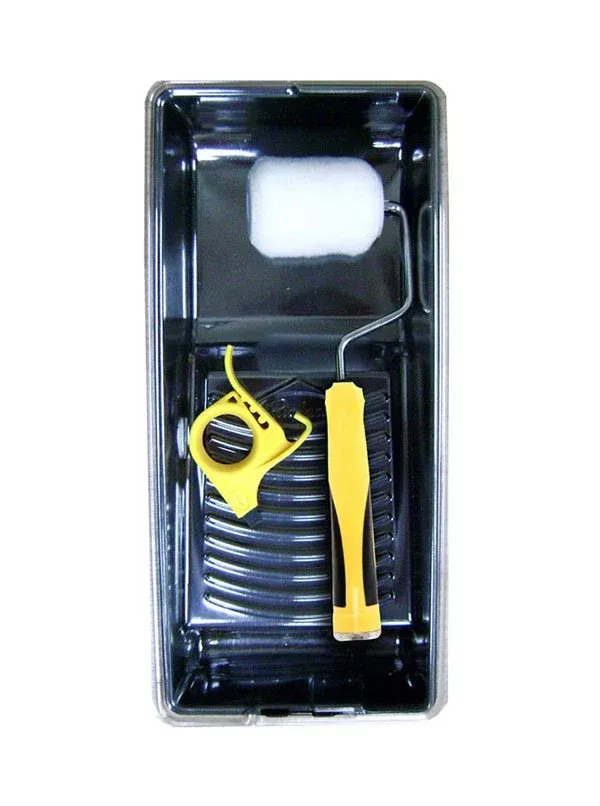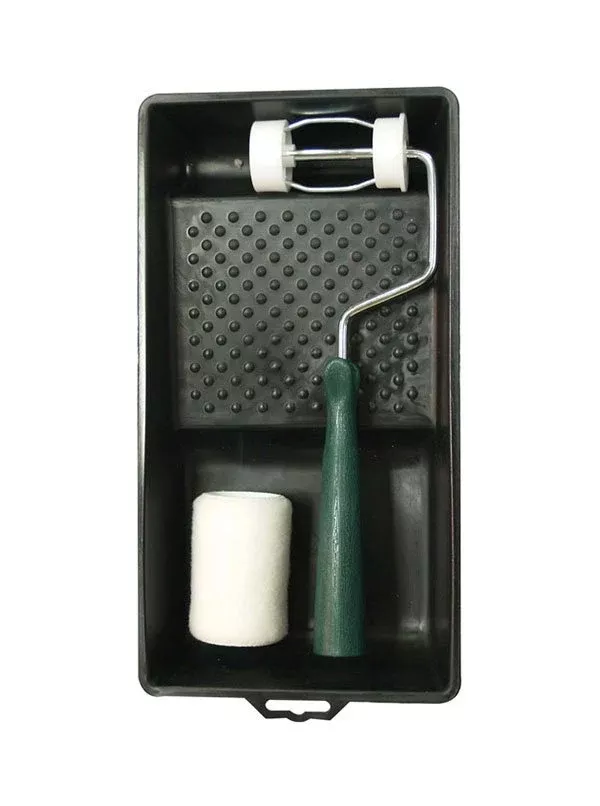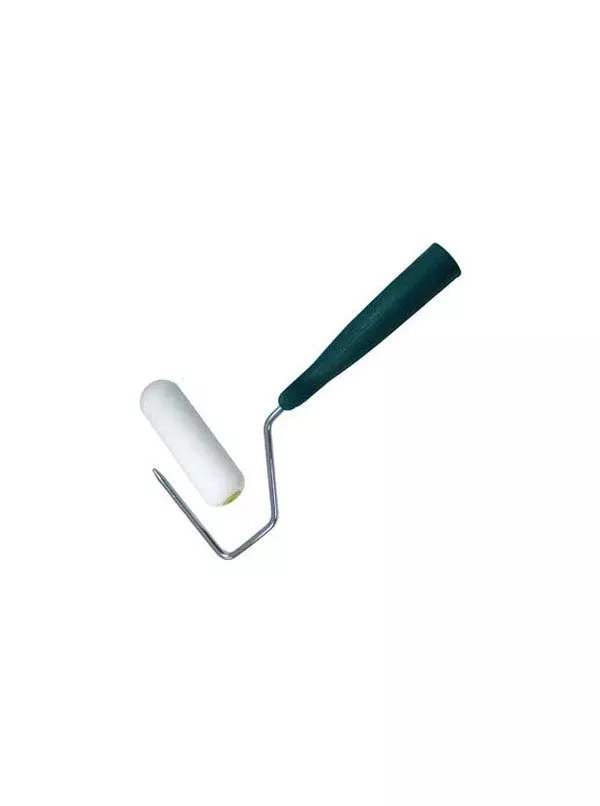
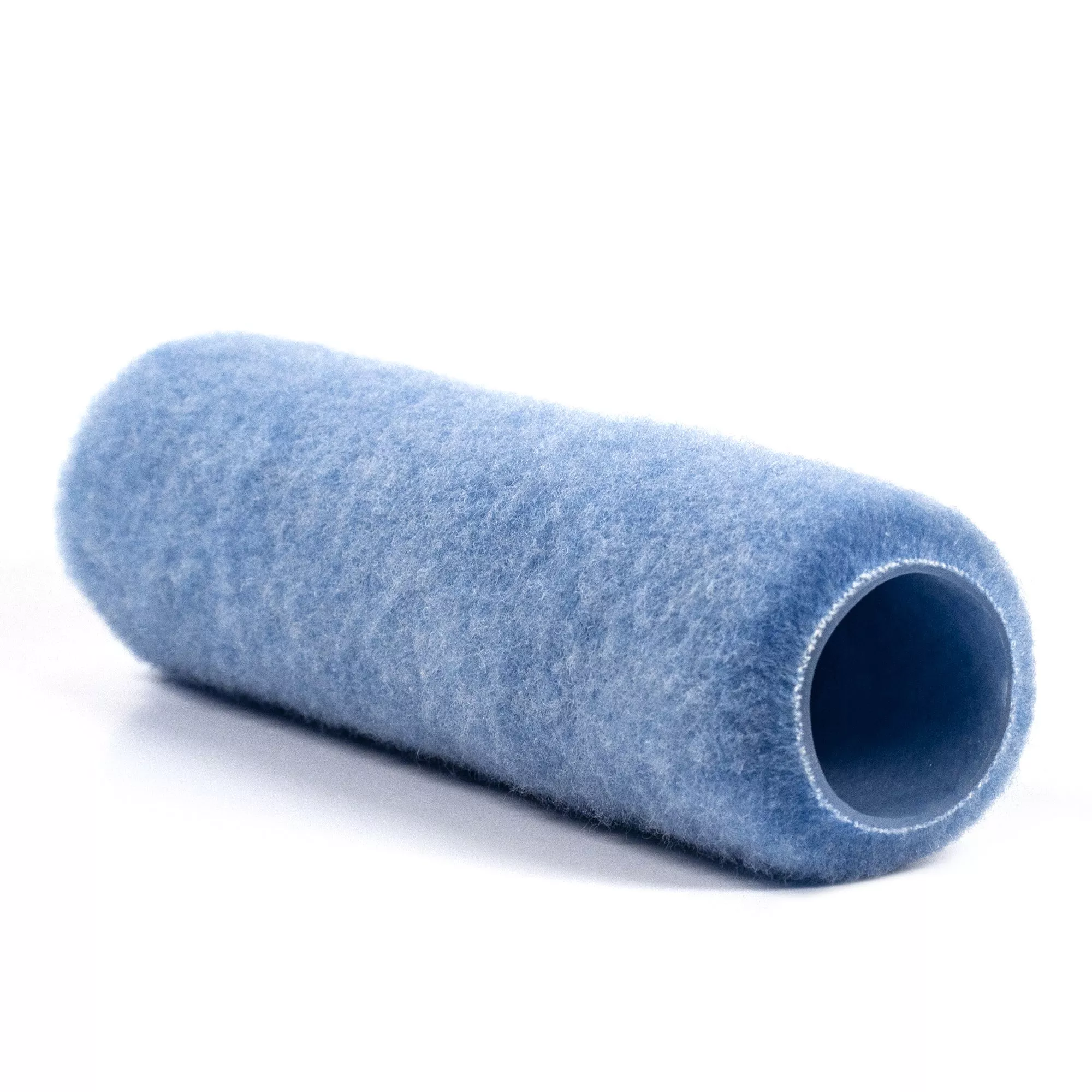
Is this the right tool for your job?
✕CHOOSE A DIFFERENT TOOL WHEN
- Full walls and ceilings — 3 inches is the smallest working width, for trim and small surfaces, not rooms.
- Critical finish work read under sheen and raking light — a general-purpose cover can shed a fiber into the film, and on a feature wall or a gloss cabinet that’s a callback; step up to the woven Pro grade or a foam cover.
- Epoxy floors and hot-solvent coatings — those demand the lint-free woven rating a utility cover doesn’t carry.
- Rough masonry — wrong nap length and wrong grade.
- And heavy, all-day production pressure — the plastic frame isn’t the cage you’d want for that.
How the pros run it
01
Seat and de-lint
push the cover fully home on the plastic frame so it runs true, then de-lint it before the first load — a general-purpose cover is more prone to shedding than a woven one, so the tape-peel or wash-and-spin step matters more here, not less. Load damp, work light: press harder and a mini floods; let the nap deliver the paint. Watch the plastic frame under pressure: it’s lighter than a metal frame and will flex if you lean on it — keep the cover square and let it roll. Lay off one direction for an even stipple. Wash or retire honestly: a general-purpose cover can be rinsed and reused for utility work, but it’s cheap enough that after a solvent job or a hard day it’s a rational throwaway — the grade is where the wash-or-toss line sits closest to “toss.”