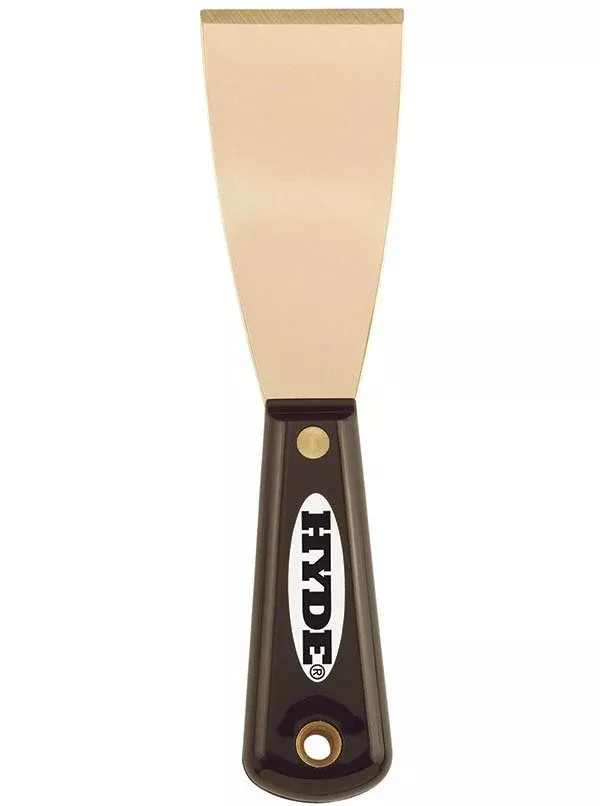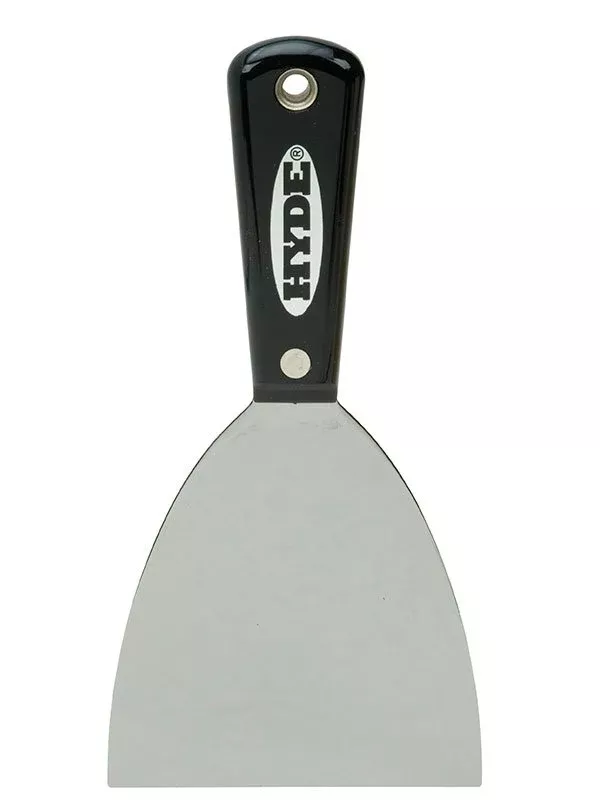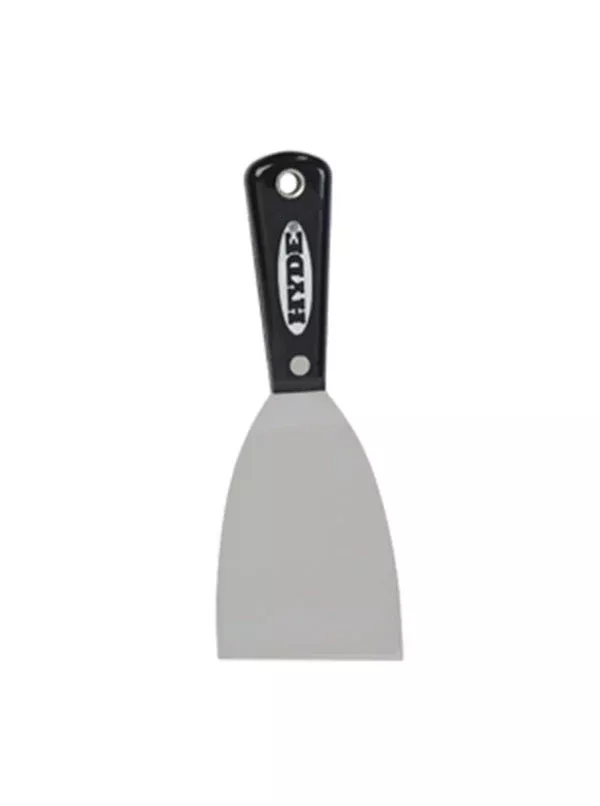
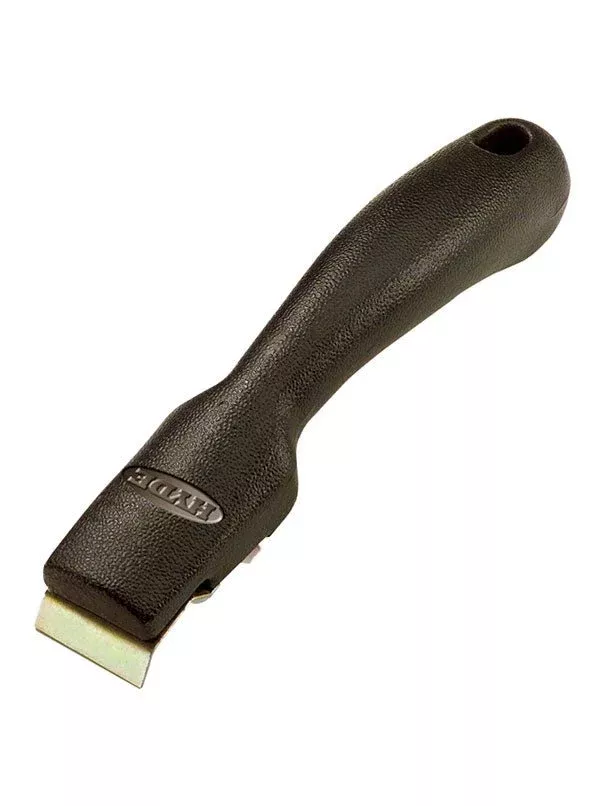
Is this the right tool for your job?
✓CHOOSE THIS WHEN
- The documented job is “How to Strip Paint from Window Muntins, Sash, and Channels — The Complete Step-by-Step Guide”.
- High-Carbon Steel Blade: 1″ blade with two scraping edges, resharpenable and replaceable.
- Well-Balanced Handle: Angled design for enhanced leverage and knuckle protection.
- Durability: Robust high-carbon steel blade ensures long-term use.
✕CHOOSE A DIFFERENT TOOL WHEN
- Broad, flat fields.
- One inch across a clapboard face or a wall is an afternoon that a 2-1/2″ head (10520/10540) finishes in an hour — width there is coverage, not a liability.
- It is not an apply tool: a pull scraper has no fill role, and spreading compound belongs to the flexible putty knives one line over.
- It is not a profile tool: the concave bellies of coves and flutes want the shaped blades of a contour scraper (10450/10460), not a straight one-inch edge that touches a hollow on two points.
- And it is not the carbide economy — if your detail work is production-scale or the coatings are iron-hard, the 7/8″ triangular-carbide 10600 holds its edge across jobs where this steel wants filing across passes.
Jobs this tool does
EXACT JOB METHODS FOR HYDE №10500✓ Job guideHow to Strip Paint from Window Muntins, Sash, and ChannelsOPEN JOB GUIDE →
For these jobs—use this instead
THE JOB, THE REASON, AND THE BETTER TOOL✕ Broad clapboard and wall facesWidth there is coverage, not a liability. BETTER TOOL Black & Silver® 2-1/2” Lifetime 4-Edge 10540 →✕ Coves, flutes, and profilesThe concave bellies of coves and flutes want the shaped blades of a contour scraper (10450/10460), not a straight one-inch edge that touches a hollow on two points. BETTER TOOL Contour Scraper 10450 →✕ Production-scale detail workAnd it is not the carbide economy — if your detail work is production-scale or the coatings are iron-hard, the 7/8″ triangular-carbide 10600 holds its edge across jobs where this steel wants filing… BETTER TOOL MAXXGRIP PRO® Carbide 3-Edge Scraper 10600 →
How the pros run it
01
The stroke is the family’s, owned in full by the scrapers line doc and summarized here
Draw the scraper toward you at a steep angle with your downforce directly over the edge. Let the narrow width do its job: when cutting slows, flip the blade or touch it up with a file rather than pushing harder, because a dull edge under extra pressure can chatter and gouge even on a one-inch blade. Keep the pull straight; twisting mid-stroke corner-loads the edge. Check the edge in raking light before deciding it is dull: a bright reflected line along the apex means it wants a file, while a one-sided glint means a rolled burr. For any building painted before 1978, assume older coats contain lead. Dry scraping falls under the EPA’s RRP rule, including containment, wet methods, and firm requirements on paid work.