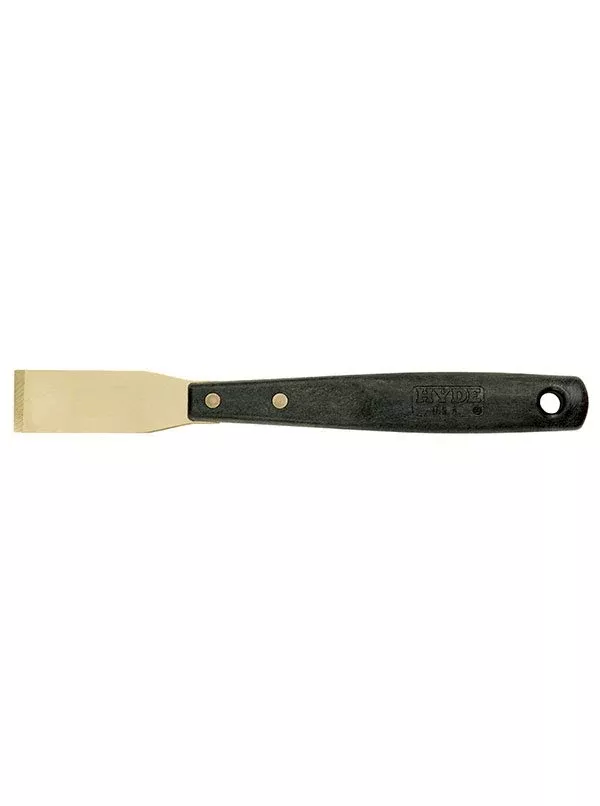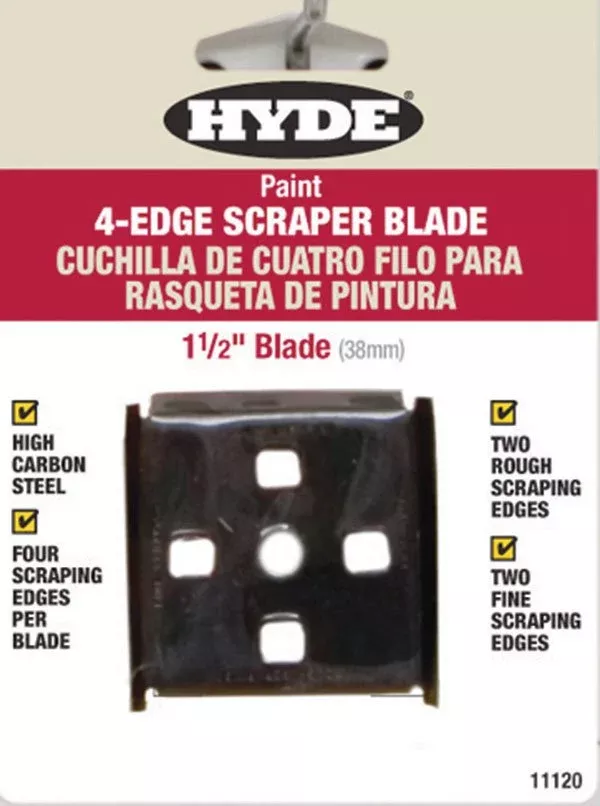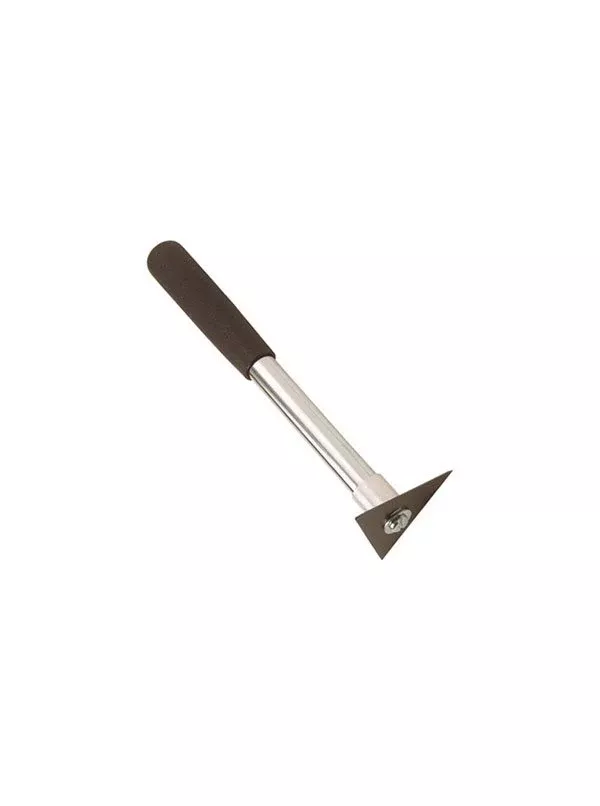
Is this the right tool for your job?
✕CHOOSE A DIFFERENT TOOL WHEN
- Not carbide — stated a third time because the rack sells the mistake: no file cuts the 11170 or any MAXXGRIP PRO® edge, and Hyde’s scope sentence draws the same line .
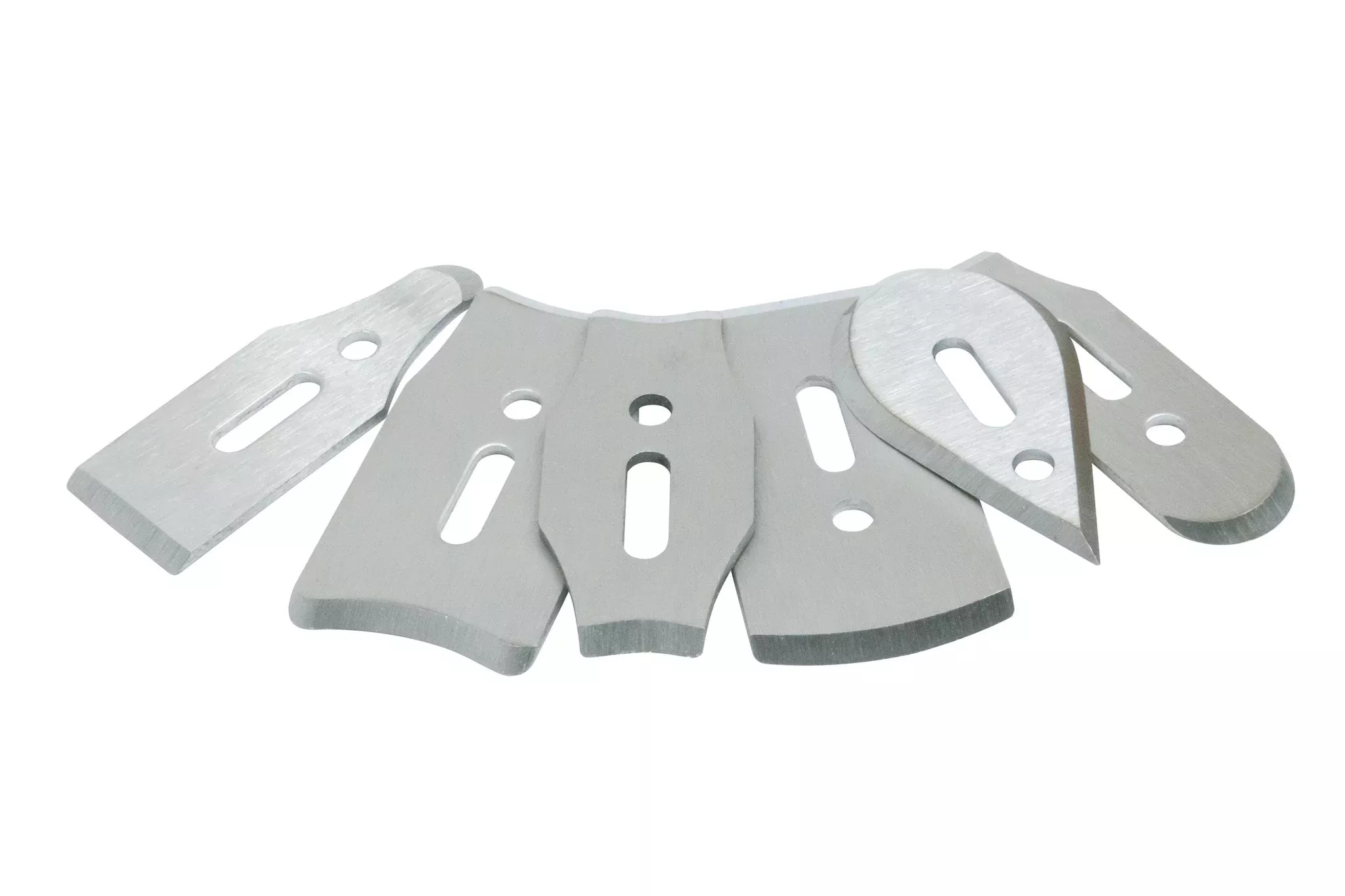
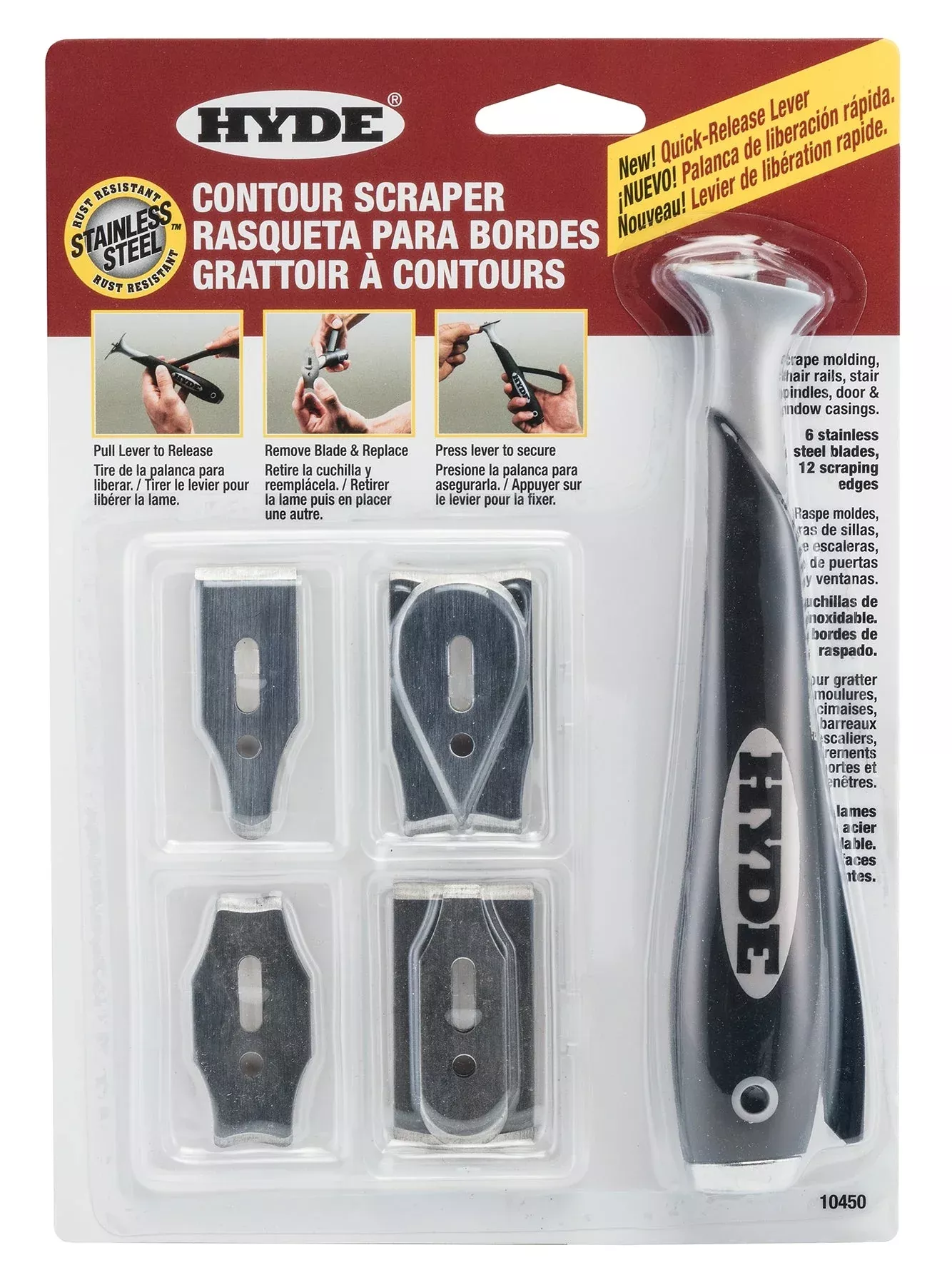
- Not the stainless contour blades of the 10450/10460 kits — outside the carbon-steel claim, so outside this page .
- Not a cabinet-scraper burnisher: woodworkers turn a hook on a cabinet scraper with a smooth burnishing rod — the opposite operation to filing a square paint-scraper edge; owners of both crafts should keep the two rituals apart.
- Not a knife or chisel sharpener in this store’s copy: Hyde’s claim scopes it to scraper blades, and finer edge tools want stones, not a double-cut file — the “general purpose” in Hyde’s sentence describes the cut style, and this page does not stretch it into a universal-sharpener promise.
Jobs this tool does
EXACT JOB METHODS FOR HYDE №11200✓ Job guideFlip, File, or Replace? The Scraper Edge DecisionOPEN JOB GUIDE →✓ Job guideHow to Match a Replacement Blade to Your Hyde ScraperOPEN JOB GUIDE →
For these jobs—use this instead
THE JOB, THE REASON, AND THE BETTER TOOL✕ Carbide edgesStated a third time because the rack sells the mistake: no file cuts the 11170 or any MAXXGRIP PRO® edge, and Hyde’s scope sentence draws the same line . BETTER TOOL Carbide Replacement Blade for 10610 11170 →✕ Stainless contour bladesOutside the carbon-steel claim, so outside this page . BETTER TOOL Contour Scraper 10450 →
How the pros run it
01
The habits that separate a good filing from a fast-but-crooked one. Full-length strokes
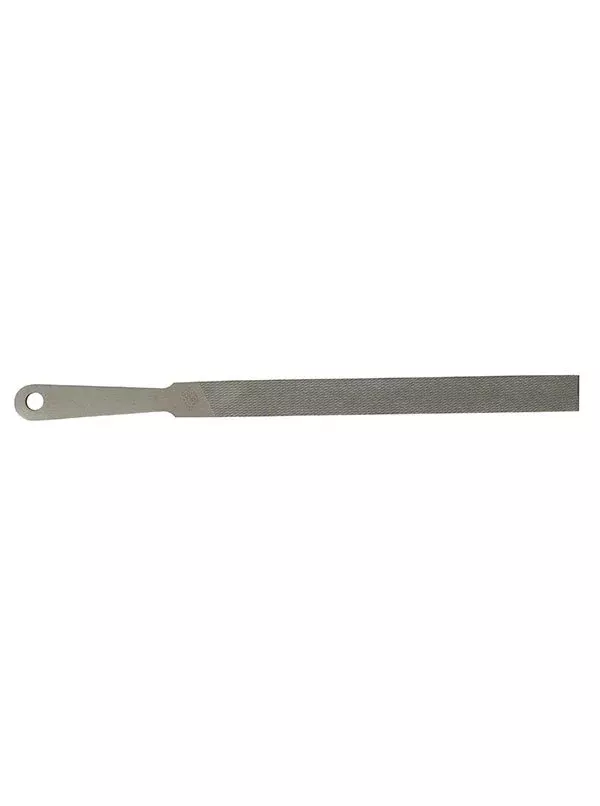
use the whole file, not a two-inch scrub in the middle — full strokes spread wear across the file’s teeth and keep the blade’s edge straight. Moderate, even down-pressure: enough that the teeth bite continuously — a skating file glazes its own teeth — and not so much that the stroke bows the blade or chatters. Count and mirror: equal strokes per edge, so paired edges wear evenly and the blade stays symmetric in its holder. Stabilize the work, not the file: the accuracy comes from the blade being immovable and the bevel angle being held; the file itself wants a relaxed, straight push. Eye protection whenever filing overhead or at eye level — fine steel filings are exactly the particle your cornea is worst at.