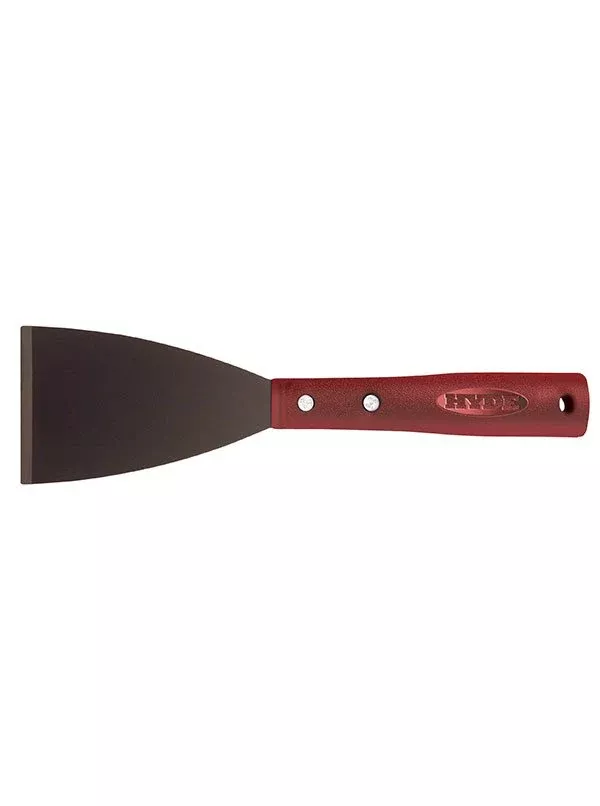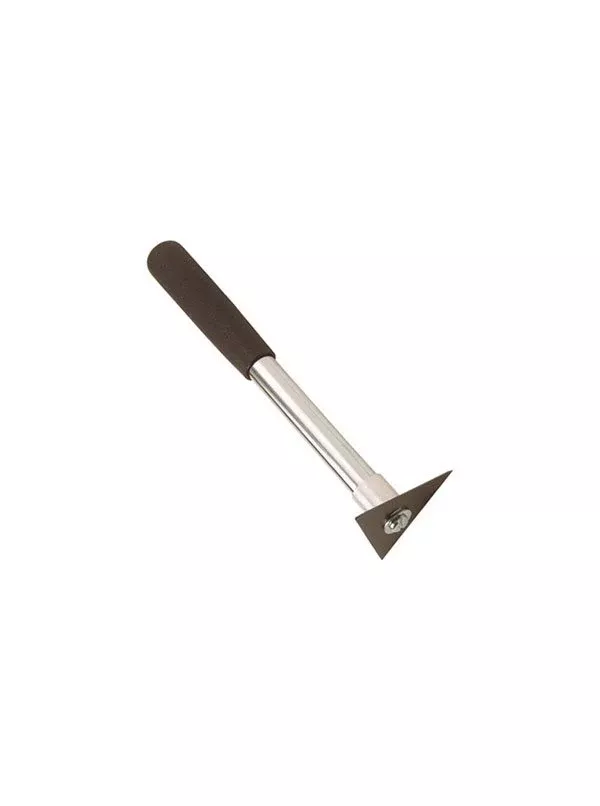
Is this the right tool for your job?
✕CHOOSE A DIFFERENT TOOL WHEN
- Any job that does not require non-sparking.
- If the site permits steel, buy steel — a carbon-steel chisel holds an edge, cuts harder, and costs less; brass gives all of that up for a benefit you are not using.
- The line’s rule is blunt: no spark-control requirement → steel, every time.
- Edge-life-critical work — brass is soft on purpose; it is the wrong tool if what you want is a durable cutting edge.
- Prying and striking — a soft brass blade levers and mushrooms even more readily than steel; prying belongs to the 45600 bar, striking to the hammer-scraper heads .
Jobs this tool does
EXACT JOB METHODS FOR HYDE №12040✓ Job guideHow to Scrape in Spark-Controlled EnvironmentsOPEN JOB GUIDE →
For these jobs—use this instead
THE JOB, THE REASON, AND THE BETTER TOOL✕ Prying and strikingA soft brass blade levers and mushrooms even more readily than steel; prying belongs to the 45600 bar, striking to the hammer-scraper heads . BETTER TOOL 9-1/2″ Bent Pry Bar/Scraper 45600 →
How the pros run it
01
Drive the chisel low and under the deposit, push from the shoulder, and let the edge shear at the bond line
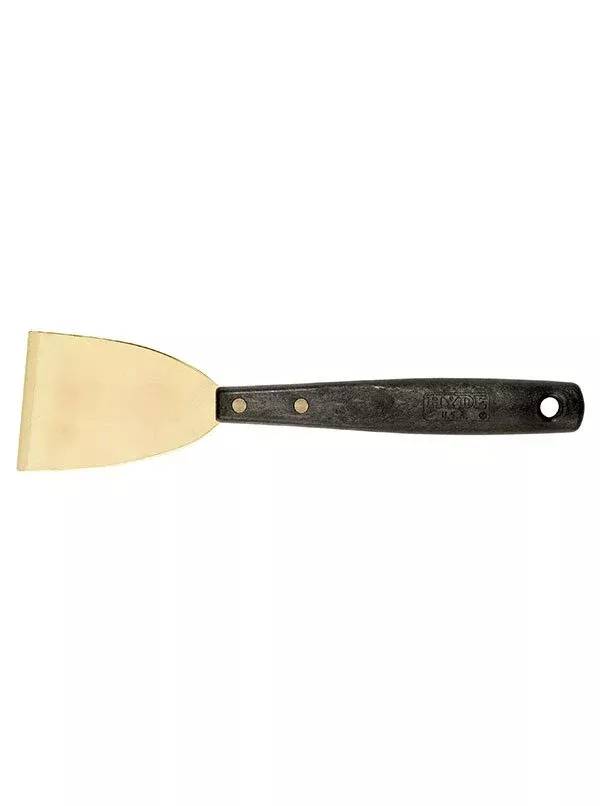
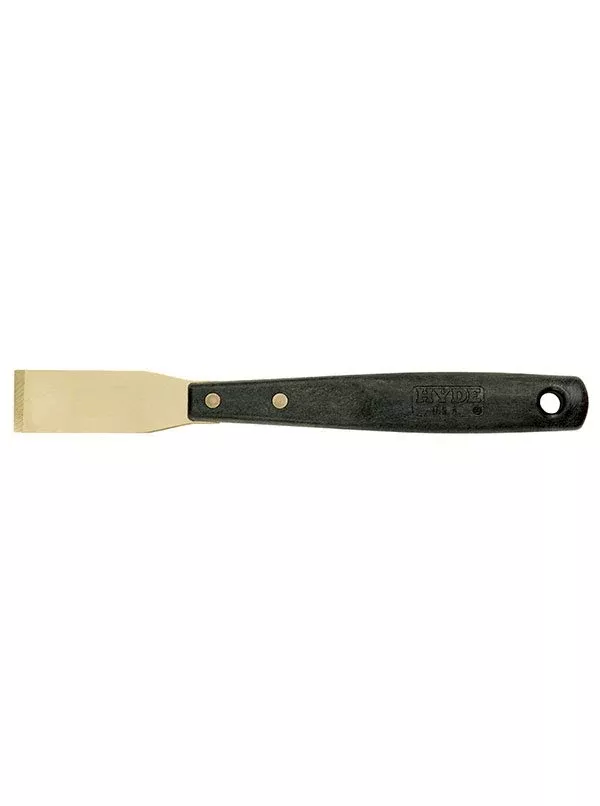
The discipline that is different from steel: brass is soft, so it dulls and deforms faster — expect to dress the edge more often, and dress it gently. A brass edge rounds rather than chips; keep it square enough to cut, but do not expect steel’s edge retention or steel’s patience with abuse. The polypropylene handle carries a large hang hole for storage, which on a permitted job also means the tool is easy to account for on the way in and out.