Is this the right tool for your job?
✕CHOOSE A DIFFERENT TOOL WHEN
- Not for porous or soft surfaces — wood, drywall, painted trim, plastic, fiberglass, and acrylic all take a scar from a razor; those are jobs for a putty knife or a wall scraper, not this.
- Not for broad glass fields measured in feet: the low-profile body is a control tool, and clearing a storefront or a wall of post-construction windows with it is slow where the full-hand Delta™ (13050) is fast.
- Not for framed inside corners where a blade needs to be stiff and pointed — a single-edge razor flexes and its corners are square; the utility-blade 13080 owns that reach.
- And not a pry bar or a putty remover: a razor edge chips if you twist it, and the soft new putty beside a re-glazed pane is off-limits to it.
Jobs this tool does
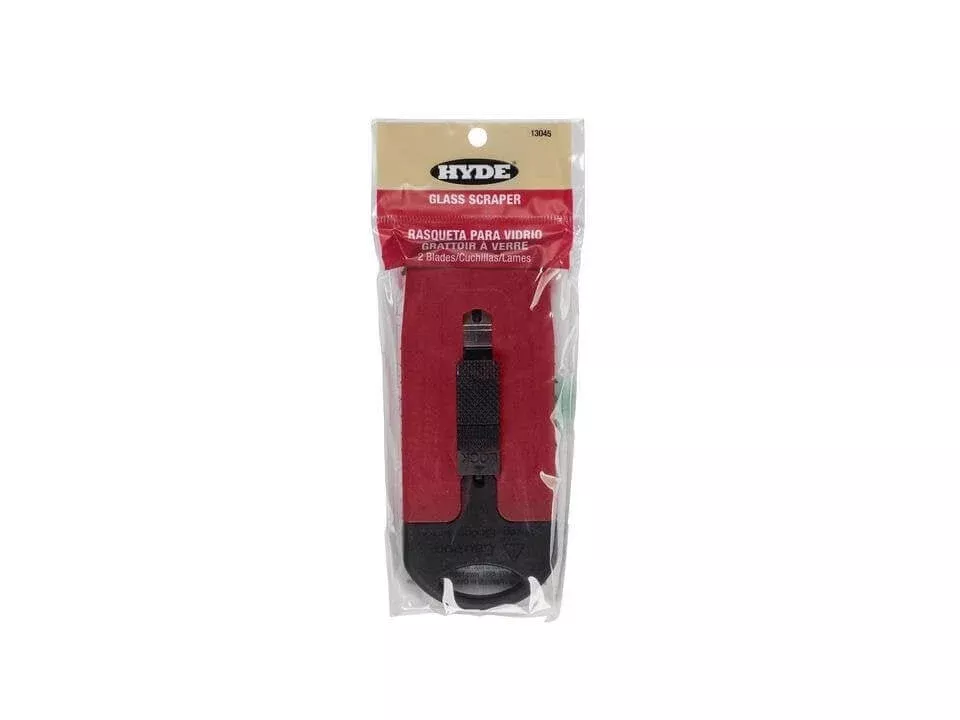
EXACT JOB METHODS FOR HYDE №13045✓ Job guideHow to Paint a Window Sash Without Taping the GlassOPEN JOB GUIDE →
For these jobs—use this instead
THE JOB, THE REASON, AND THE BETTER TOOL✕ Broad glass fieldsThe low-profile body is a control tool, and clearing a storefront or a wall of post-construction windows with it is slow where the full-hand Delta™ (13050) is fast. BETTER TOOL DELTA Glass Scrapers, 5 blades included 13050 →✕ Framed inside cornersA single-edge razor flexes and its corners are square; the utility-blade 13080 owns that reach. BETTER TOOL Glass Scraper 13080 →
How the pros run it
01
Wet, low, and one-way
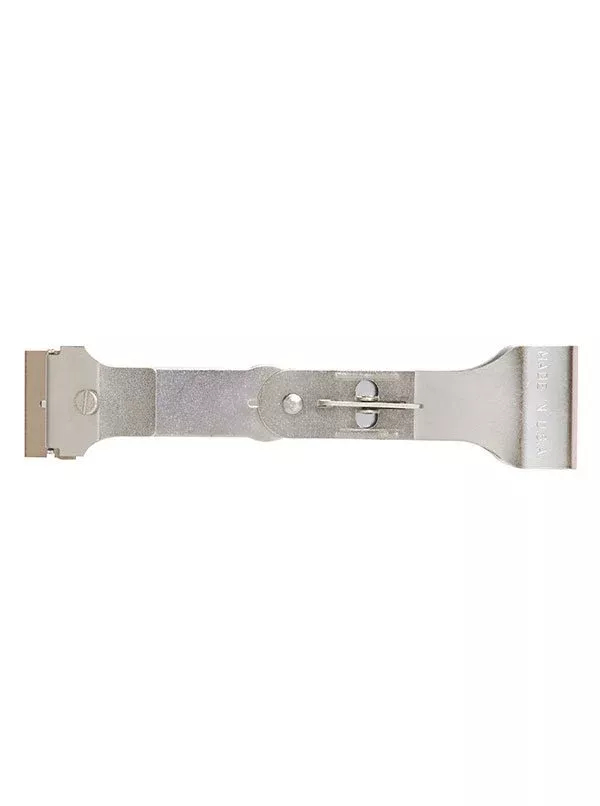
The three-word razor gospel: a wet surface floats chips and prevents scratching, a low angle shaves rather than chisels, and a single push direction keeps you from dragging grit back across the glass. Fresh edges only. A single-edge razor is a consumable measured in minutes of hard use — the instant it starts skipping or leaving a comet-tail of un-lifted film, retract it and load a fresh one from the handle; a dull or nicked blade is the direct cause of most razor scratches. Two-finger control. The low body invites a light, controlled grip with the index and middle finger guiding the head — this is a finesse tool, and forcing it defeats the point of choosing it over a fisted holder. Lock, then load. Extend, confirm the blade lock has seated before you lean into drag, and retract-and-lock the moment the tool leaves your hand.