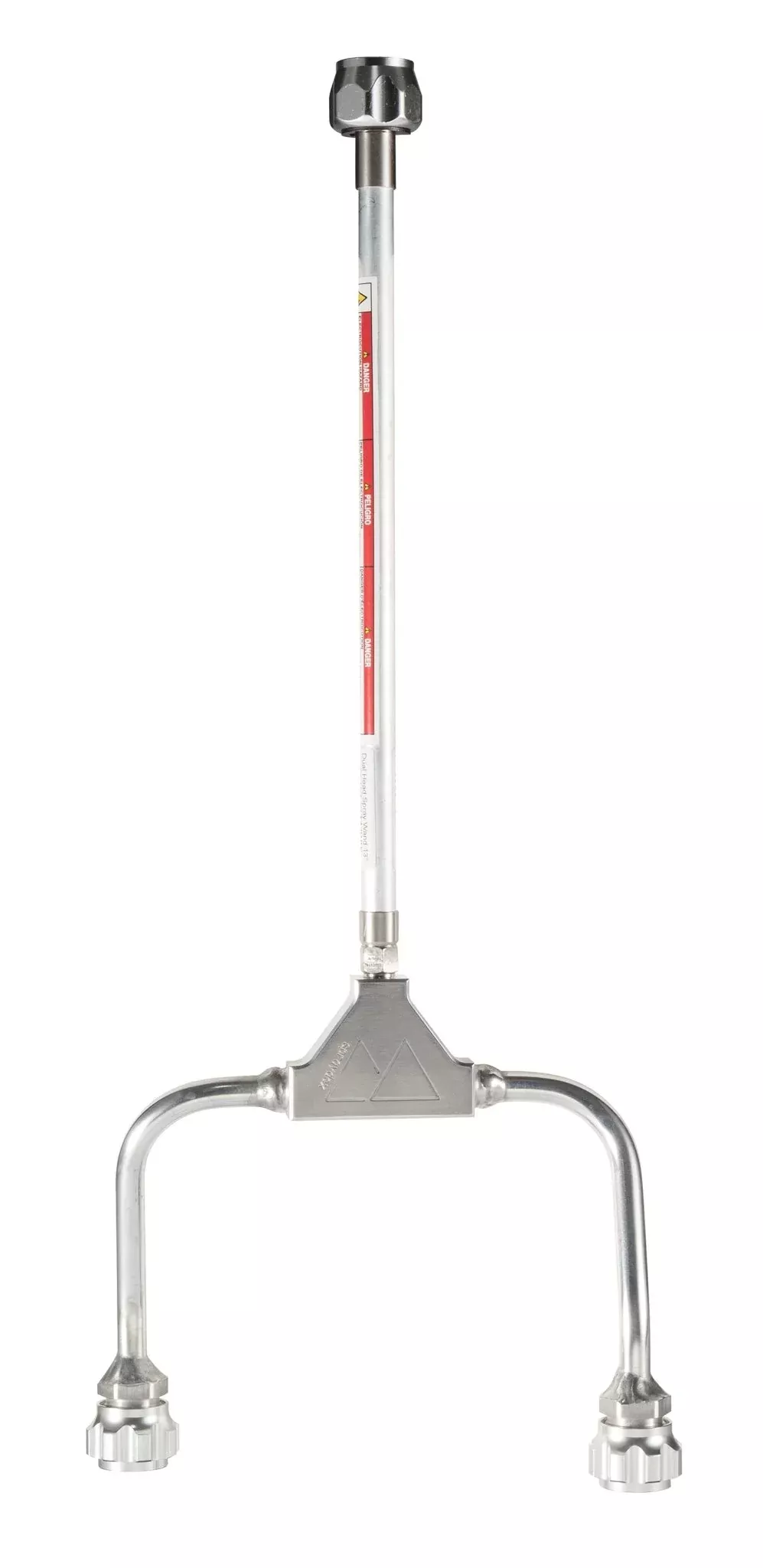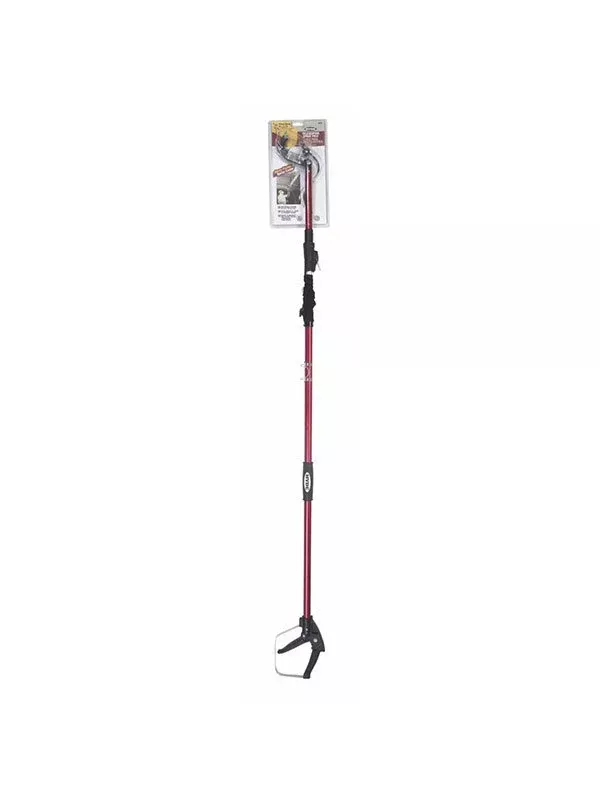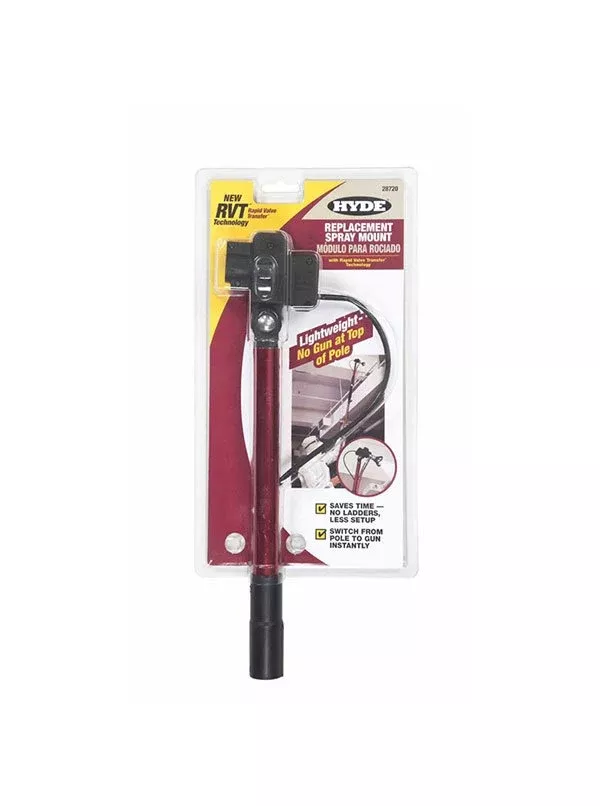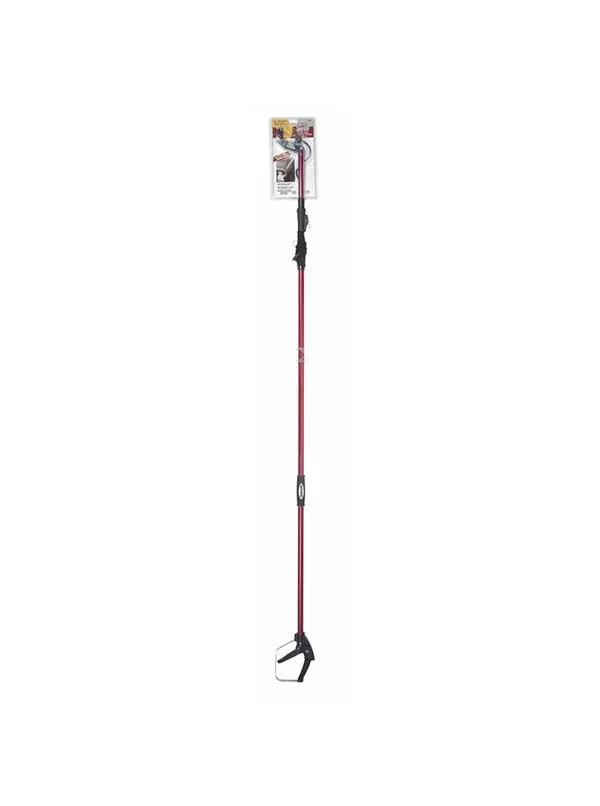

Is this the right tool for your job?
✓CHOOSE THIS WHEN
- The documented job is “Run Airless Reach Work Safely — The Complete Guide”.
✕CHOOSE A DIFFERENT TOOL WHEN
- It does not solve standing-position problems: if the surface is a stairwell wall or a 14-foot ceiling field, the answer is a QuickReach pole carrying the whole gun, not a longer wand in your hand.
- It is not a detail or fine-finish instrument — surfaces judged from arm’s length get sprayed from arm’s length.
- It is not rated beyond its family’s 4000 PSI and claims no thread universality — fitment gets verified, not assumed.
- And it is not a ladder-avoidance machine on dormer work: it removes the lean, not the climb.
Jobs this tool does
EXACT JOB METHODS FOR HYDE №28270✓ Job guideRun Airless Reach Work SafelyOPEN JOB GUIDE →✓ Job guideSpray Decks, Fences, and Floor Coatings Without StoopingOPEN JOB GUIDE →✓ Job guideHow to Spray Dormers and Gable EndsOPEN JOB GUIDE →✓ Job guideHow to Spray Porch Ceilings and Deck Undersides from the GroundOPEN JOB GUIDE →
VIEW 1 MORE DOCUMENTED JOB
✓ Job guideHow to Spray Soffits and Eaves with the Fan Square to the BoardOPEN JOB GUIDE →
How the pros run it
01
Set the angle, then forget the wrist
The working method is two separate acts: square the head to the surface first, then spray with your hand doing nothing but holding and triggering. If you catch yourself steering the fan by rotating the gun, stop and re-set the head — five feet amplifies every wrist correction into visible pattern wander.
02
Your legs are the pass
At this length the walked pass is not advice, it is the mechanism: lock the wand’s relationship to your torso and translate the whole frame past the work at constant speed. The pass ends when your feet stop, not when your arms run out.
03
Native trigger, real feathering
The gun’s own trigger stays under your finger — the extension side of this line keeps full trigger feel, with none of the linkage a remote pole handle adds. Feather pass ends exactly as you would with a bare gun: trigger opening before the surface, closing after it.
04
Watch the fan, not the wand
Five feet ahead of you, the evidence that matters is the wet line and the fan’s shape. Tails at the pattern edges mean pressure or a worn tip; a fan that reads crooked means the head crept off square — fix the head, not your grip.
05
Fatigue math
A raised wand is a held lever, and the hour of overhead work that felt fine at the start shows up in the last wall’s pass-ends. Rest it at real intervals; the wand’s whole value is geometric precision, and tired shoulders spend that value first. Flush the wand’s bore at washout with the rest of the fluid path, and keep the threads clean and dry between jobs (service procedure unstated in claims — trade practice; consult product documentation).