Is this the right tool for your job?
✓CHOOSE THIS WHEN
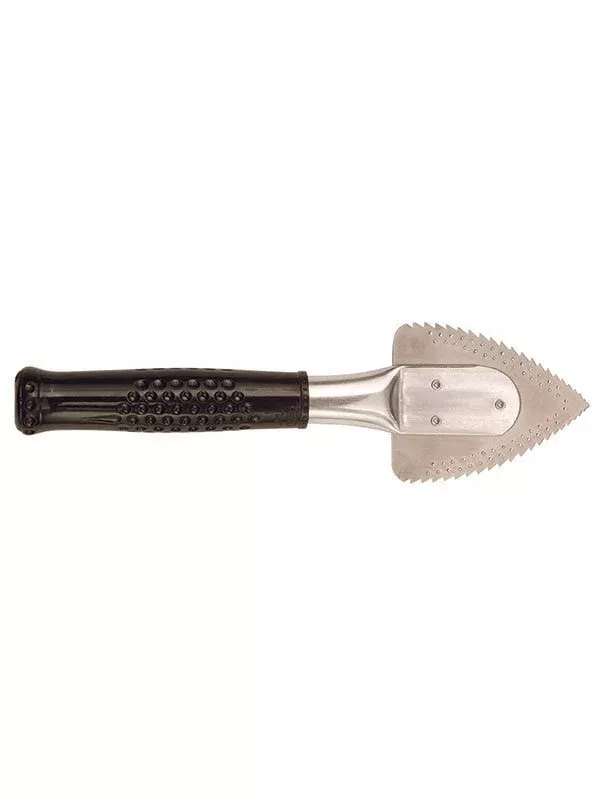
- Stainless steel sawtooth blade saws paint from between frame and sash of windows that are painted shut. Tubular metal handle with plastic hand grip.
✕CHOOSE A DIFFERENT TOOL WHEN
- Not a lever — the tubular handle is a grip, not a pry arm, and the urge to pry means a seam is still uncut (§2d).
- Not a scraper — teeth belong in a gap, and failed paint on sash faces is the scrapers line’s territory.
- Not a glazing tool — it removes no putty and cuts no glazing bead; sash restoration beyond the paint bond runs through heat and patience outside this line.
- Not for swollen, racked, or hardware-jammed windows (§2a — you cannot cut paint that is not the problem).
- Not for weatherstripped vinyl and aluminum sliders, which jam from debris, bent tracks, and failed rollers — mechanical causes with nothing in the seam for teeth to cut.
Jobs this tool does
EXACT JOB METHODS FOR HYDE №45200✓ Job guideHow to Free a Painted-Shut WindowOPEN JOB GUIDE →
How the pros run it
01
Let the teeth work
Speed and repetition cut; pressure bends. Strokes should feel almost too light — if the blade flexes or chatters, shorten the stroke and ease off. Track the fixed member. The blade’s flat rides the stop, bead, or frame so the teeth stay in the seam; the moment the tip wanders onto the sash face it is chewing finish. Corners are pierce points. Bring the blade near vertical at each corner and work the junction with short strokes — corners hold the thickest paint bridges and release last. Stainless upkeep is nothing. This blade meets paint dust, not standing water; wipe it and hang it. If the teeth pack with soft paint crumbs, a wire-brush pass clears them. Gloves and glasses. The blade exits the seam without warning when a film releases mid-stroke, knuckles meet stops, and window work happens at eye height — dress for it.