Is this the right tool for your job?
✓CHOOSE THIS WHEN
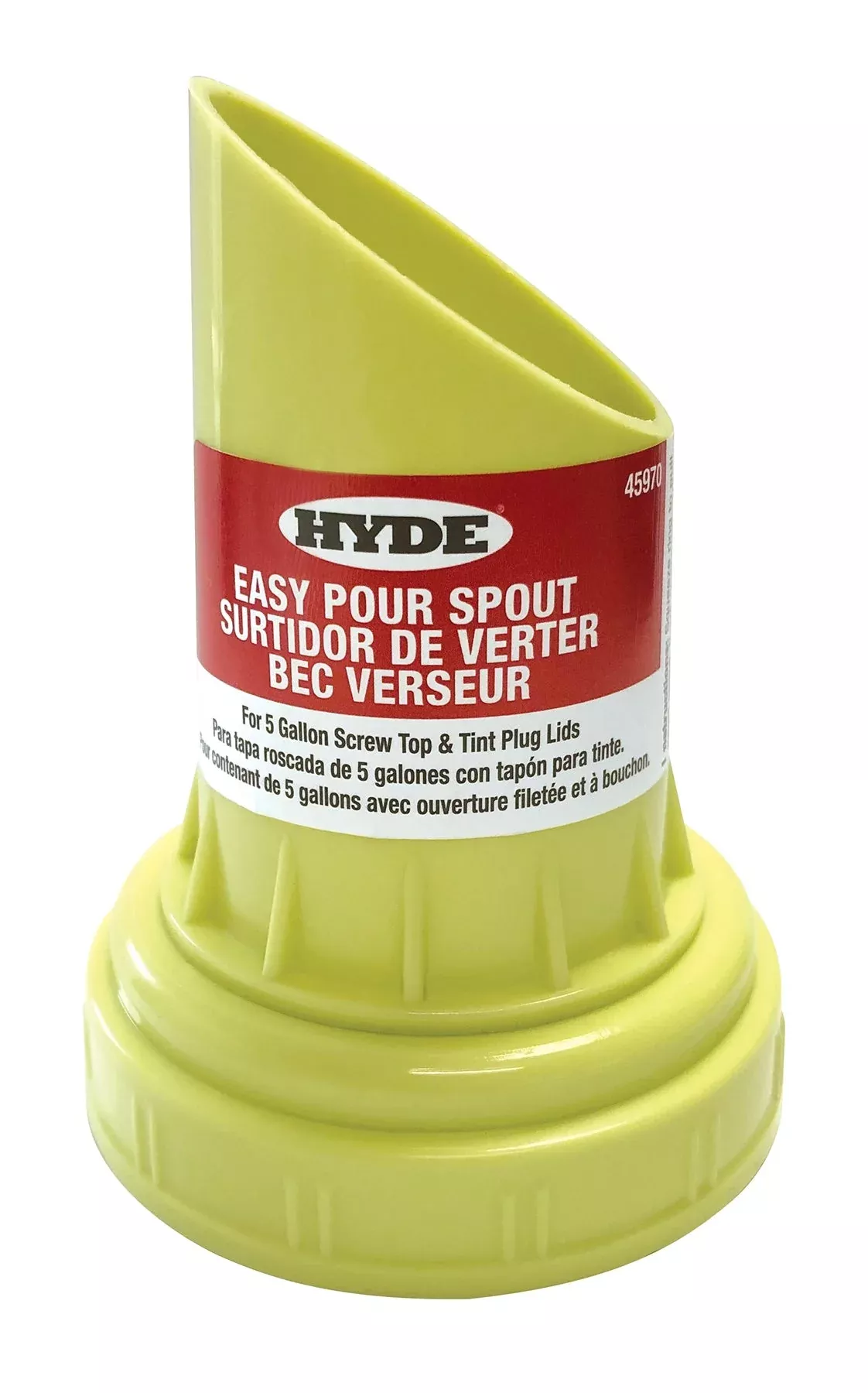
- Screw top and tint plug spout for 5-gallon bucket allows for spill-free pouring of paint, sealer and other liquids. Sturdy, easy to clean and leak-proof.
✕CHOOSE A DIFFERENT TOOL WHEN
- It opens nothing: the spout has no role in getting a lid off, and the day full access wins — grid hung inside, drill mixer through the mouth, hand-paddle stir, boxing into the bucket — is the 02996 Pail Popper’s day.
- It cannot fix settlement: a stored five stratifies, and pouring an unstirred five through any aperture delivers thin binder first and dense sludge last — condition first (through-the-spout mixers, or paddle 47050 once the pail is open), then pour; the sequence is the line’s own pair call.
- It is not rated beyond its stated scope — paint, sealer, other liquids per the maker, with material and chemistry unstated .
- And it is not a reason to hang a five from anything: a spouted five is still a five, and the line’s weight doctrine keeps it on the ground.
Jobs this tool does
EXACT JOB METHODS FOR HYDE №45970✓ Job guideHow to Decant into a Working PailOPEN JOB GUIDE →✓ Job guideHow to Open a 5-Gallon PailOPEN JOB GUIDE →✓ Job guideHow to Pour from a Five-Gallon Pail Without Removing the Main LidOPEN JOB GUIDE →✓ Job guideHow to Reseal and Store Leftover Paint So It SurvivesOPEN JOB GUIDE →
For these jobs—use this instead
THE JOB, THE REASON, AND THE BETTER TOOL✕ Opening the lidThe spout has no role in getting a lid off, and the day full access wins — grid hung inside, drill mixer through the mouth, hand-paddle stir, boxing into the bucket — is the 02996 Pail Popper’s day. BETTER TOOL Pail Popper™ Pail Opener, 3” 02996 →✕ Fixing settlement stratificationA stored five stratifies, and pouring an unstirred five through any aperture delivers thin binder first and dense sludge last — condition first (through-the-spout mixers, or paddle 47050 once the… BETTER TOOL 14″ Paint Paddle 47050 →
How the pros run it
01
Two hands, smooth arcs
A five is heavy and its momentum is real; the pour is controlled by slow, continuous tipping, never by jerks — the column follows the wrist. Meter with angle, not height. Pour rate is set by how far past the balance point the bucket tips; pouring from higher up just adds splash distance. Confirm the seal before the tip. Lid seated, spout fitted (per the physical product’s fitment), then tip — the leak-proof claim describes the product, not a loose assembly. Right the bucket like you tipped it. The end of the pour is where drips happen; a smooth return keeps the last of the column in the spout’s path. Clean it wet. Easy to clean is the claim; honoring it means rinsing the spout while the paint is liquid — the tool’s easiest maintenance window is the five minutes after the pour, and a spout with a cured bore stops being a precision aperture.