Is this the right tool for your job?
✕CHOOSE A DIFFERENT TOOL WHEN
- Textured or masonry surfaces — foam has no fibers to reach into valleys and dies quickly dragging over anything rough; it is a dead-smooth-substrate tool only.
- Big walls — it holds too little paint to keep a wet edge over any area, and it is a mini besides.
- High-volume production — foam wears and tears far faster than fabric.
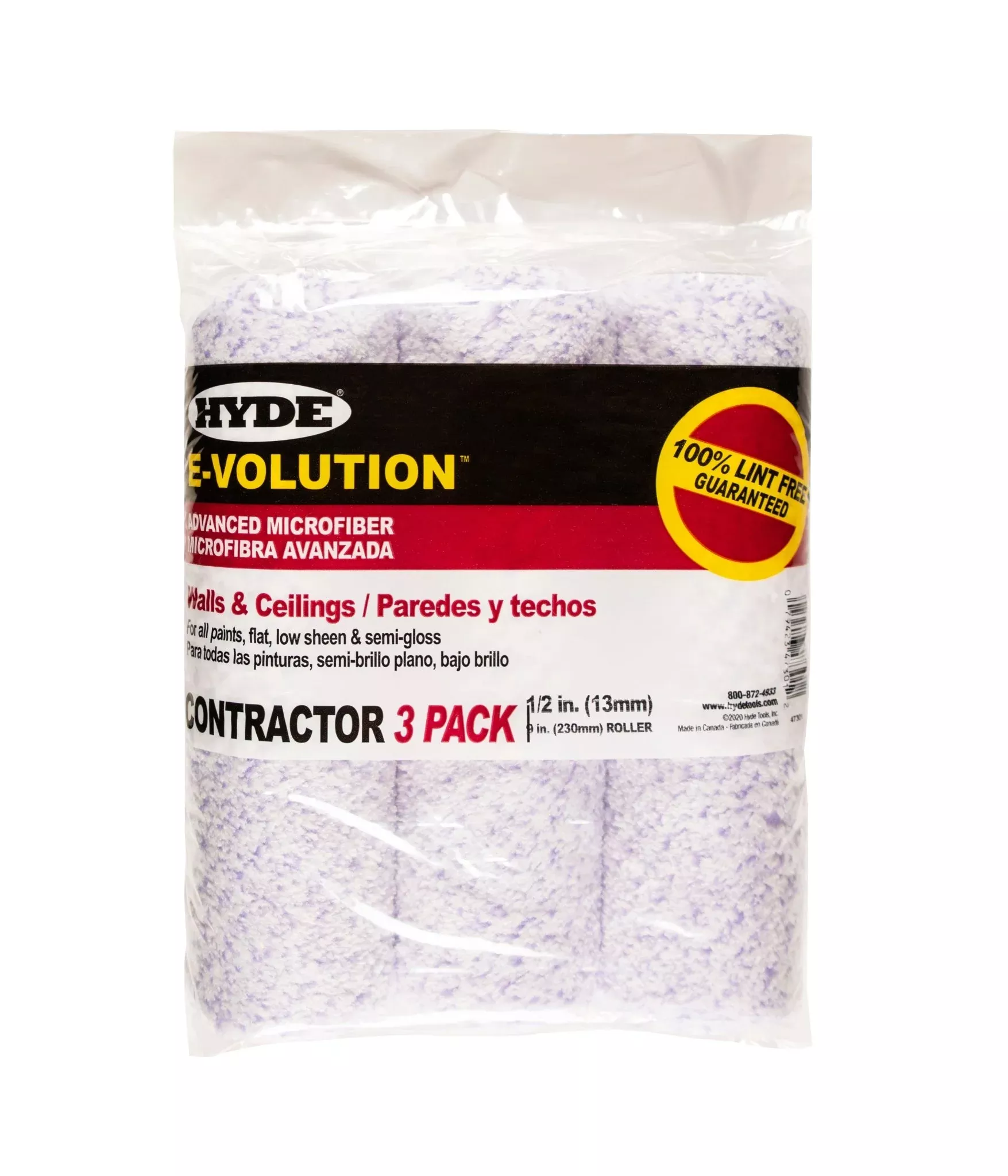
- And it is emphatically not a 1/2″-nap texture cover: if you have a lightly textured wall, you want a 1/2″ fabric nap (the 9″ Woven-Ultra 47330 or E-volution 47300), not this foam.
Jobs this tool does
EXACT JOB METHODS FOR HYDE №47348✓ Job guideRoll Doors, Cabinets, and Built-Ins to a Near-Spray FinishOPEN JOB GUIDE →✓ Job guideHow to Roll Varnish or Polyurethane on FurnitureOPEN JOB GUIDE →
For these jobs—use this instead
THE JOB, THE REASON, AND THE BETTER TOOL✕ Lightly textured wallsAnd it is emphatically not a 1/2″-nap texture cover: if you have a lightly textured wall, you want a 1/2″ fabric nap (the 9″ Woven-Ultra 47330 or E-volution 47300), not this foam. BETTER TOOL 9″Woven Lint Free Roller Cover. 1/2″ 47330 →
How the pros run it
01
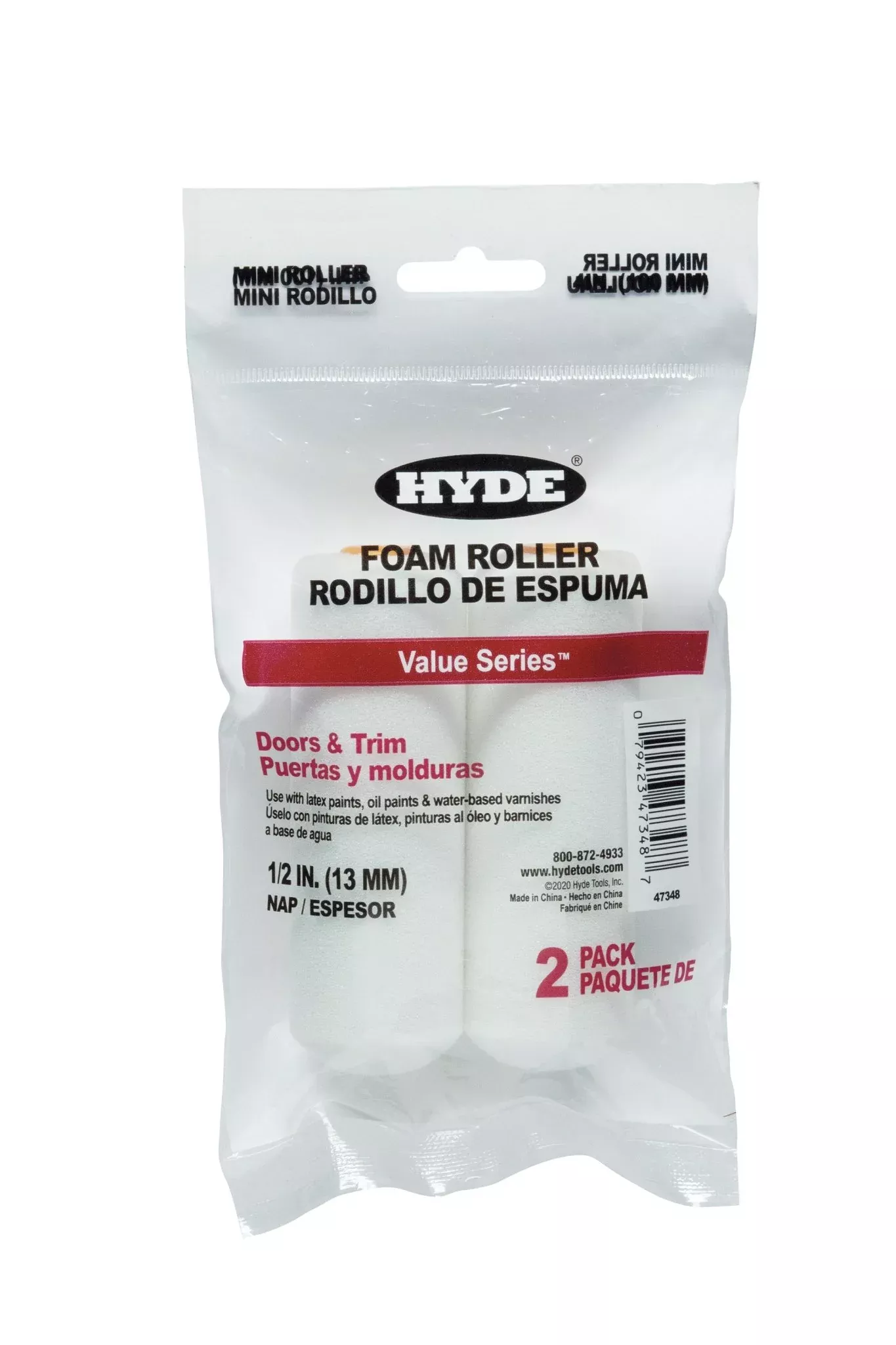
Foam is a slow, light-touch cover. Load lightly
foam holds far less paint than a fabric nap, so expect to reload often; that is the trade for the finish. Roll at an unhurried pace: worked too fast or too hard, foam can shed air bubbles into the film, and in a fast-drying latex those bubbles can set before they pop, leaving a pocked surface. Slow passes, light pressure, and a final feathering lay-off in one direction let the coat flow out. One real advantage over every fabric cover in this line: no de-linting, ever — there are no fibers to shed, so a foam cover meets the paint clean out of the wrapper. On waterborne coats a foam cover can sometimes be rinsed and reused a time or two; on solvent enamels, treat it as a consumable and toss it.