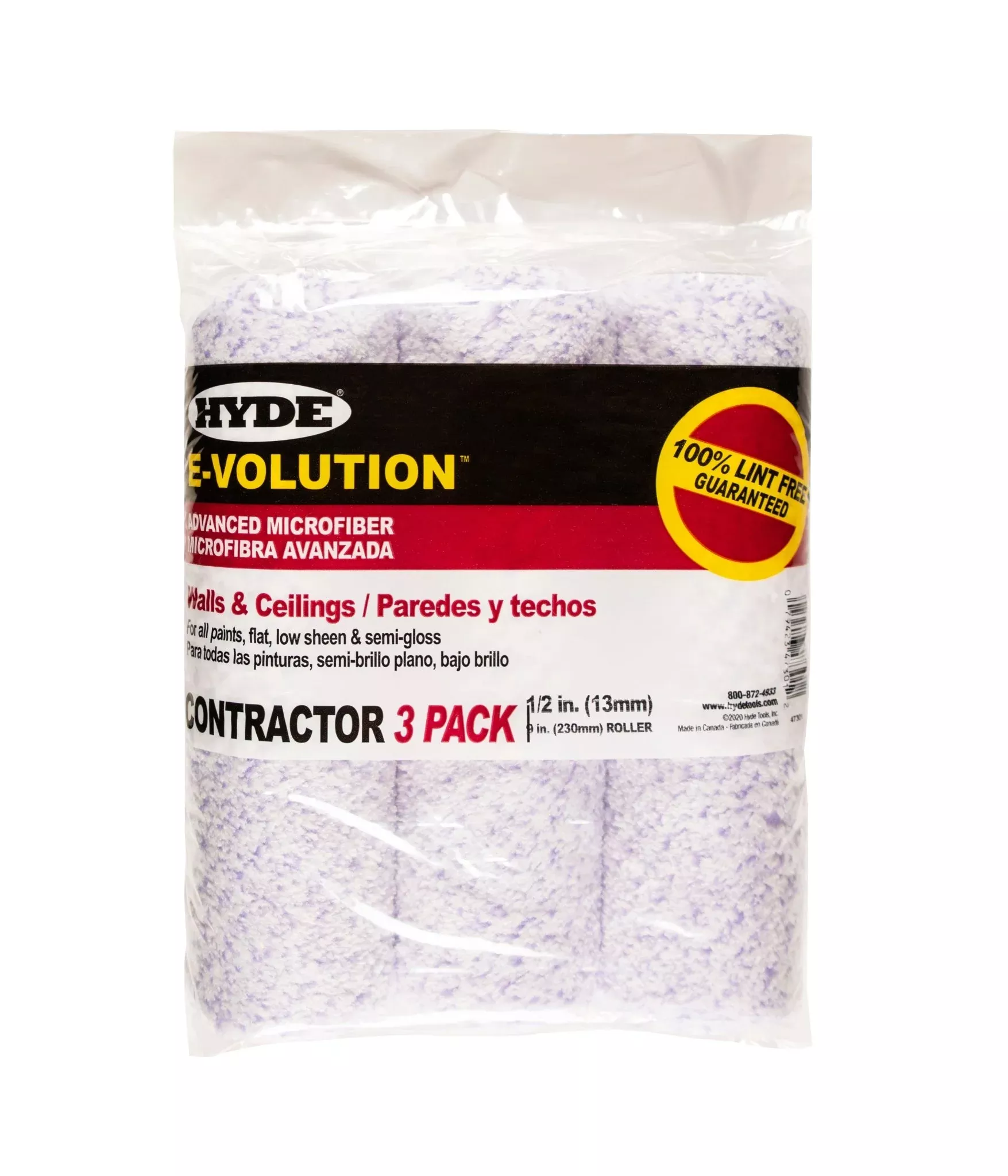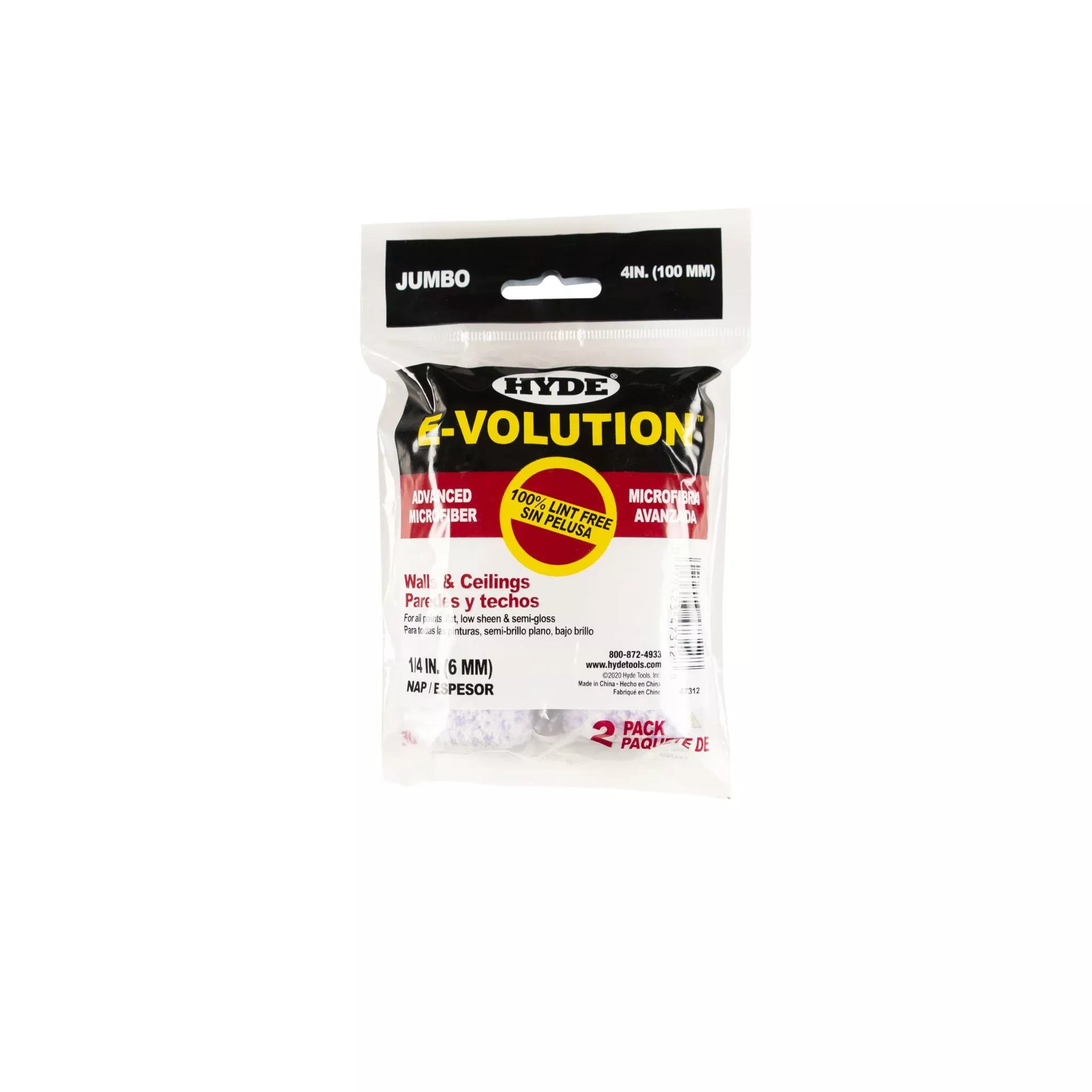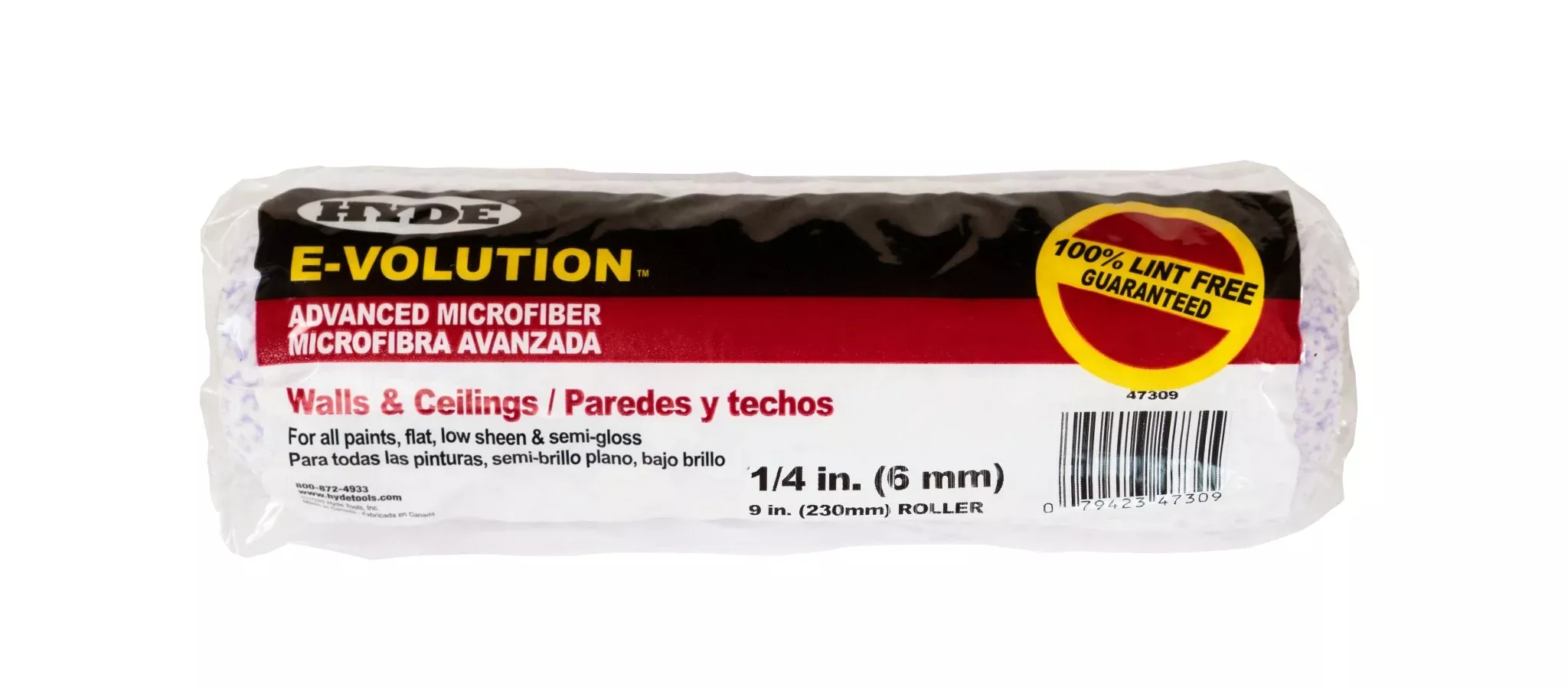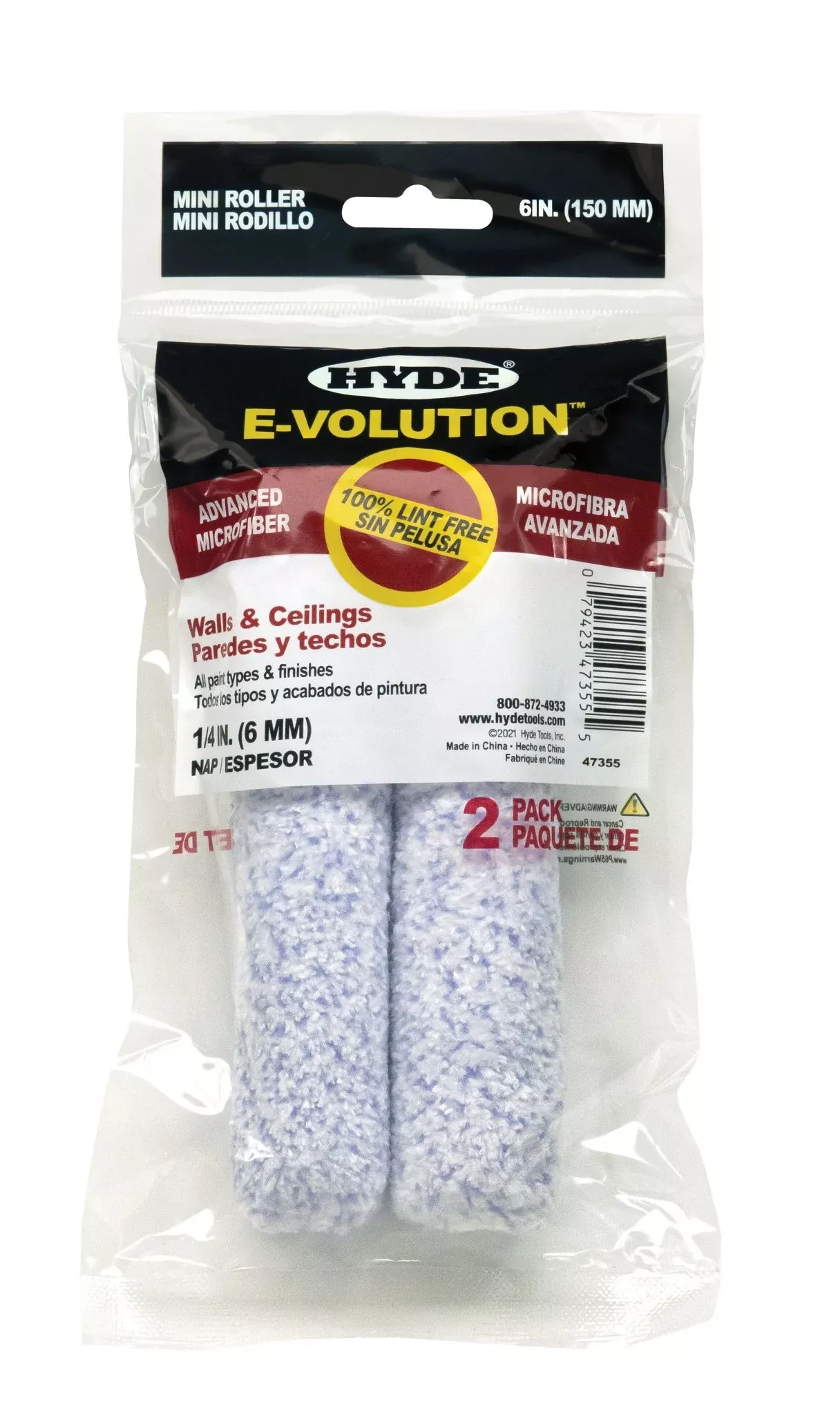

Is this the right tool for your job?
✕CHOOSE A DIFFERENT TOOL WHEN
- Rooms full of obstacles.
- Windows, doors, outlets, switches, and furniture defeat an 18″ — it can’t work close to an edge or into a broken field, and a 9″ beats it on everything but raw square footage there.
- Choose the 18″ only for large open surfaces.
- Rough or textured surfaces — heavy stucco, brick, cinder block, broom-finished concrete will snag and tear microfiber’s fine filaments; wrong fabric entirely, and 3/8″ is the wrong nap for that texture besides.
- Epoxy floors — that’s the 18″ woven’s job (47336).
Jobs this tool does
EXACT JOB METHODS FOR HYDE №47350✓ Job guideHow to Production-Roll Big Walls with an 18-Inch SystemOPEN JOB GUIDE →
For these jobs—use this instead
THE JOB, THE REASON, AND THE BETTER TOOL✕ Epoxy floorsThat’s the 18″ woven’s job (47336). BETTER TOOL 18″ WovenLint Free Roller Cover 47336 →
How the pros run it
01
Two rules govern an 18″ microfiber. First, light touch
microfiber’s huge capacity means a loaded cover will flood the wall if you lean on it; let the paint come off under the cover’s own weight and the roller’s momentum. Hyde flags this directly for the E-volution family: the capacity demands a lighter hand, and pressing hard overloads the surface. Second, feed it from a bucket and grid, not a tray — an 18″ cover won’t load evenly in a 9″ tray, and its appetite empties a tray fast; a 5-gallon bucket with a hanging grid (or a proper 18″ tray) is the right supply. Expect real forearm work: an 18″ microfiber saturated with paint is heavy, and on a pole it’s a genuine workout — pace the crew accordingly. Microfiber also rinses out slowly (the dense fibers hold paint tightly), so budget cleaning time. Lint-free by construction, it needs no de-linting.