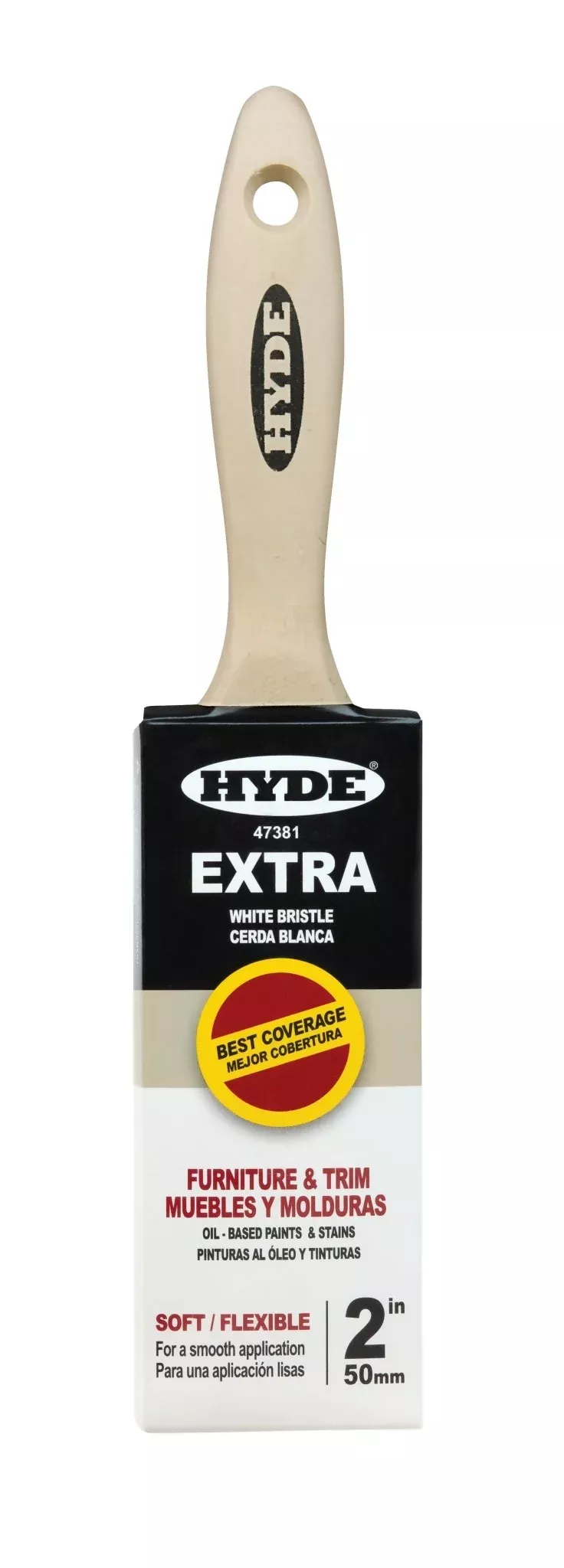
Is this the right tool for your job?
✓CHOOSE THIS WHEN
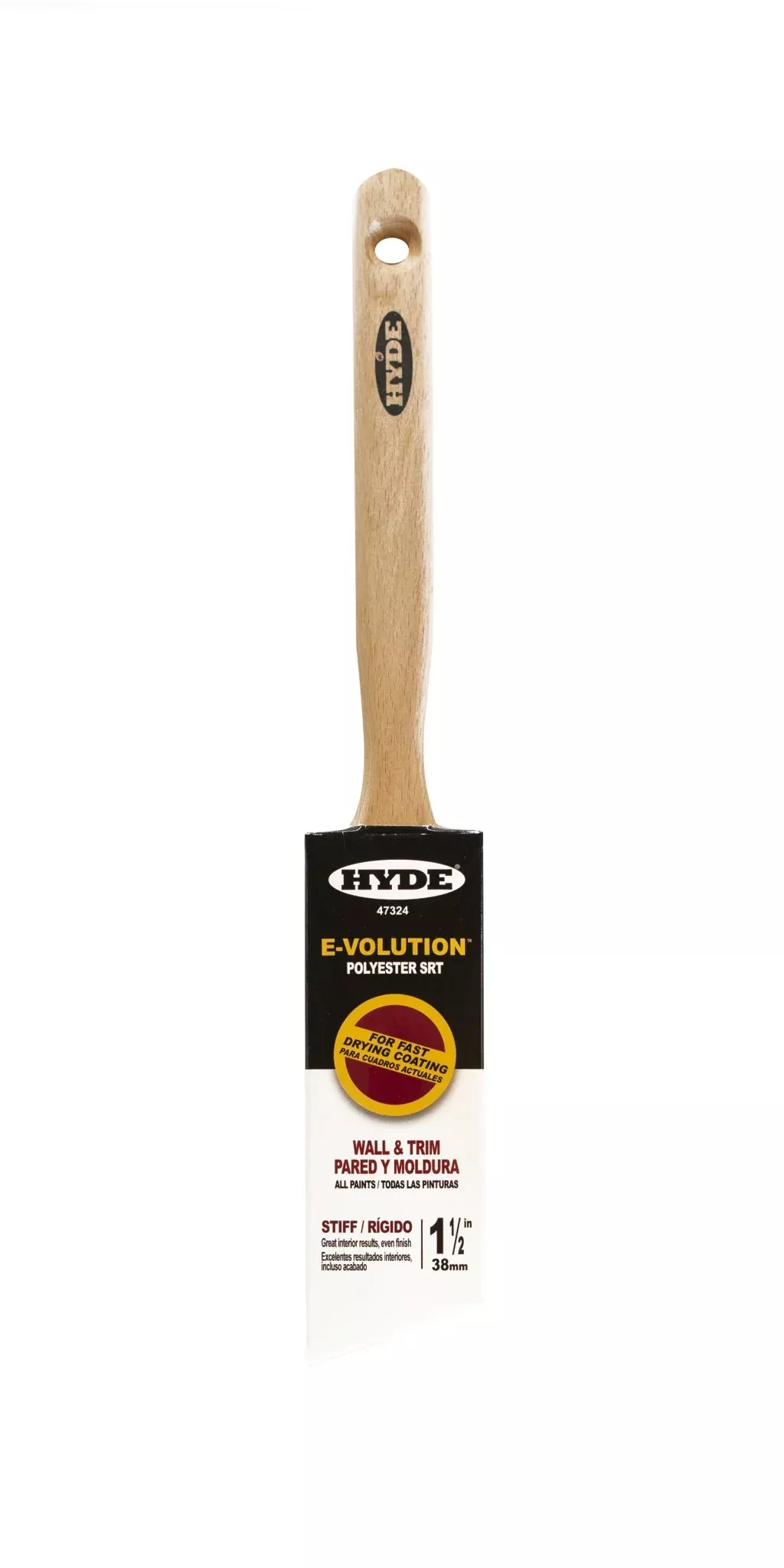
- Bristle Material: Soft, flexible synthetic bristles (historically called white bristles).
- Handle: Beavertail handle for improved grip and control.
- Coating Compatibility: Ideal for use with oil-based paints and stains.
✕CHOOSE A DIFFERENT TOOL WHEN
- Water-based coatings.
- Rated for oil, and — if the fill is genuine natural white bristle — actively harmed by latex, which softens and flares it.
- Use the flagged-polyester 47531 for a 2-ish-inch latex job instead.
- It is also not an angular sash brush: it is a square-tipped flat, so for cutting a crisp ceiling or trim line, an angled sash beats it.
- And it is not a broad-field brush — for a full flush door or a large tabletop in one loading, the 3″ or 4″ Extra moves more finish with fewer strokes.
For these jobs—use this instead
THE JOB, THE REASON, AND THE BETTER TOOL✕ Two-inch latex jobsUse the flagged-polyester 47531 for a 2-ish-inch latex job instead. BETTER TOOL 3″ Straight Brush, 100% Polyester, Wood 47531 →
How the pros run it
01
Loading
one-third of the bristle, tap off the excess, paint from the loaded side; a soft 2″ over-charged will run at the ferrule and drip. Laying off: finish every area with one light, one-directional tip-off — this is where the Extra’s softness pays, leveling enamel and varnish flat. Grip: full grip on the beavertail for the productive straight-away strokes; the palm swell reduces fatigue across a long finishing session. Cleaning: for oil finish, flush the correct solvent (mineral spirits for most oil enamel and oil stain; the finish maker’s thinner for varnish/poly) all the way into the heel, wash, comb straight, spin or shake, and hang. Cured finish trapped where the bristles meet the ferrule splays the brush for good — the heel, not the tip, is what you are protecting.