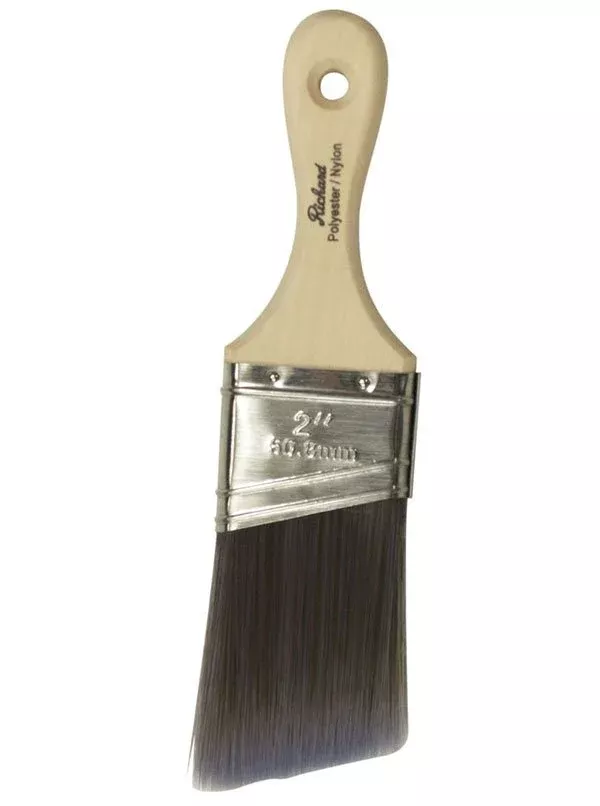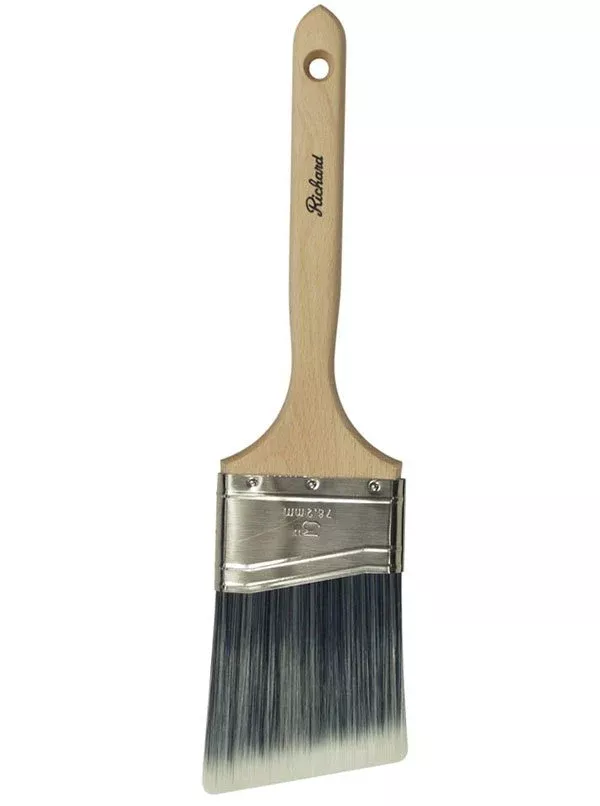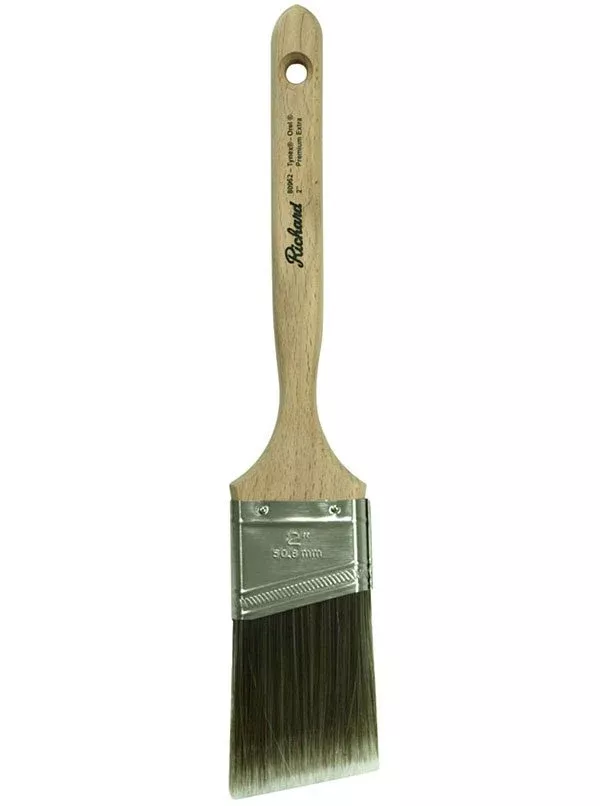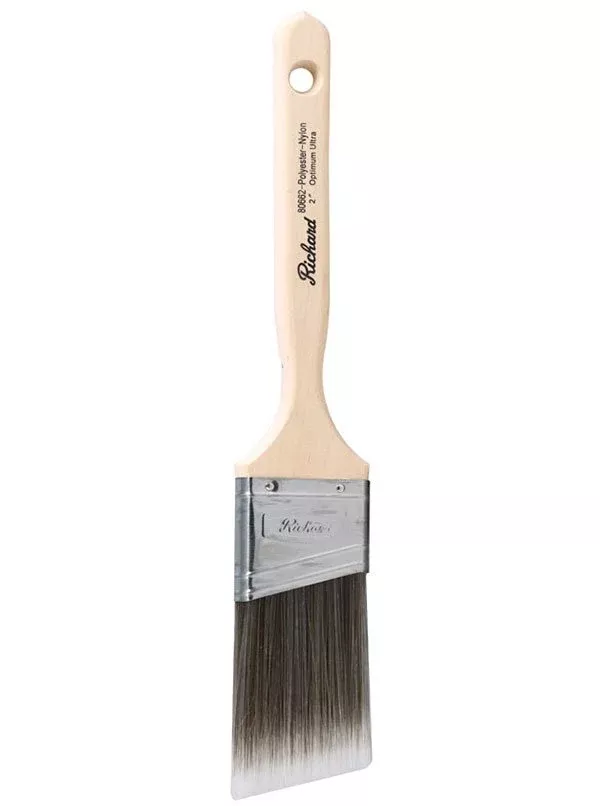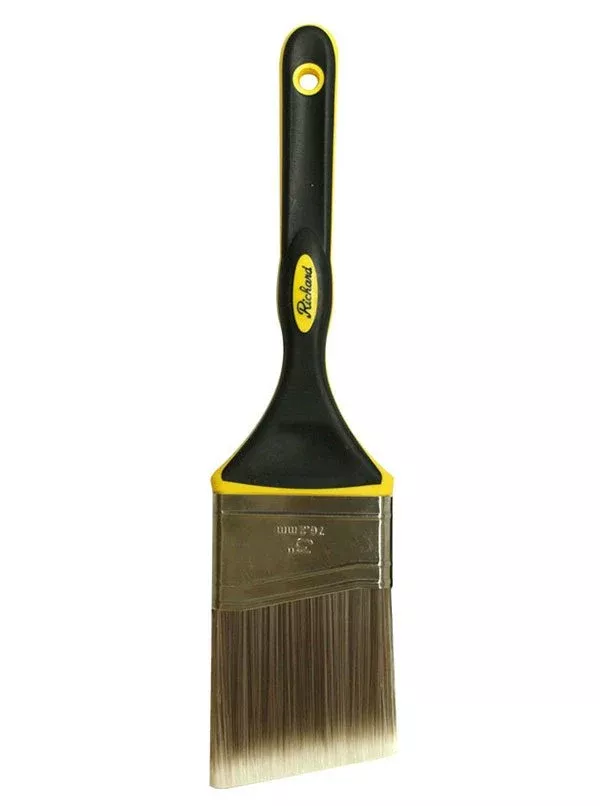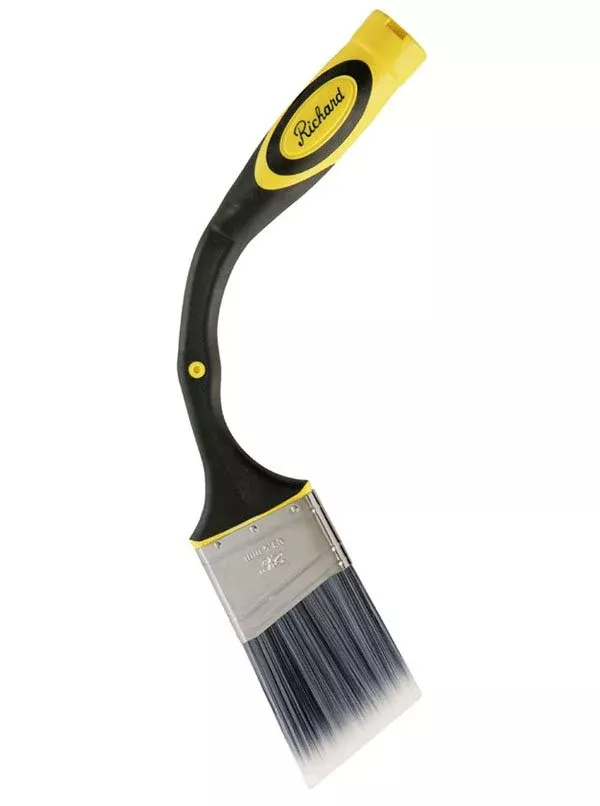

Is this the right tool for your job?
✕CHOOSE A DIFFERENT TOOL WHEN
- Oil-based paint, varnish, and enamel where the finish must flow dead flat.
- Synthetic filament will carry oil coatings, but the glass-smooth lay-off of an oil enamel belongs to soft natural bristle — Richard’s black-bristle PREMIER (80452-class) and Hyde’s white-bristle Extra (47380-class) are the same-family tools built for it.
- Match the fill to the can, not to habit.
- Broad open fields — a 1-1/2″ brush painting a whole wall is a long afternoon; cut the edges with this and roll the middle.
- Wide cut-in runs — for the long uninterrupted wall-to-ceiling line, the 2-1/2″ carries more paint and covers the same line in fewer strokes (§5).
For these jobs—use this instead
THE JOB, THE REASON, AND THE BETTER TOOL✕ Glass-smooth oil enamel lay-offRichard’s black-bristle PREMIER (80452-class) and Hyde’s white-bristle Extra (47380-class) are the same-family tools built for it. BETTER TOOL 2” Straight Paint Brush, PREMIER 80452 →
How the pros run it
01
Grip it like a pencil, not a hammer
thumb and first two fingers on the ferrule, handle laid back over your hand. The pencil grip is what gives a straight cut its fine wrist control. Load a third. A cut-in brush carries paint in the belly of the bristle, not the tip; overloading floods the line and drips. Lead with the long point and let the weight of the loaded brush do the pressing — you are steering, not scrubbing. Set back, then move to the line so first contact doesn’t splay a blob right on the edge. Keep a wet edge: cut a section, roll it in before the cut flashes dry, and the two melt together — this matters more with fast-drying modern latex, which is exactly what a synthetic brush is built for. Ease off the load before you lift to avoid a fat stop mark.