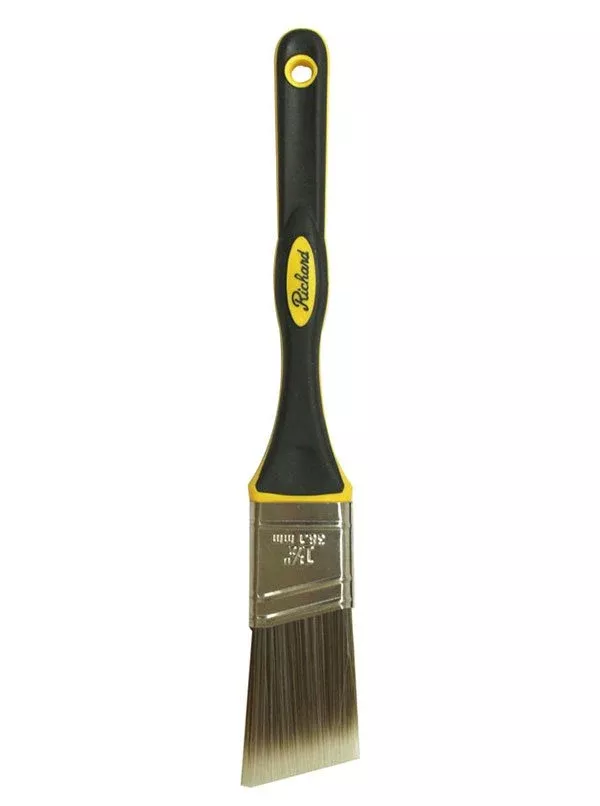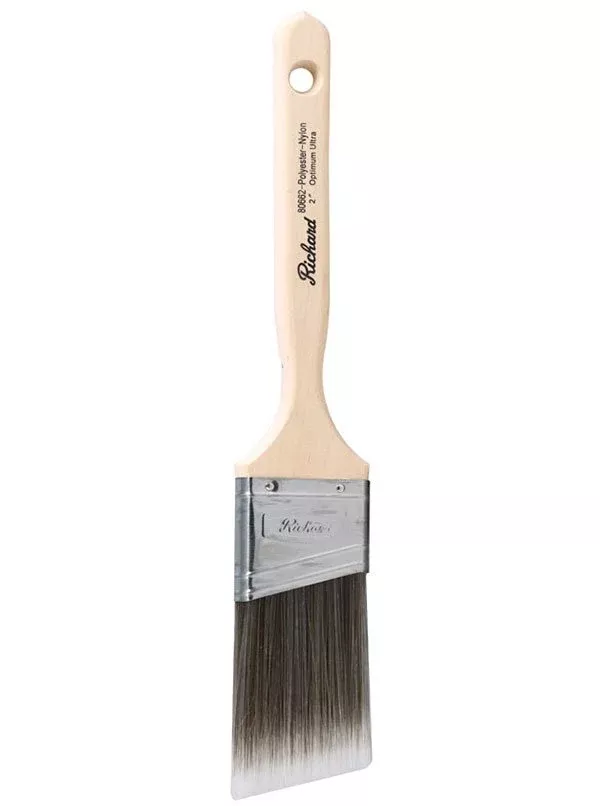
Is this the right tool for your job?
✕CHOOSE A DIFFERENT TOOL WHEN
- Not a precision-line brush.
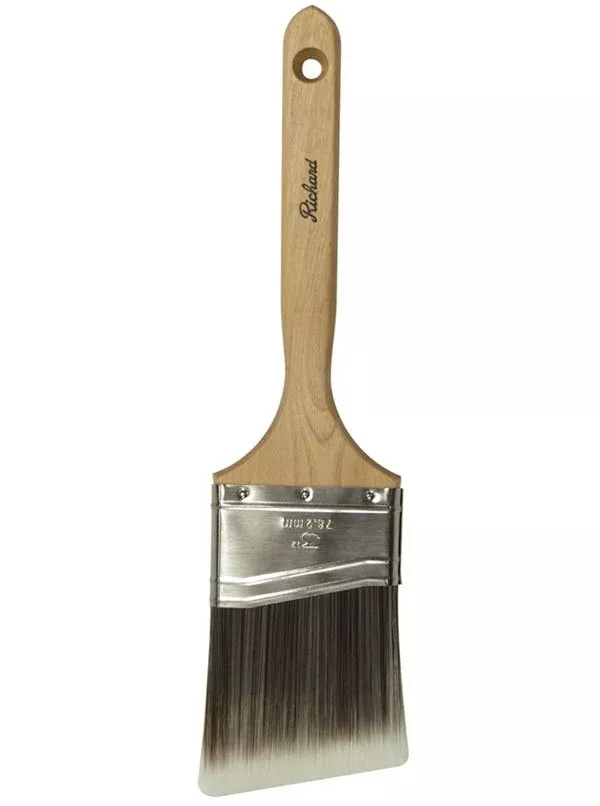
- Three inches rides a broad freehand line; a scrutinized hairline cut is a 2-1/2″ or 2″ job (§2a).
- Not a big-field tool — a wall or ceiling is a roller’s work; this cuts and covers the bands the roller can’t.
- Not the oil-and-varnish finisher — poly-nylon carries waterborne coatings and only tolerates oil; a mirror enamel or varnish lay-off wants natural white bristle.
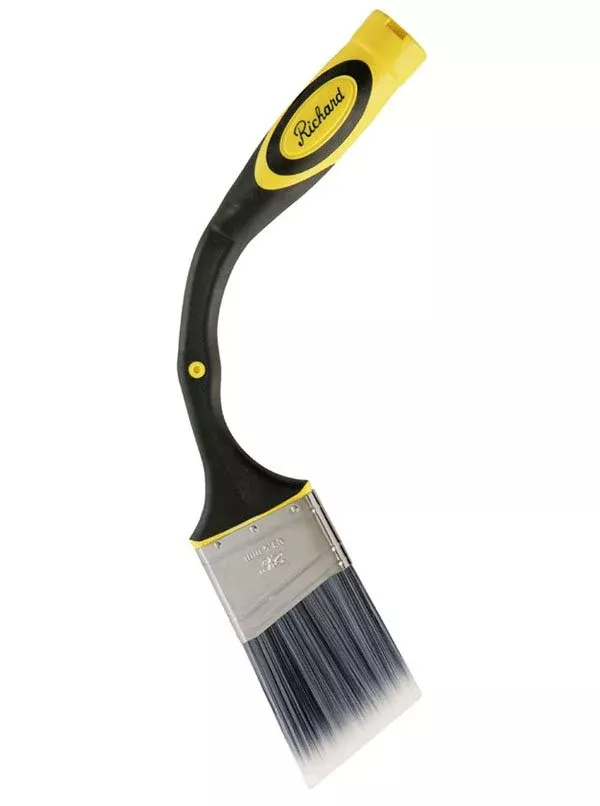
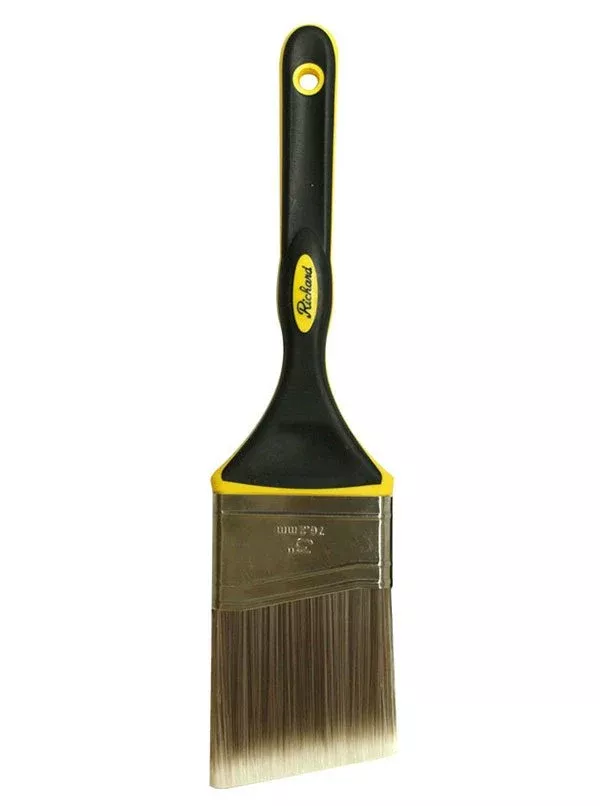
- Not a reach or pole brush — the fixed soft-grip handle can’t get behind a radiator or up a stairwell, which is the goose-neck 80832/80833’s job.
For these jobs—use this instead
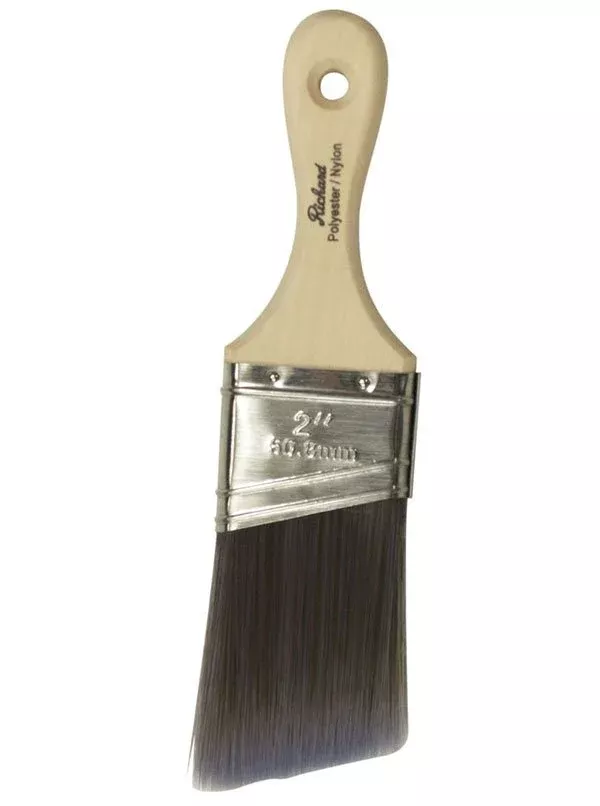
THE JOB, THE REASON, AND THE BETTER TOOL✕ Reach and pole workThe fixed soft-grip handle can’t get behind a radiator or up a stairwell, which is the goose-neck 80832/80833’s job. BETTER TOOL 2-1/2″ Angular Paint Brush, Polyester 80832 →
How the pros run it
01
Load one-third, tap don’t scrape
a 3″ brush’s advantage is its reservoir; a scraped brush throws it away and a drowned one loads the heel. Set a bead, then draw it — off the line first, on the line with the toe second. Drive from the arm — the wide belly needs a stable, shoulder-led pull to hold a line. Manage the weight — a loaded 3″ is heavy; the soft-grip and a relaxed hand are how you keep control late in the day. Toe leads; flip the brush to change direction. Reload before it drags. Clean to the heel every session and comb the filaments straight — the wide head holds the most paint and the most in the heel to ruin it (line-wide care rule).