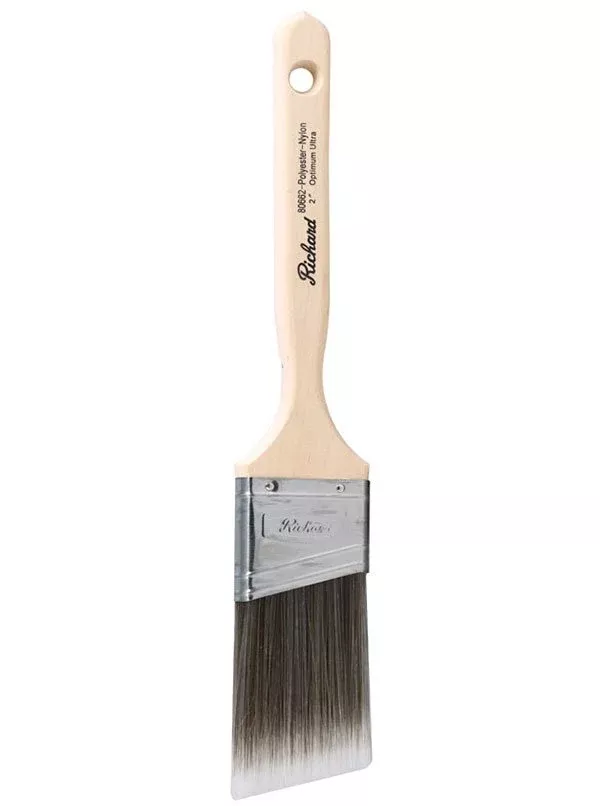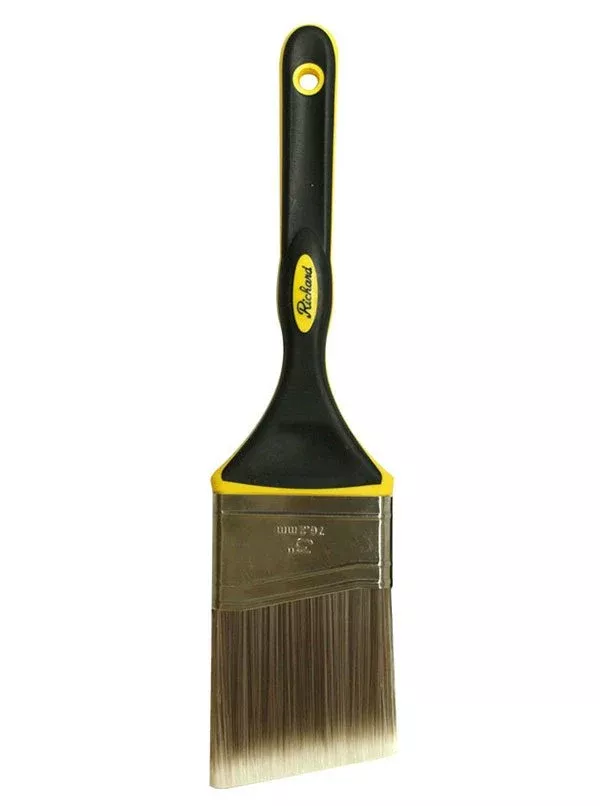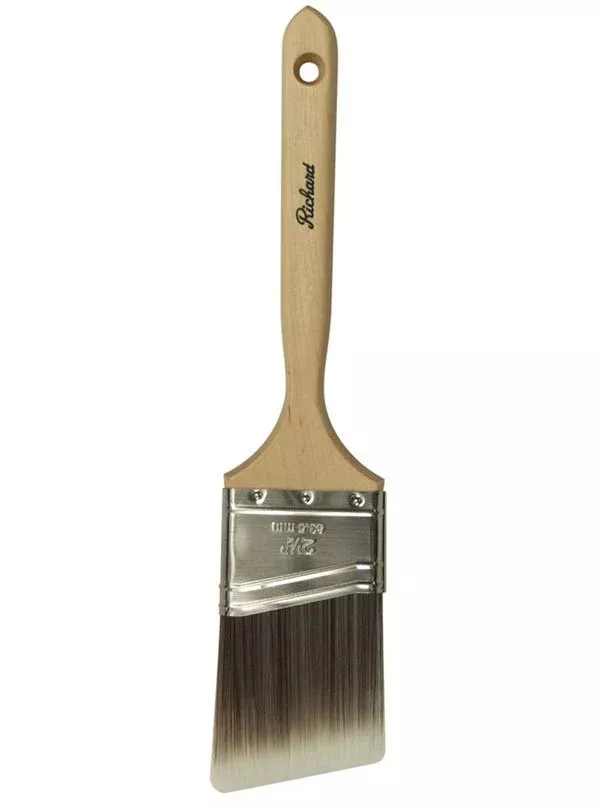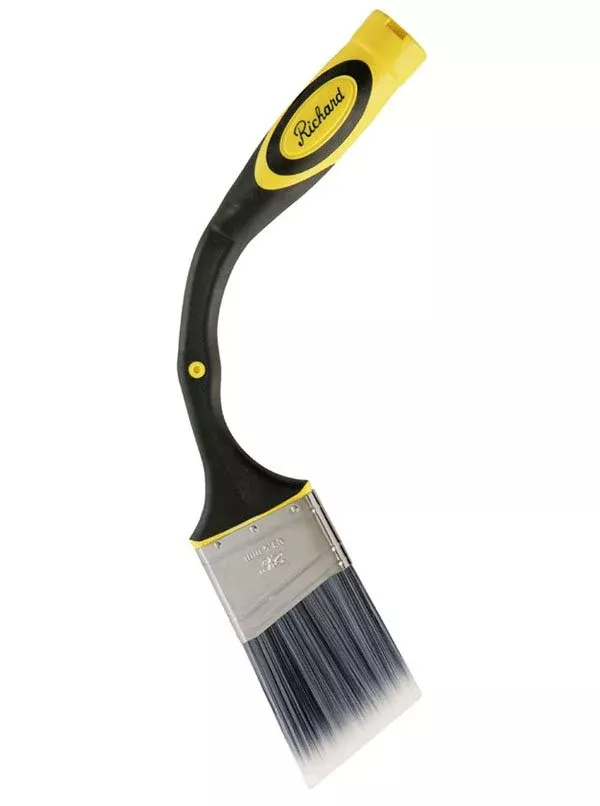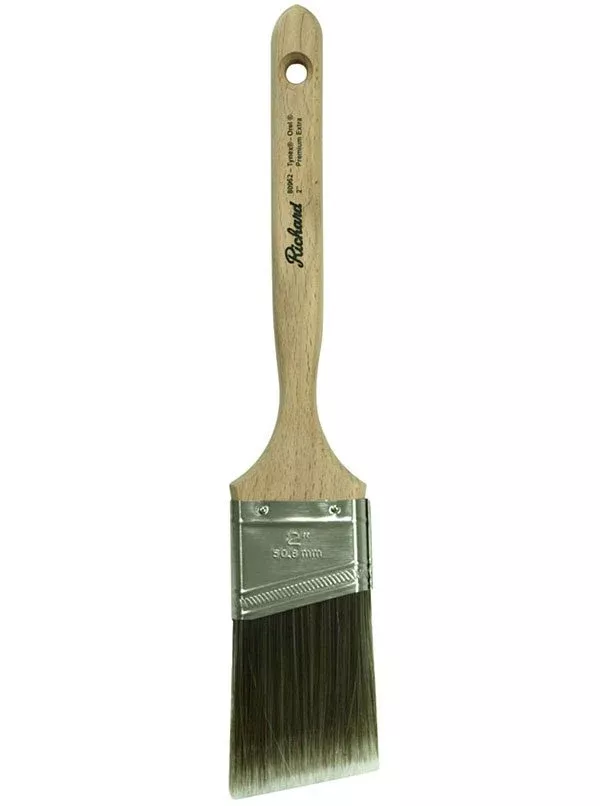

Is this the right tool for your job?
✕CHOOSE A DIFFERENT TOOL WHEN
- One inch of angled bristle is the wrong size and shape to lay off a wall, a door, or wide trim — that is a straight flat’s job (the 80403 and its width-mates).
- Long open cut lines.
- For a long straight ceiling run you can go faster and steadier with a 1-1/2″ or 2″ angular sash.
- Oil finishing where natural bristle wins.
- This is polyester — a water-based cutting brush; for a fine oil enamel or varnish line, natural bristle lays off flatter.
For these jobs—use this instead
THE JOB, THE REASON, AND THE BETTER TOOL✕ Laying off walls and wide trimThat is a straight flat’s job (the 80403 and its width-mates). BETTER TOOL 3” straight paint brush, PREMIER 80403 →
How the pros run it
01
Pencil grip on the flutes
Hold it like a pen, fingers indexed on the fluting, wrist relaxed — cut lines come from fingertip steering, not arm force. Load a third, tap off — an overloaded angular floods its own corner and loses the line. Lead with the long point and let the bead form off that corner; keep the brush moving at a steady speed, because a hesitating hand records as a wobble. Set then ride: establish the line with a light pass, then commit to the full stroke. Feather away from the line into the field so the roller can blend into it. Clean to the heel and comb the angle back straight — an angular brush that loses its clean chisel of tips stops cutting a clean line, so its edge maintenance matters more than a flat’s.