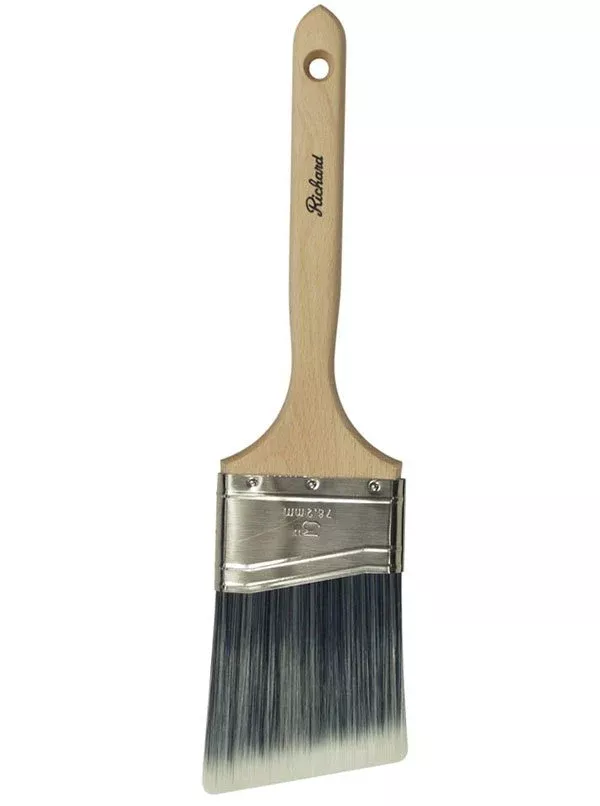
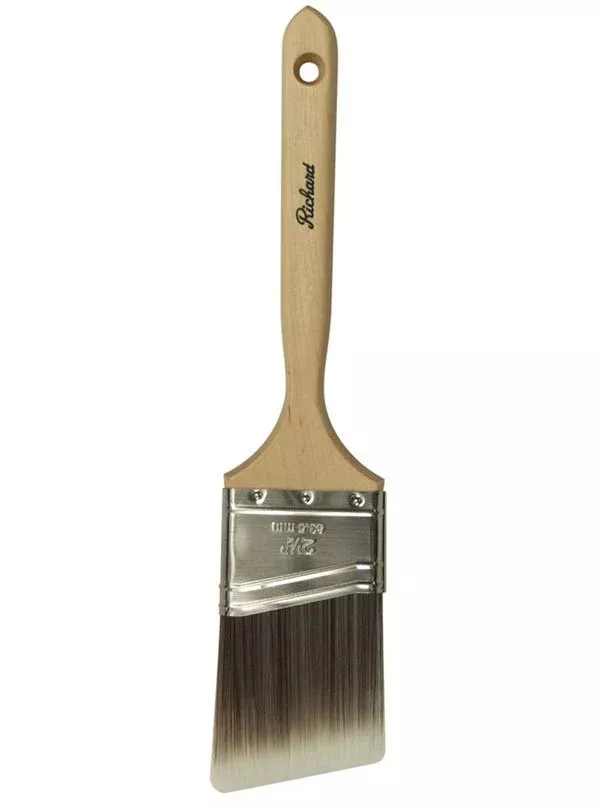
Is this the right tool for your job?
✕CHOOSE A DIFFERENT TOOL WHEN
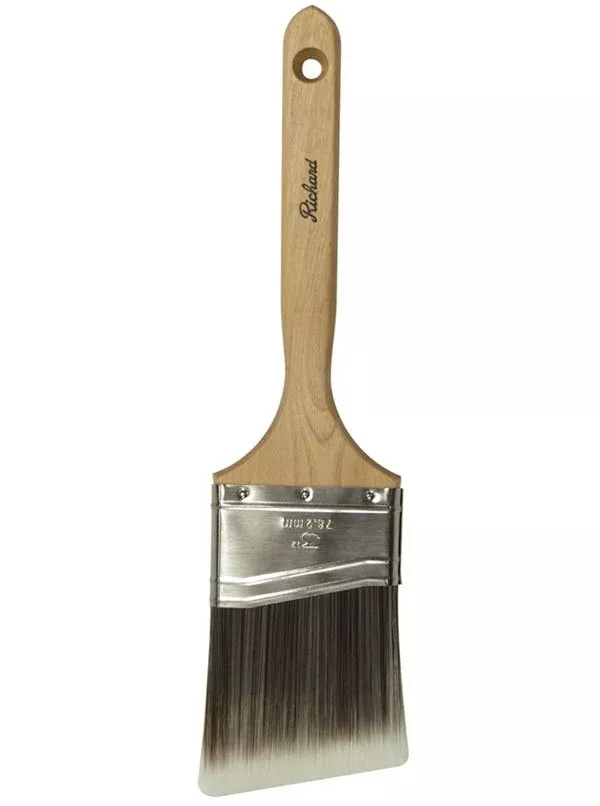
- Oil-based enamels and varnish that must lay off perfectly flat — that finish is the province of soft natural bristle (PREMIER black-bristle 80452-class, Hyde Extra white 47380-class); the synthetic here is for waterborne paint.
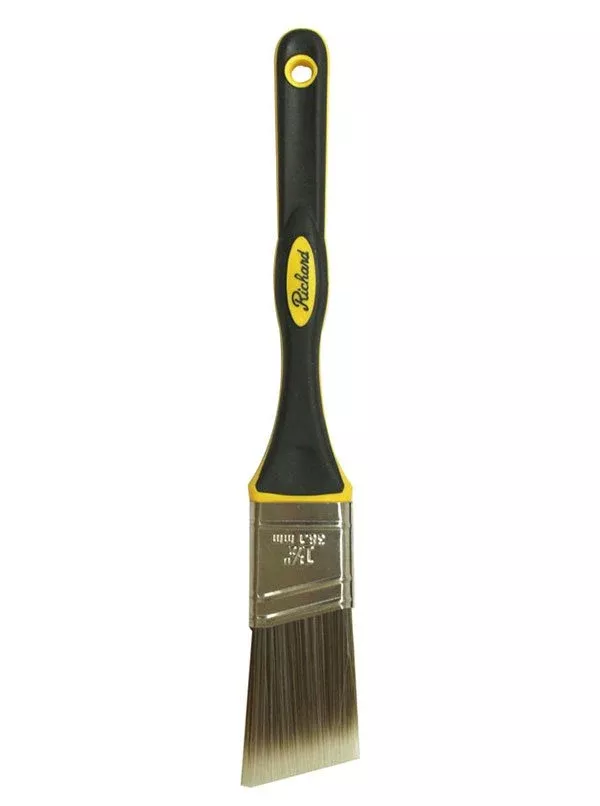
- The tightest muntins and narrow pockets — where 2-1/2″ is too broad to steer, drop to the 1-1/2″ 80801.
- Huge thirsty exterior fields — for laying a heavy coat over broad rough siding fastest, an oval’s larger reservoir beats a flat sash (§5).
- And it is not a roller — cutting a whole wall face with any brush is wasted effort.
For these jobs—use this instead
THE JOB, THE REASON, AND THE BETTER TOOL✕ The tightest muntins and narrow pocketsWhere 2-1/2″ is too broad to steer, drop to the 1-1/2″ 80801. BETTER TOOL 1-1/2” Angular Paint Brush, PRO 80801 →✕ Perfectly flat oil enamelsThat finish is the province of soft natural bristle (PREMIER black-bristle 80452-class, Hyde Extra white 47380-class); the synthetic here is for waterborne paint. BETTER TOOL 2” Straight Paint Brush, PREMIER 80452 →
How the pros run it
01
Pencil grip on the ferrule
for wrist-level control of the line. Load to a third and tap the excess — a cut brush holds its paint in the belly, and a flooded tip drips onto everything below the line. Long, single, unhurried strokes off the long point; let the loaded brush’s own weight set the pressure. Come to the line from just behind it, not straight down on it. Cut wet-into-wet with the roller, and only cut as far ahead as the paint will stay open — with fast modern latex that is a shorter run than it used to be, which is why the brush is synthetic. Tip off the tail of each stroke to lift the mark before you reload.