Is this the right tool for your job?
✕CHOOSE A DIFFERENT TOOL WHEN
- Texture and volume.
- On orange-peel, knockdown, or any tooth, foam paints the peaks, misses the valleys, and abrades its own face; on masonry it disintegrates.
- It also holds far too little paint to roll a full wall efficiently at any width — six inches of foam on a bedroom wall is a reloading marathon a fiber cover would win easily.
- And in fast flat latex, an overworked foam face bubbles; a short-nap fiber mini is the better quick-touch-up tool.
- Foam is for smooth surfaces and level-out coatings, full stop.
How the pros run it
01
Foam rewards restraint. Load light
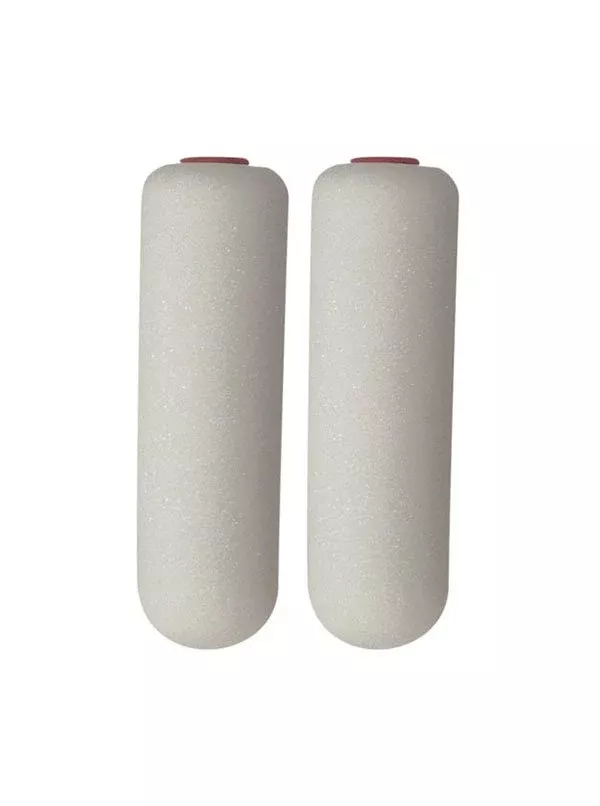
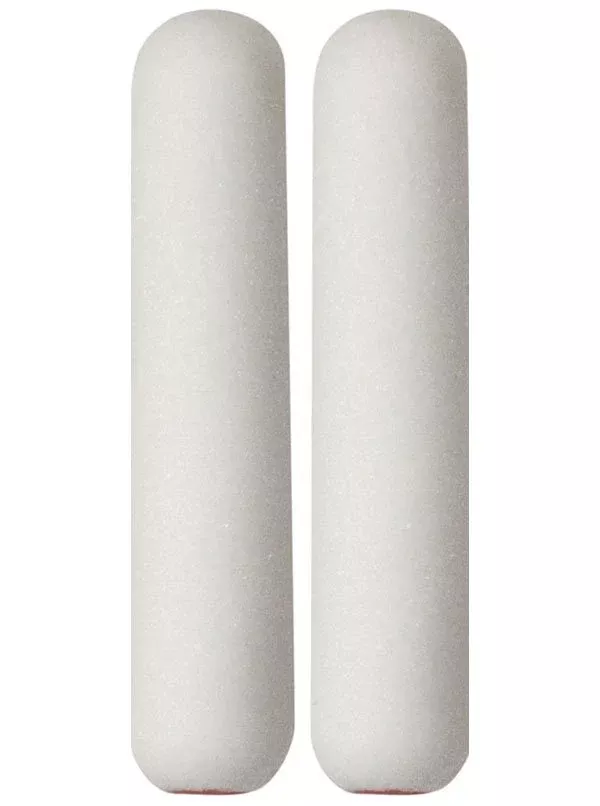
a foam sleeve carries little and sags when overloaded, and six inches of sagging foam drops fat edges fast. Roll slowly — speed whips bubbles into enamels and clears. Build with thin coats, never one heavy one; foam cannot hold enough paint to build film and will curtain if you try. Lay off in one direction for a uniform sheen. And plan to discard it in solvent work: foam is cheap and never rinses fully clean out of its closed-cell face, so with oil enamel, varnish, or poly, tossing the cover beats a mineral-spirits soak — which is why this exact cover also comes as a two-pack (94015).