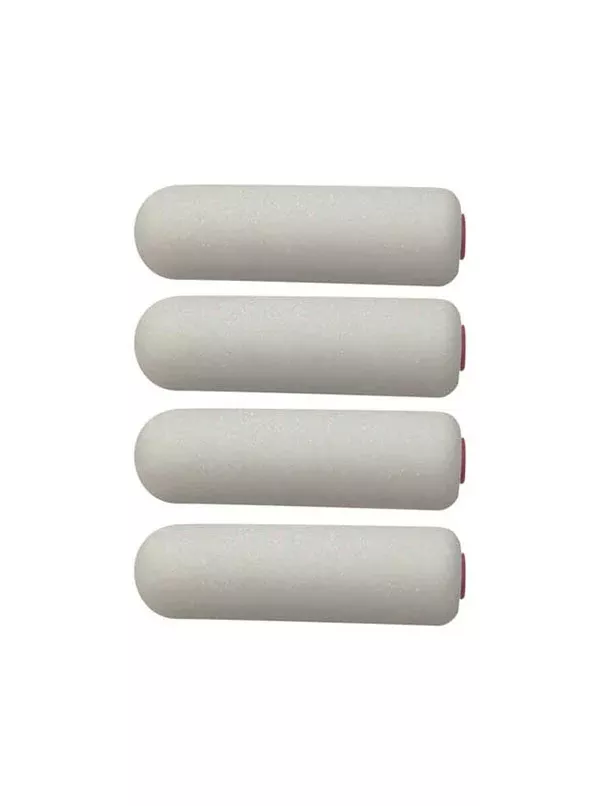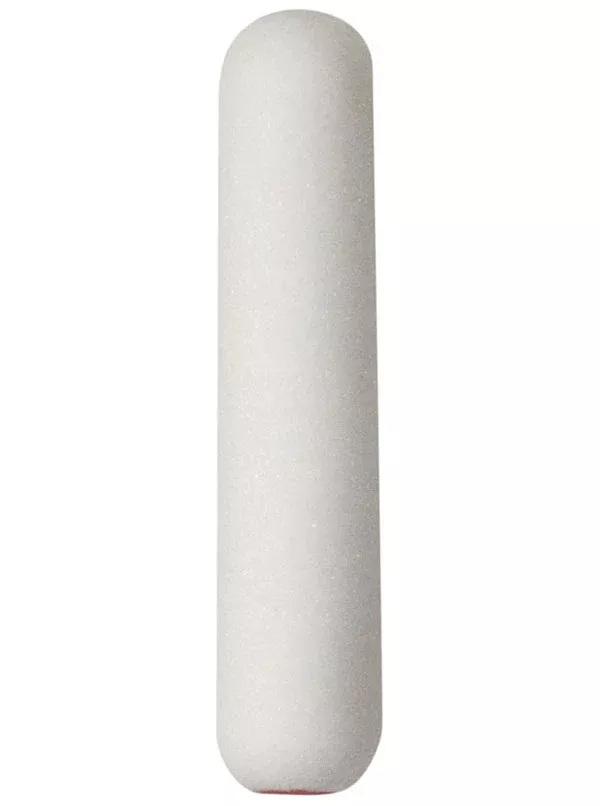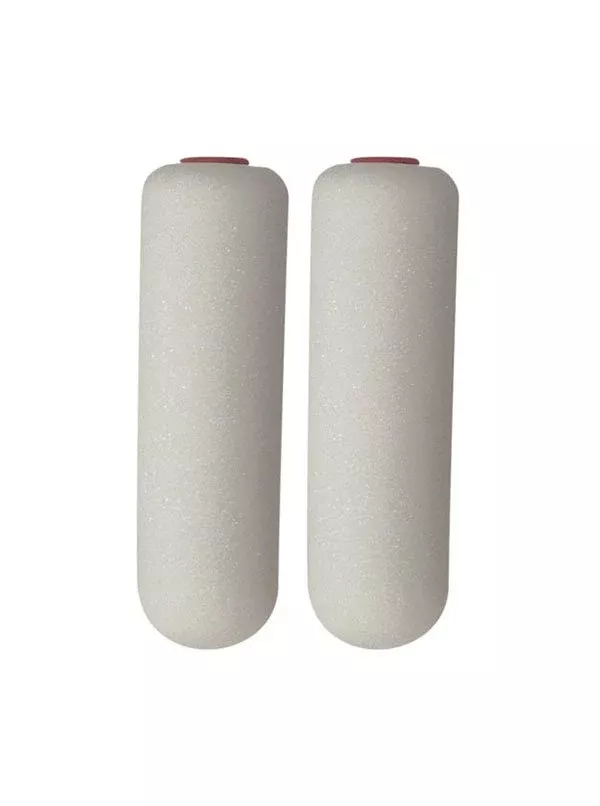
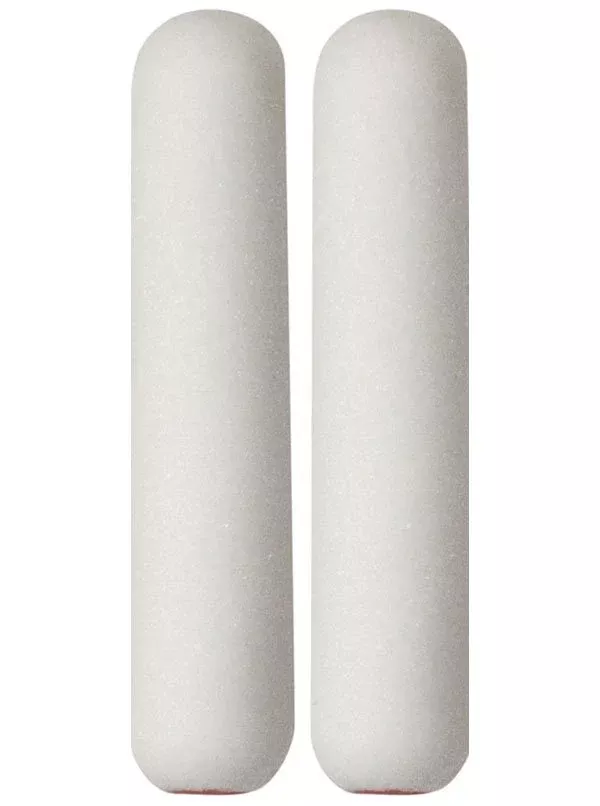
Is this the right tool for your job?
✕CHOOSE A DIFFERENT TOOL WHEN
- Walls and ceilings — foam holds too little paint to keep a wet edge over any real area and bridges any texture; walls belong to a fibered 9-inch cover.
- Any textured surface at all — knockdown, orange peel, stucco, brick — foam rides the peaks and skips the valleys, and no pressure fixes it.
- Applying a heavy build coat — foam sags under a thick coat, so if the coating needs to go on in one heavy pass, foam is the wrong applicator.
- And narrow work — at 6 inches this overhangs stiles, muntins, and railings; drop to a 4-inch foam mini or a 3-inch wound-foam cover for those.
How the pros run it
01
Damp, never dripping
foam meters itself only if loaded shallow and rolled out on the screen; loaded heavy it runs. Thin is the system, not a preference: plan two coats. Slow strokes: speed aerates the paint and foam bubbles are almost always a pace problem, not a product fault. Lay off and leave: one feather pass, one direction, then hands off. Cleaning by chemistry: water-based paint rinses out of foam readily and the cover reuses; solvent-based work is usually a foam cover’s last job — trade habit discards rather than solvent-baths it, which is what the spare is for. Between coats: a foam cover bagged airtight stays usable overnight; a foam face left in open air is finished by morning.