Is this the right tool for your job?
✓CHOOSE THIS WHEN
- The documented job is “Feather and Finish a Wall Patch — The Complete Step-by-Step Guide”.
- The documented job is “Patch a Ceiling Hole — The Complete Step-by-Step Guide”.
- The documented job is “Repair a Drywall Stress Crack — The Complete Step-by-Step Guide”.
- The documented job is “Repair Cracks and Holes in Plaster and Stucco — The Complete Step-by-Step Guide”.
- Fast Application: Quick to apply, reducing overall repair time.
✕CHOOSE A DIFFERENT TOOL WHEN
- Not for Class 1 — a pin hole costs a squeeze of the 09914, not a dip.
- Not for Class 3 — fabric spans a doorknob hole, not a stud bay, and 108 inches of length adds no inch of width.
- Not a surface — the claims sequence a compound coat over it, and an unskimmed patch is an unfinished one.
- Not the whole answer to a moving crack — it is the bridge stage, after the crack pair has opened and filled the line (§2b); fabric over an untreated hairline is a skin over a working joint, the exact failure the line’s crack doctrine exists to prevent.
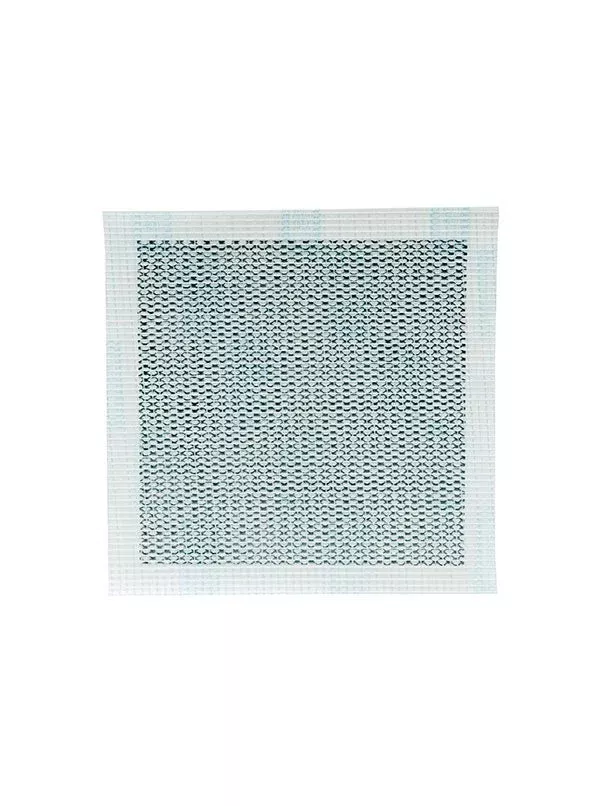
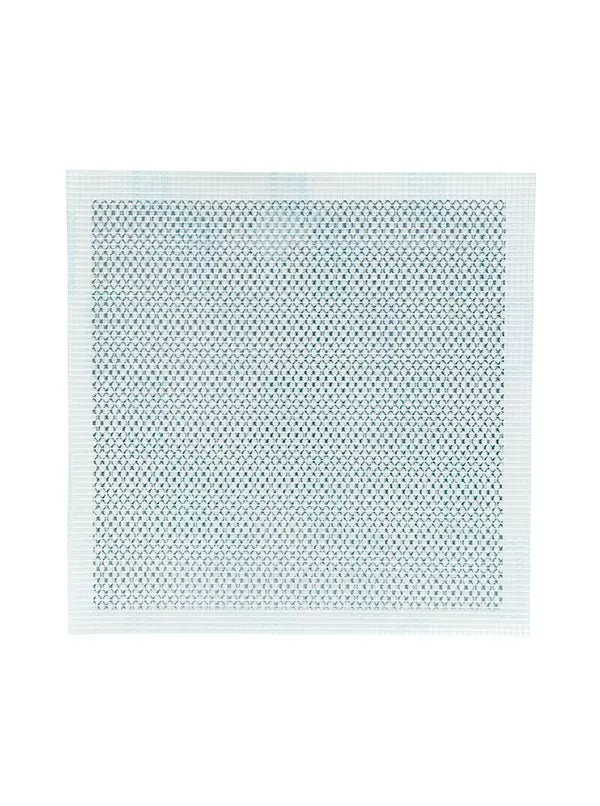
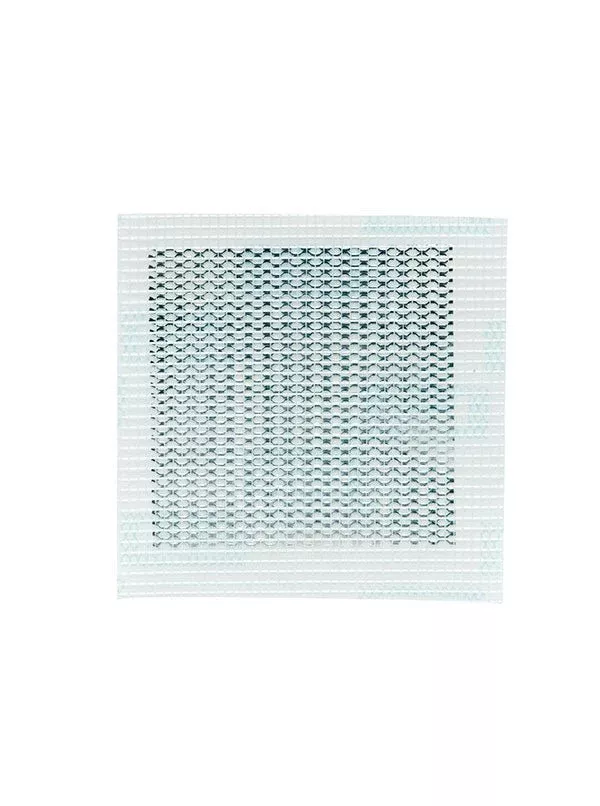
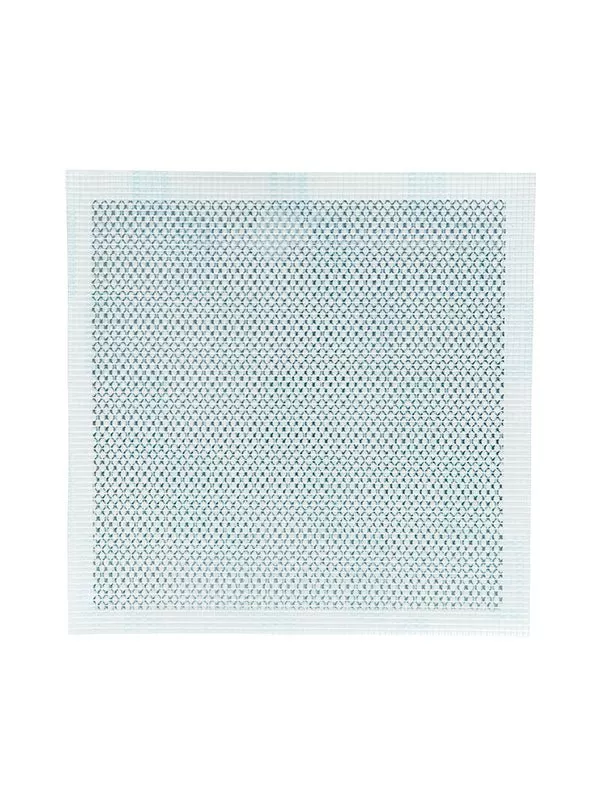
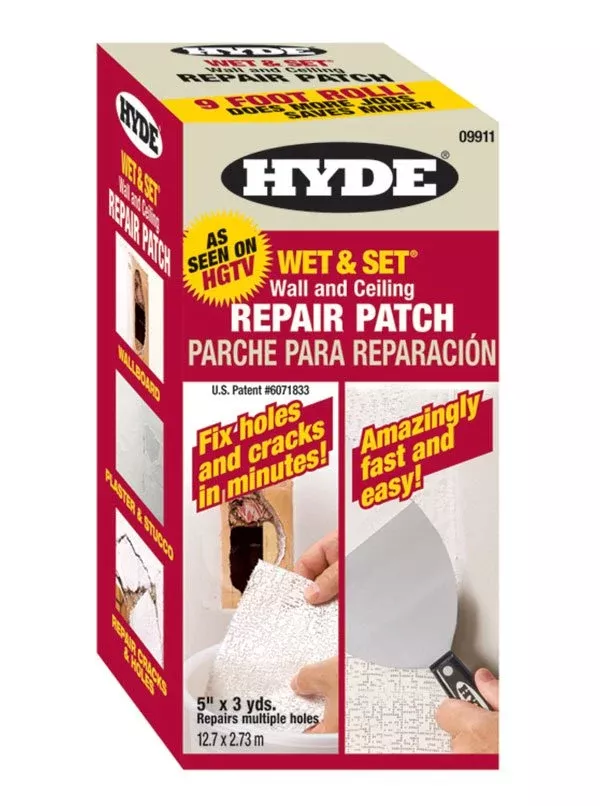
- And not a reason to invent differences from its sheet twin: same fabric, same set, same claims — the roll is more of it, in longer possible pieces, and this store refuses any deeper distinction.
Jobs this tool does
EXACT JOB METHODS FOR HYDE №09911✓ Job guideFeather and Finish a Wall PatchOPEN JOB GUIDE →✓ Job guideMake Ready a Rental UnitOPEN JOB GUIDE →✓ Job guidePatch a Ceiling HoleOPEN JOB GUIDE →✓ Job guideRepair a Drywall Stress CrackOPEN JOB GUIDE →
VIEW 1 MORE DOCUMENTED JOB
✓ Job guideRepair Cracks and Holes in Plaster and StuccoOPEN JOB GUIDE →
For these jobs—use this instead
THE JOB, THE REASON, AND THE BETTER TOOL✕ Class-1 pinholesA pin hole costs a squeeze of the 09914, not a dip. BETTER TOOL Better Finish Nail Hole Filler 09914 →
How the pros run it
01
Cut dry, cut exact
All scissor work happens before water; the claim’s “custom fit” is a dry-bench activity, and a production visit cuts every planned piece before the first dip. One dip, total. Immerse the full piece; carried material that never met water never hardens. Bed center-out. Air chased to the edges leaves; air trapped mid-piece stays. Never re-enter a setting piece. The minutes between placement and rigidity belong to the material; adjustment after the set has begun is subtraction of strength. Fresh water forward. Each dip clouds the bath with activated material; a crew doing repairs in sequence changes water rather than seasoning every later patch with the residue of the earlier ones — trade practice, not package text. After the set, it is wall. Skim it, feather it, sand it, prime it exactly as substrate; the one-coat claim describes the usual case, and raking light — not optimism — decides the exceptions. Store the spool dry. A water-activated material’s shelf enemy is obvious; the van bin it lives in should not be the wet one (storage conditions are not claimed — the caution is the material’s logic, flagged as trade inference).