Is this the right tool for your job?
✓CHOOSE THIS WHEN
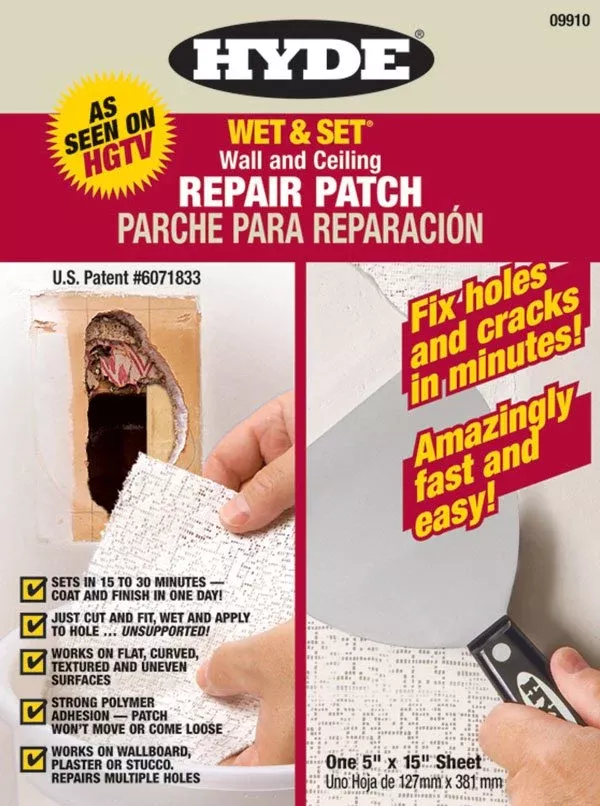
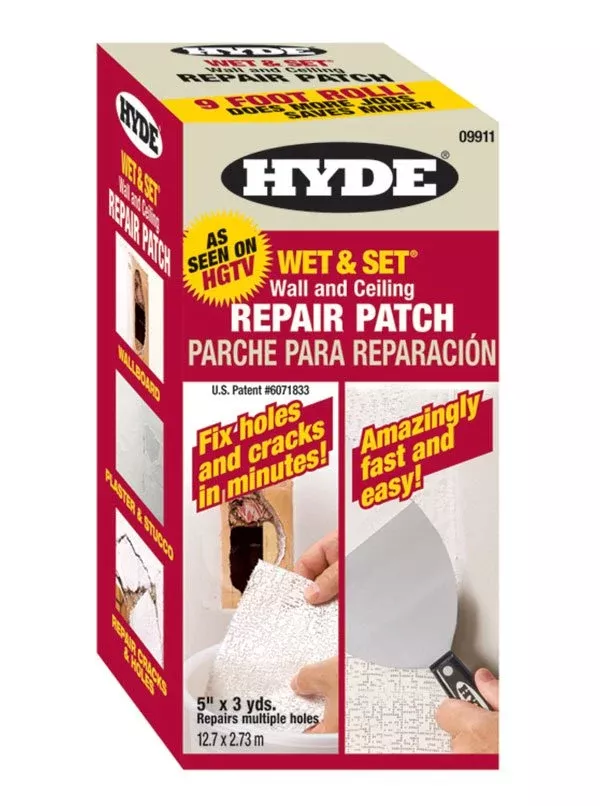
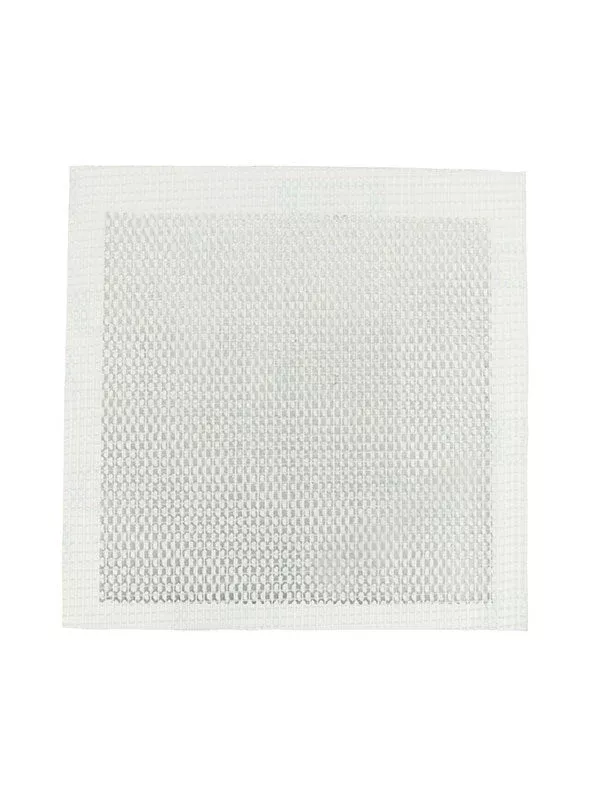
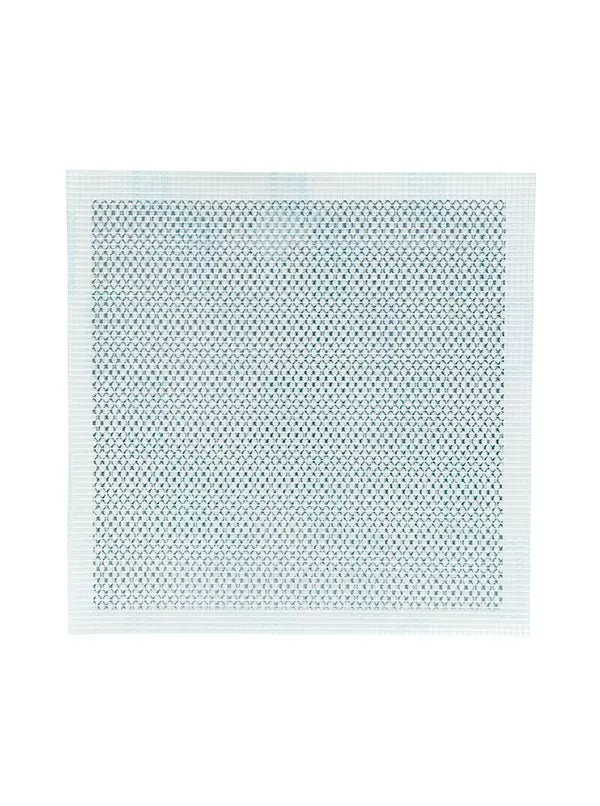
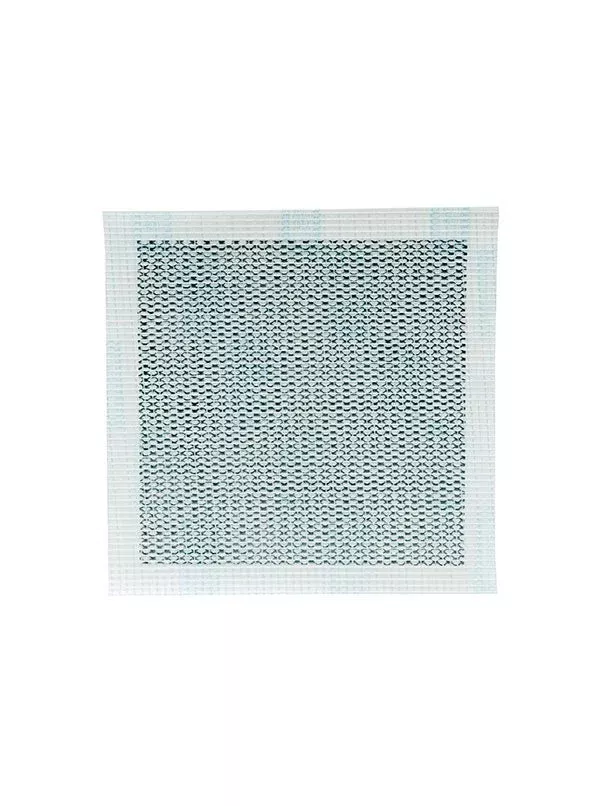
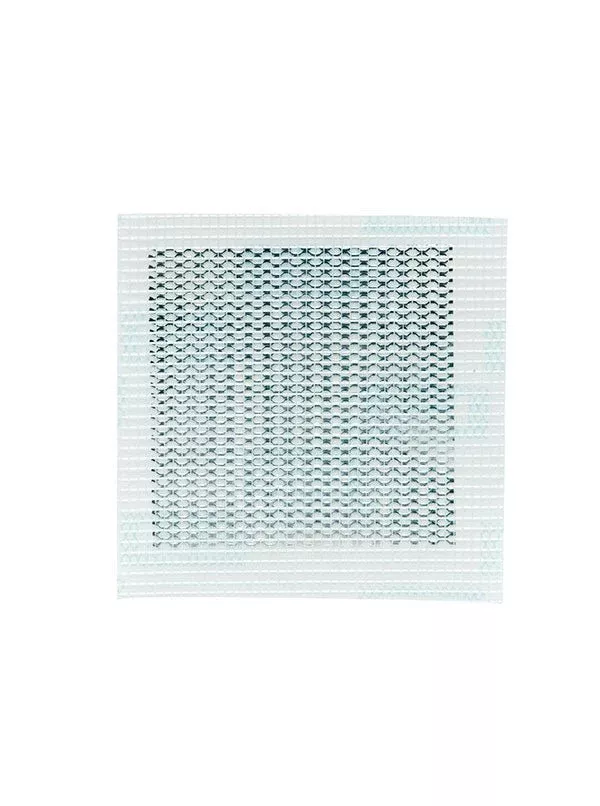
- Material: Self-adhesive fiberglass mesh with perforated aluminum core.
- Surface Compatibility: Works with drywall, plaster, wood, and other materials.
- Easy Application: Self-adhesive design eliminates the need for pre-plastering, speeding up the repair process.
✕CHOOSE A DIFFERENT TOOL WHEN
- Dents and gouges with no through-hole — if the paper or plaster face is only crushed, that’s a filler job, not a bridging job; a patch plate is overkill and leaves a needless crown.
- Nail, pin, and screw holes — spackle or a patch-and-primer tube fills those flush; a plate over a nail hole is a mound where none was needed.
- Holes past the bond margin — an opening approaching or beyond the plate’s edge has nowhere to stick.
- Don’t stack plates; step up a size, or when a truly flat result matters, cut in a drywall patch (the trade’s California patch) or new board.
- Hyde’s own how-to counsel: past golf-ball size a truly flat result wants cut-in board — the plate is the fast version that always leaves a slight crown.
How the pros run it
01
Bond margin is the whole game
The plate doesn’t hold the repair — the inch of sound wall its adhesive grabs all around does. Center the plate so adhesive lands on sound wall on every side; if it can’t, the hole is too big for this size and wants the next one up.
02
Stroke across and past a patch edge, never into it
Drive compound with strokes that start on the wall, cross the patch, and land on the wall beyond — leading a knife into a patch edge from outside is how edges lift and how a crack later rings the perimeter.
03
Thin and wide beats thick and hopeful
A surface mount is buried by width, not depth. Build the mound with progressively wider knives and thinner mud; a thick, narrow bed coat bulges and prints an outline at every low sun angle.
04
Prime before paint, and inspect in raking light
Unprimed compound flashes as a dull square even when the geometry is perfect; a flashlight held flat to the wall is the only inspector that doesn’t flatter.
05
Old walls, stated plainly
In buildings finished before 1978, paint may carry lead and old patching materials may predate the 1977 asbestos ban. A patch-over disturbs almost nothing — quietly one of this repair’s virtues — so keep it that way: don’t sand aggressively into old wall surfaces without testing first.