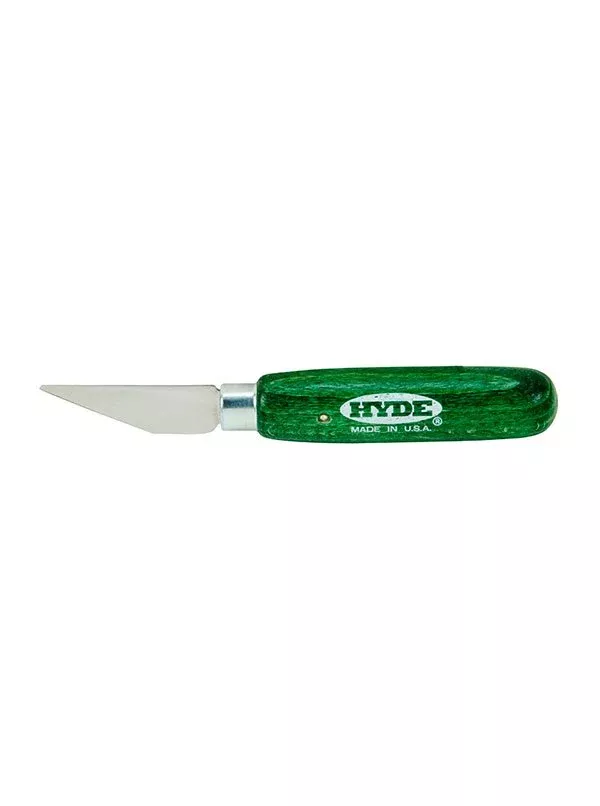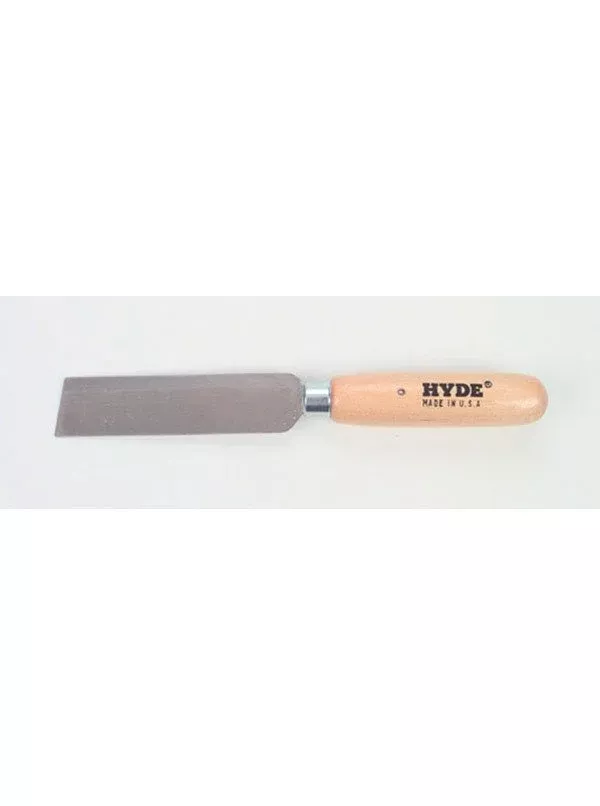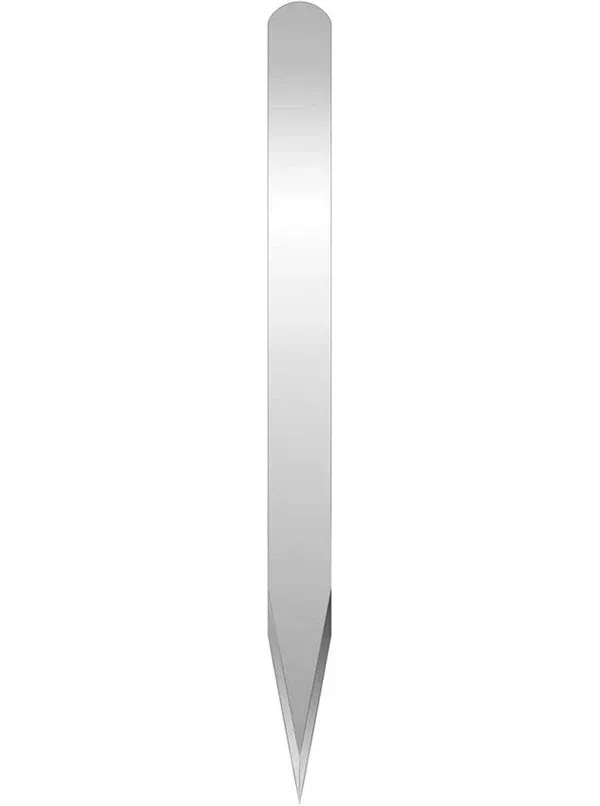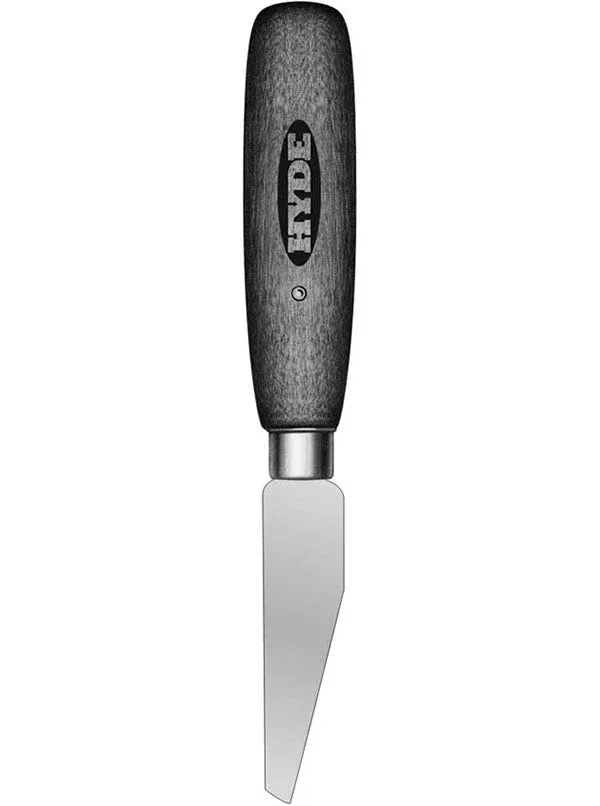
Is this the right tool for your job?
✕CHOOSE A DIFFERENT TOOL WHEN
- Not straight-line and inside-start work — piercing the field of a panel and drawing a straight cut is the sharp points’ job (55000/55050); this curved blade is built to follow arcs, not to run straight.
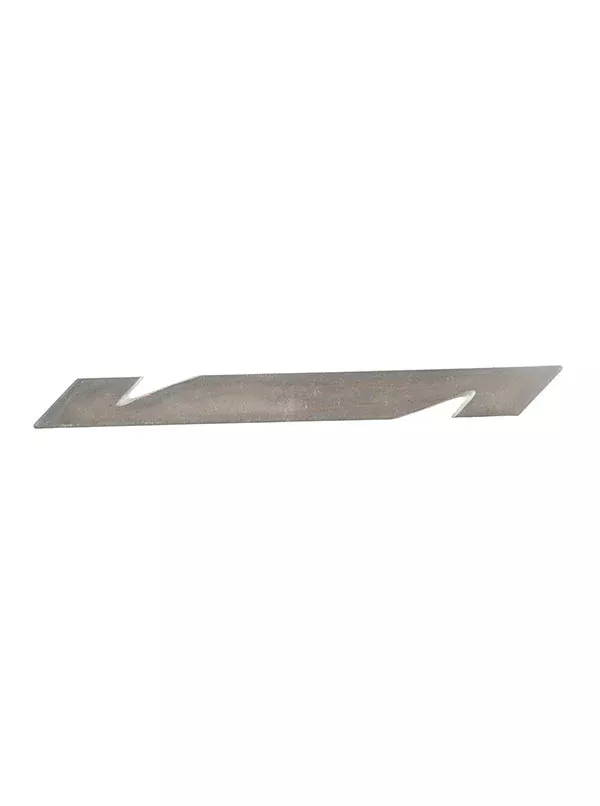
- Not a station blade — the mounted, consumable version of curve-following work is the Curve Point Extension Blade (57320), a mill blade for a cutting-floor handle; the 55300 is a whole riveted personal knife.
- Not a square-end tool — it is pointed and will puncture what lies beneath.
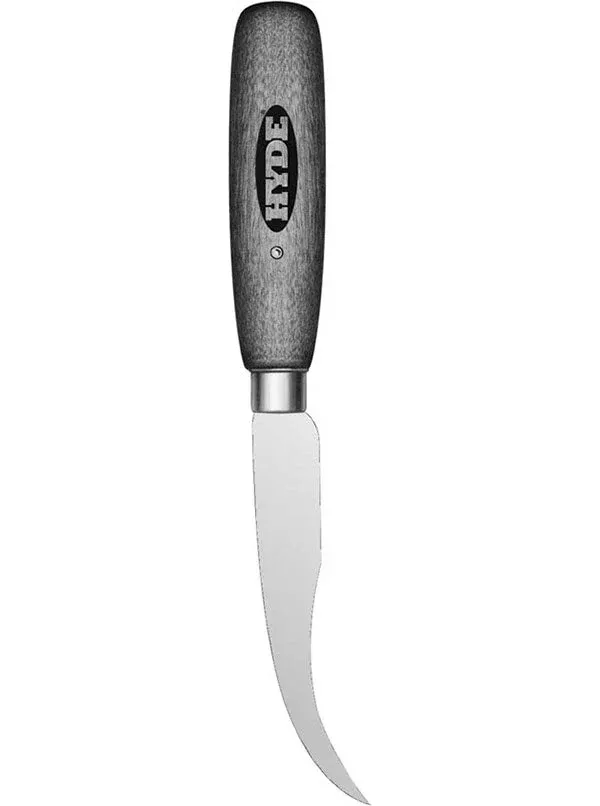
- Not a heavy-force knife — the slender 17-gauge curved blade is for steered precision, not prying.
Jobs this tool does
EXACT JOB METHODS FOR HYDE №55300✓ Job guideHow to Sharpen and Maintain a Pattern Knife Without Changing Its GeometryOPEN JOB GUIDE →✓ Job guideHow to Trim to a Curved Pattern LineOPEN JOB GUIDE →
For these jobs—use this instead
THE JOB, THE REASON, AND THE BETTER TOOL✕ Straight-line and inside-start workPiercing the field of a panel and drawing a straight cut is the sharp points’ job (55000/55050); this curved blade is built to follow arcs, not to run straight. BETTER TOOL Sharp Point 1, 3/4″ x 9/16″ 55000 →✕ Station-mounted curve workThe mounted, consumable version of curve-following work is the Curve Point Extension Blade (57320), a mill blade for a cutting-floor handle; the 55300 is a whole riveted personal knife. BETTER TOOL 20-Gauge 4-3/4″x3/8″x.035″ Curve Point 57320 →
How the pros run it
01
Steer the rolling point
The skill of a curved knife is different from a straight one: you are not pushing a line of edge through the material, you are steering a single moving point of contact along a path. Let the curve do the turning; guide the tip, and the edge behind it follows. Match the sweep to the work. Set the blade so its arc agrees with the arc of the cut — fighting the curve against the line is how you get chatter and flats. Keep the point and the belly both. The upswept tip starts and finishes the cut; the belly does the through-curve work — hone both. Honing a curved edge is its own discipline: a flat bench stone used alone flattens the curve’s belly and un-designs the knife, so follow the sweep with a slip stone or a dowel-backed abrasive and strop the burr off the outside face. Rust. High-carbon cutlery steel — wipe dry after wet or oily work.