Is this the right tool for your job?
✕CHOOSE A DIFFERENT TOOL WHEN
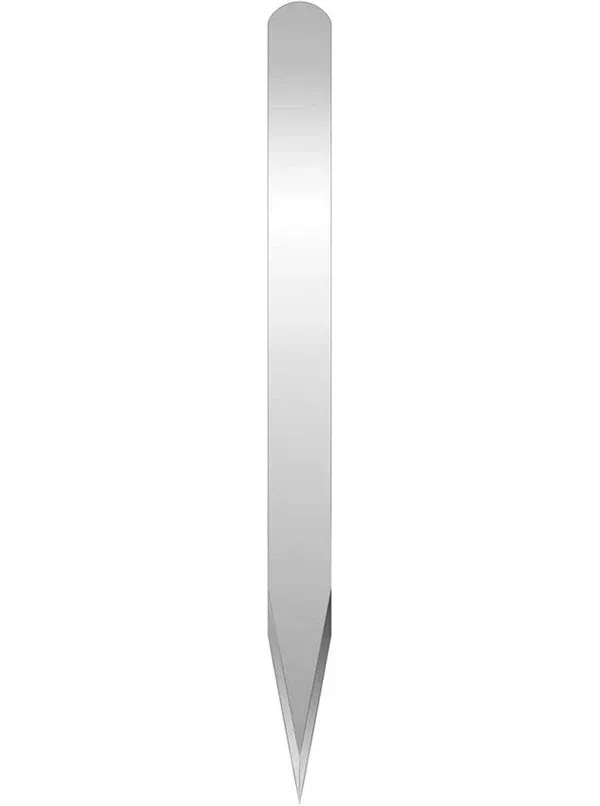
- Not a cure for chipping. Chipped hooks indict technique or stock inclusions; harder steel chips at least as willingly. Buy this blade for wear, never for damage.
- Not the everyday economy. On natural fiber, soft sheet, and intermittent duty, the standard 6520 does the identical cut at the standard-steel position on the card — the honest default until a blade log argues otherwise.
- Not the heavy hook. Dense stock that folds or twists a .035″ blade needs the BG448A’s gauge and the 5/8″ handles — and note that this line offers no HSS blade at that width; going heavier means leaving the printed-steel option behind.
- No maximum-thickness claim. Throat and hook-opening dimensions are unpublished for every pattern here; what the hook can swallow is stated by no one, including this corpus .
- Not for steel banding. Shears cut steel strap. The steel of the blade is irrelevant to that rule.
Jobs this tool does
EXACT JOB METHODS FOR HYDE №67450✓ Job guideChoose Capture Geometry: V-Cut vs HookOPEN JOB GUIDE →✓ Job guideHow to Clear Wraps and Lap-Ups from Machine RollsOPEN JOB GUIDE →✓ Job guideHow to Cut Cord, Twine, Strapping, and Banding with a Hooked PullOPEN JOB GUIDE →✓ Job guideCut Thick Abrasive Stock—Rubber and Carpet Class—at a Hook-Blade StationOPEN JOB GUIDE →
VIEW 5 MORE DOCUMENTED JOBS
✓ Job guideFit, Set, and Flip a Hook Blade in a Mill-Blade HandleOPEN JOB GUIDE → ✓ Job guideFlip and Extend a Double-End BladeOPEN JOB GUIDE → ✓ Job guideHow to Run the Double-End Changeover and Inspection RoutineOPEN JOB GUIDE → ✓ Job guideSever Sheet Goods Without Scoring What Is BeneathOPEN JOB GUIDE → ✓ Job guideHow to Stock and Reorder Hook Blades by PatternOPEN JOB GUIDE →
How the pros run it
01
The geometry gives the orders; the steel just extends them
Pull path planned past the body, work anchored, follow-through predictable — the hooked cut’s rules do not soften because the edge lasts longer. Back on the surface, throat in the work. The spine rides what must survive; a hook climbing out of contact is asking for an angle correction, not more force. Minimum stickout, always. The throat’s depth of exposure is the whole requirement, and a short-set blade loads its screws least. Let the calendar stretch, not the standards. The right response to HSS is longer intervals between flips at the same keenness bar — not running a tired hook because the steel is expensive. Sharpening is a worse deal here than anywhere in the line. The interior bevel already limits honing to a slipstone worked along the curve; on high-speed steel, whose wear resistance resists abrasives as effectively as it resists carpet backing, hand-refreshing a hook costs more bench time than it returns — the flip and the box are the maintenance system (authored practice; Hyde publishes no sharpening guidance for these patterns). HSS is not stainless. Wear resistance is not corrosion resistance; wipe the blade dry after wet stock or adhesive-faced goods like any other tool steel in the drawer.