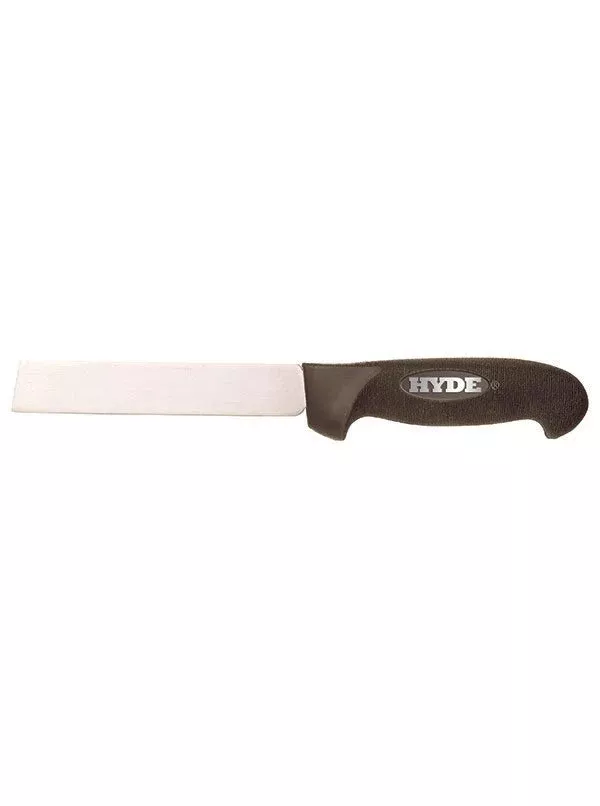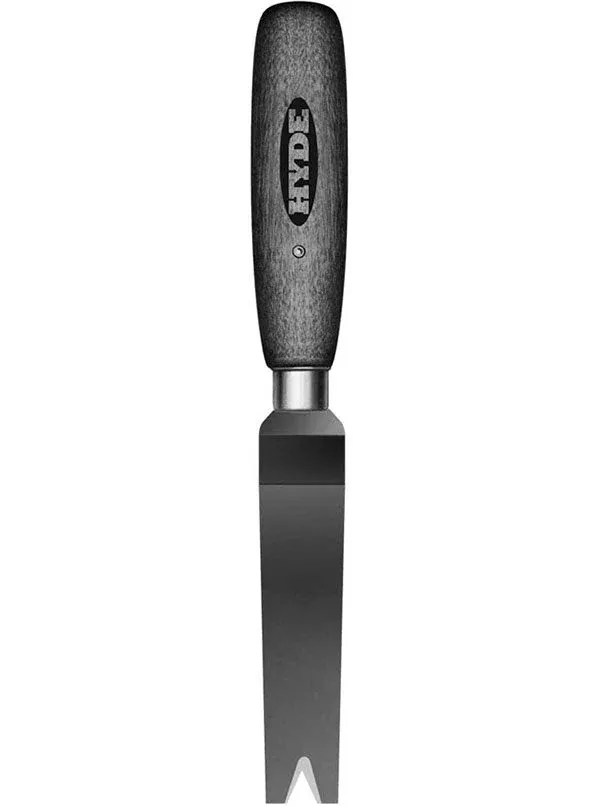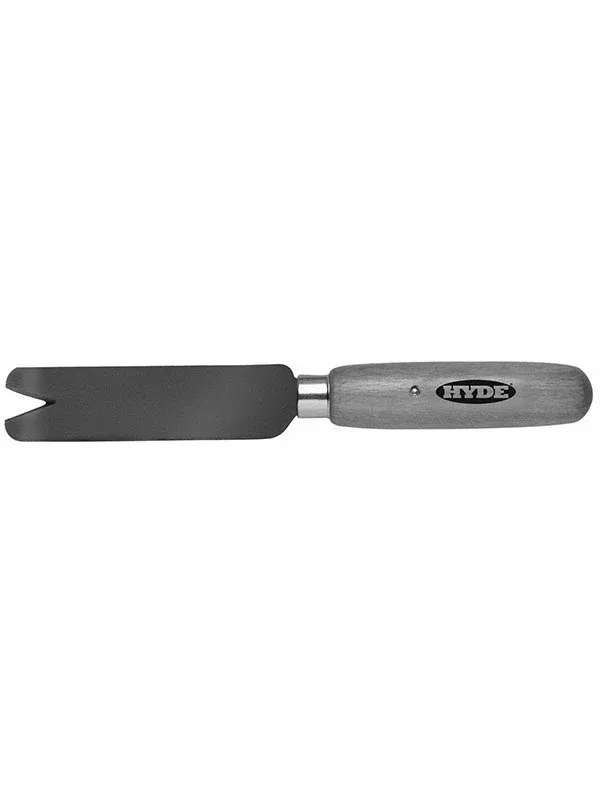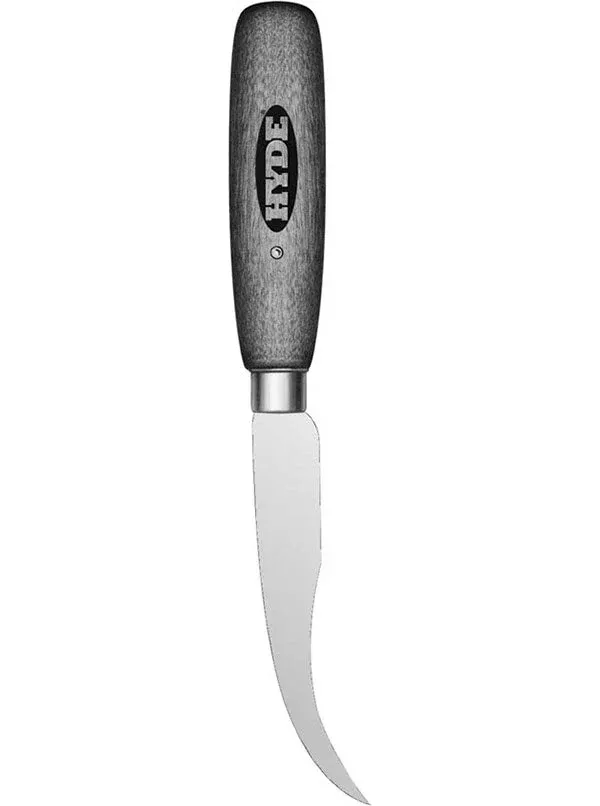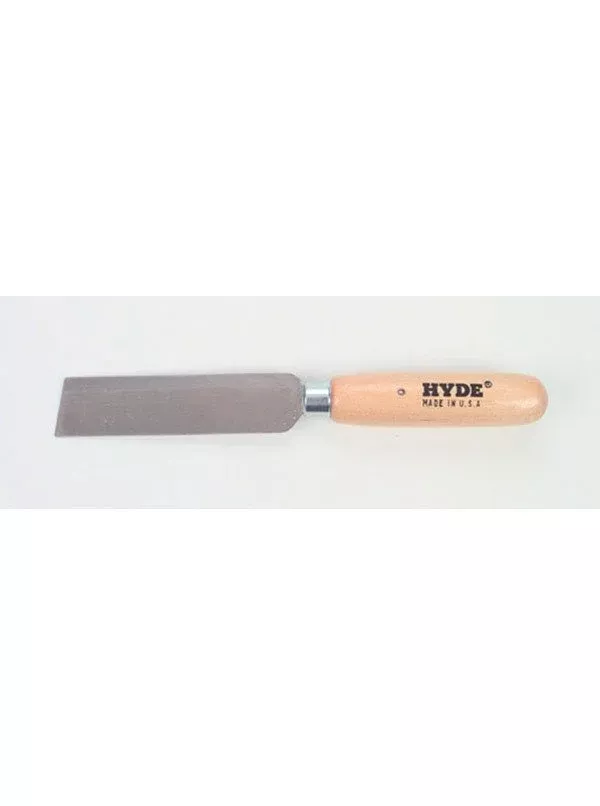
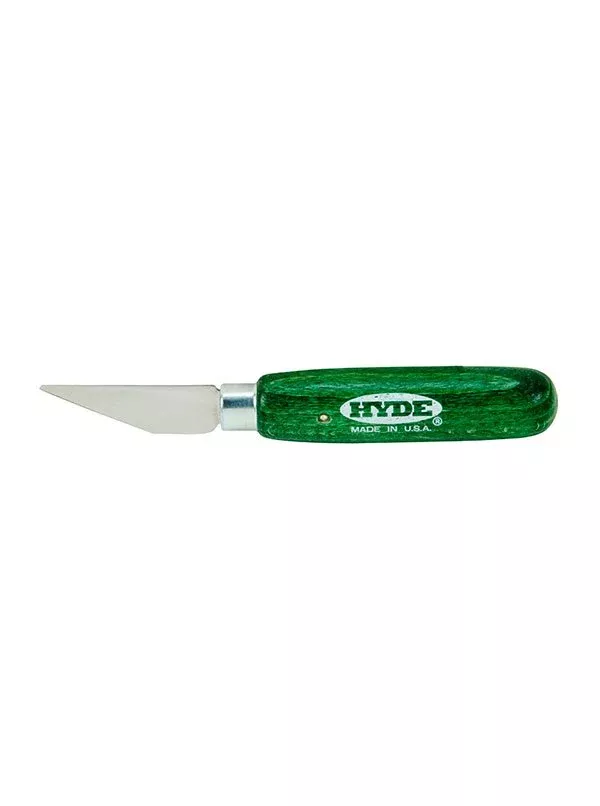
Is this the right tool for your job?
✕CHOOSE A DIFFERENT TOOL WHEN
- Not a station blade — it is a whole riveted knife for one hand, not a consumable that mounts in a handle at a cutting floor (that is the extension-blade half of this line, 57xxx).
- Not a heavy-force tool — the light 17-gauge blade is for control, not for the prying and gouging the stub-bladed 61080 is built to survive.
- Not the clipped-point knife — that geometry and Hyde’s “Clipped Point” name belong to the (A/53360), and this guide doesn’t borrow either.
- Not an inside-panel starter for large sheet work — piercing the middle of a hide and drawing a long cut is the sharp-point knives’ job (55000/55050), which carry longer blades made for the stroke.
- And not a square-end tool: this is a pointed knife, so it will puncture whatever lies under the work — if protecting the layer beneath is the goal, that is the square-point line’s guarantee, one bench over.
Jobs this tool does
EXACT JOB METHODS FOR HYDE №53300✓ Job guideHow to Open a Stitched Seam Without Cutting the Joined ComponentsOPEN JOB GUIDE →✓ Job guideHow to Sharpen and Maintain a Pattern Knife Without Changing Its GeometryOPEN JOB GUIDE →✓ Job guideHow to Use the McKay Stitching Bench for Knife WorkOPEN JOB GUIDE →
For these jobs—use this instead
THE JOB, THE REASON, AND THE BETTER TOOL✕ Prying and gougingThe light 17-gauge blade is for control, not for the prying and gouging the stub-bladed 61080 is built to survive. BETTER TOOL Heavy Duty Bevel Point BG268, 2″ x 1″ 61080 →✕ Clipped-point workThat geometry and Hyde’s “Clipped Point” name belong to the (A/53360), and this guide doesn’t borrow either. BETTER TOOL McKay Stitcher Knife A, 2-3/4″ x 3/4″ 53360 →✕ Inside-panel starts on large sheetsPiercing the middle of a hide and drawing a long cut is the sharp-point knives’ job (55000/55050), which carry longer blades made for the stroke. BETTER TOOL Sharp Point 1, 3/4″ x 9/16″ 55000 →
How the pros run it
01
Grip and range
Choke up: this is a fingertip knife, held close, the blade an extension of the index finger. Its whole reason to be short is to work near a machine and near the eye without the tip roaming. Angle. Low and shearing for trimming and channel work; steeper and point-led for picking a seam. The point is the tool. A stitcher knife lives or dies by a keen point — so keep it, and never pry with it. Twisting or levering the fine tip is how these knives die; the (A)’s heavier gauge tolerates more abuse, and this lighter (B) tolerates less. Edge care. High-carbon cutlery steel takes and re-takes a very keen edge on a stone — that is the whole bargain of a riveted personal knife versus a consumable blade. Hone on a fine bench stone, strop the burr off, and keep the point above all. Rust. Carbon steel blooms where stainless would shrug; wipe it dry after cutting anything wet or after a day of hand-oil and leather dust, and it will outlast its owner.