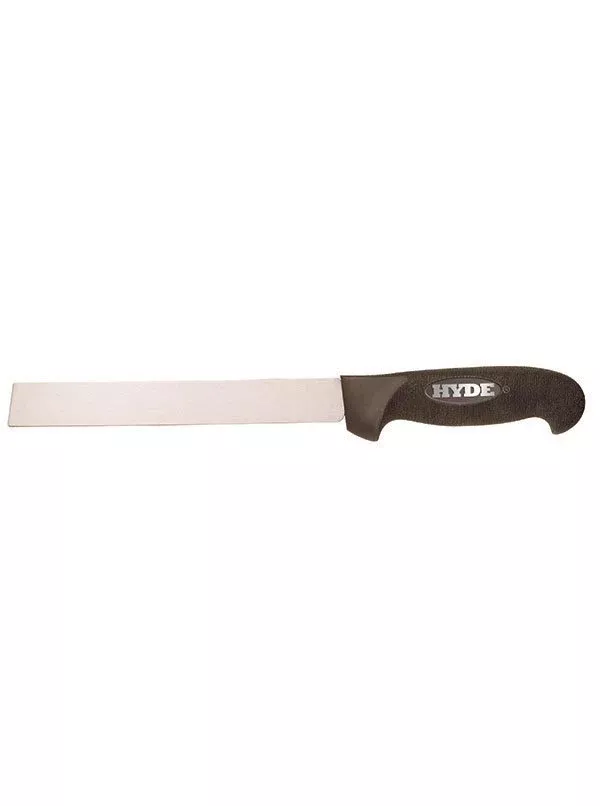
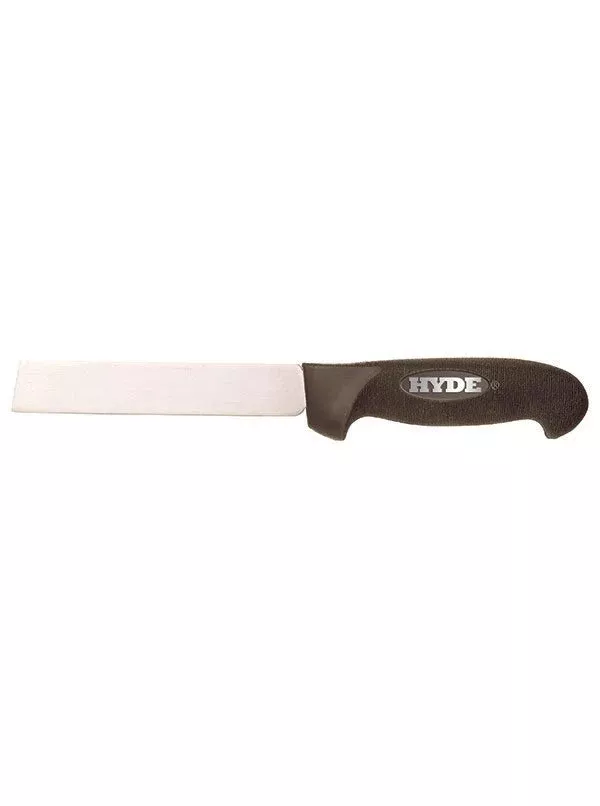
Is this the right tool for your job?
✕CHOOSE A DIFFERENT TOOL WHEN
- Not the fingertip tool: flush-shaving overhangs and steering tight gasket curves live one rung down, where the whole edge sits within a hand-span.
- Not the thick-stock or production-table knife: past three inches of loft, or across a full-width production trim, the 8″ exists for a reason.
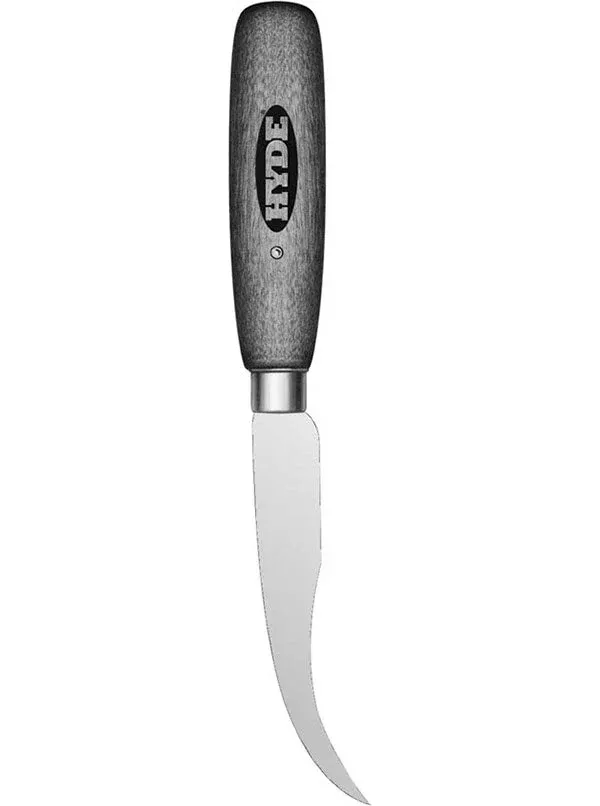
- Not the insulation specialist: batts and foam board that clamp a plain edge belong to the wave-edged 60118 — a plain blade in a lofty batt drags where the wave relieves.
- Not a belting knife, not a pry, not a scraper, and not a screwdriver: the blade is a riveted cutting tool, and twisting or levering it works against the rivets and the corner both.
- And not a snap-off substitute — a user who wants disposable edges is shopping a different wall, and this store will point at it.
Jobs this tool does
EXACT JOB METHODS FOR HYDE №60110✓ Job guideHow to Cut Fabric and Canvas to a LineOPEN JOB GUIDE →✓ Job guideHow to Cut Flexible Foam and Padding CleanlyOPEN JOB GUIDE →✓ Job guideHow to Cut Underlayment and Wrap to LengthOPEN JOB GUIDE →
For these jobs—use this instead
THE JOB, THE REASON, AND THE BETTER TOOL✕ Insulation cuttingBatts and foam board that clamp a plain edge belong to the wave-edged 60118 — a plain blade in a lofty batt drags where the wave relieves. BETTER TOOL Insulation Knife 60118 →
How the pros run it
01
Travel is the whole secret
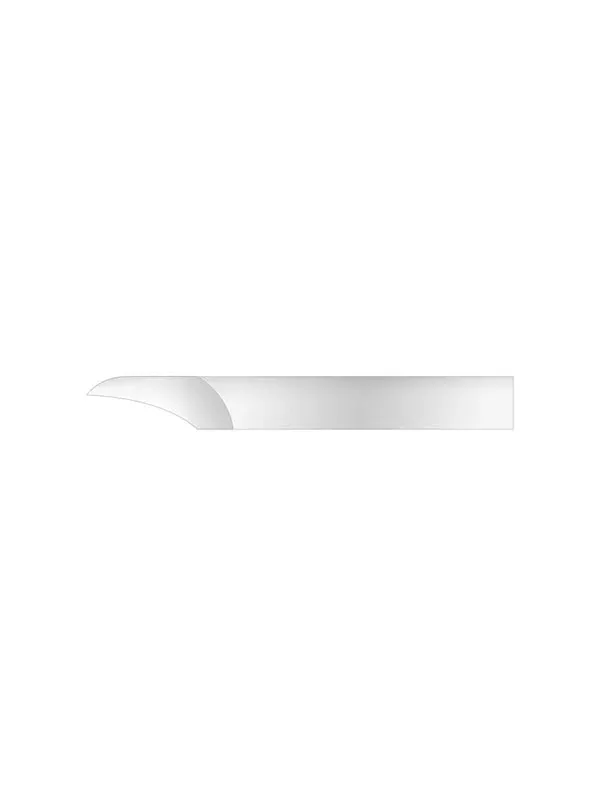
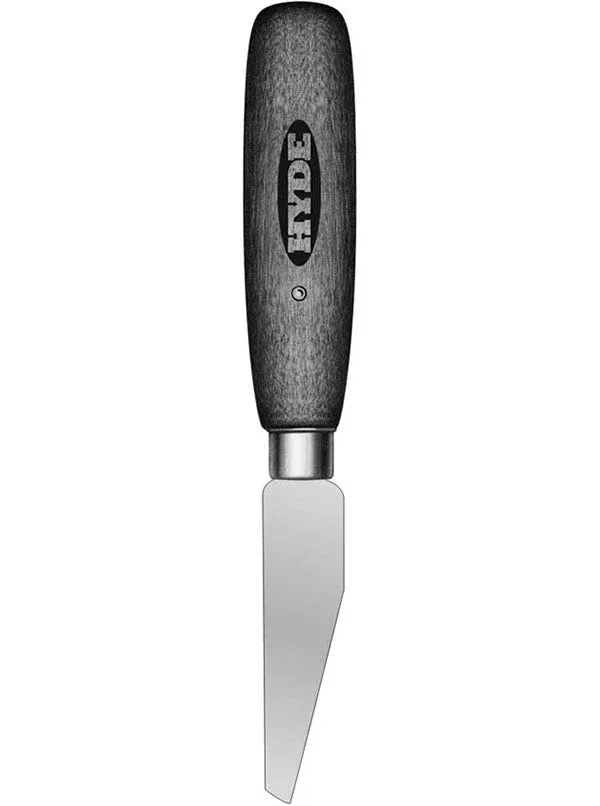
Every rule above compresses to one: the edge must move along the material, never merely into it. Long full-length strokes; pressure light enough that the slice, not the push, parts the stock. Blade low. A low working angle shears material against its backing; a steep angle chisels and snags. No plunge starts. The end of this knife is a right angle on purpose; cuts begin at an edge, a punched hole, or a scribed opening — never in the field of a sheet. The half-length gate. About 3″ of soft stock is this blade’s clean-cut ceiling; thicker material means the ladder’s next rung, not more force. Edge care, on the record here: the accepted claims give this knife a hardened high-carbon steel blade, and high-carbon cutlery steel is the sharpen-and-return type — a few passes on a fine stone at the first sign of drag, a strop if the work is fussy, and a dry wipe after damp or adhesive-adjacent work, because carbon steel blooms rust where stainless shrugs. The grind behind the edge (flat versus hollow) is not in the record for the straight-edge trio, so no sharpening advice here assumes one .