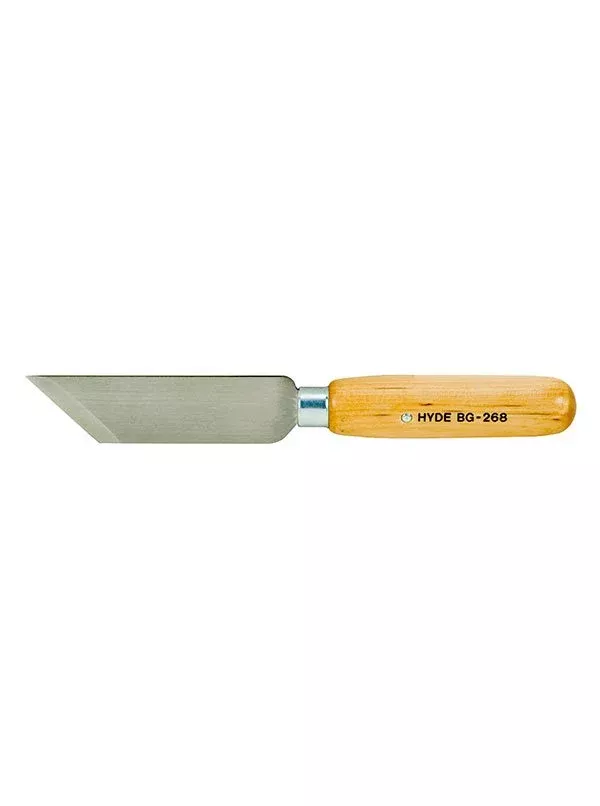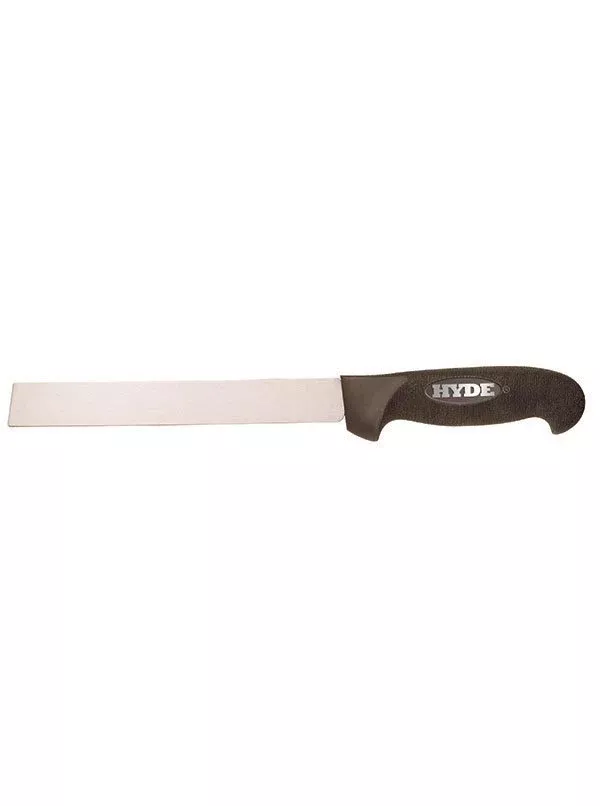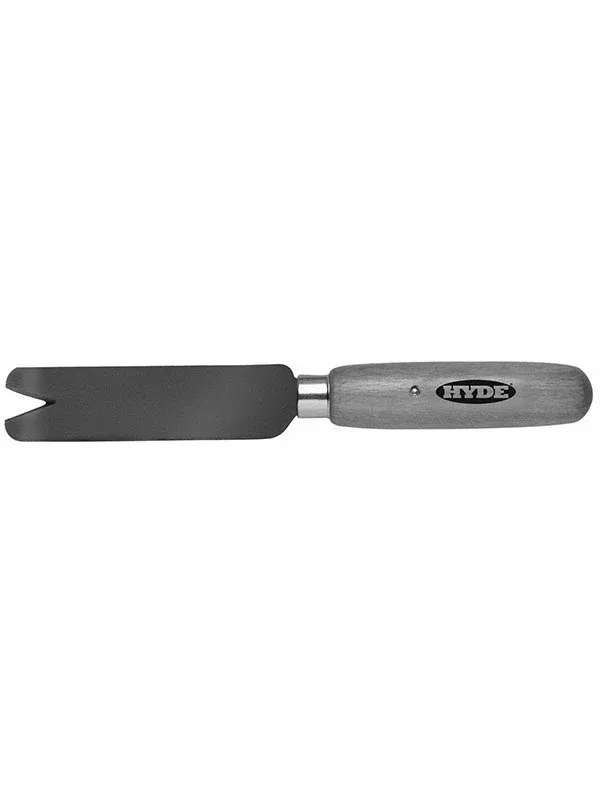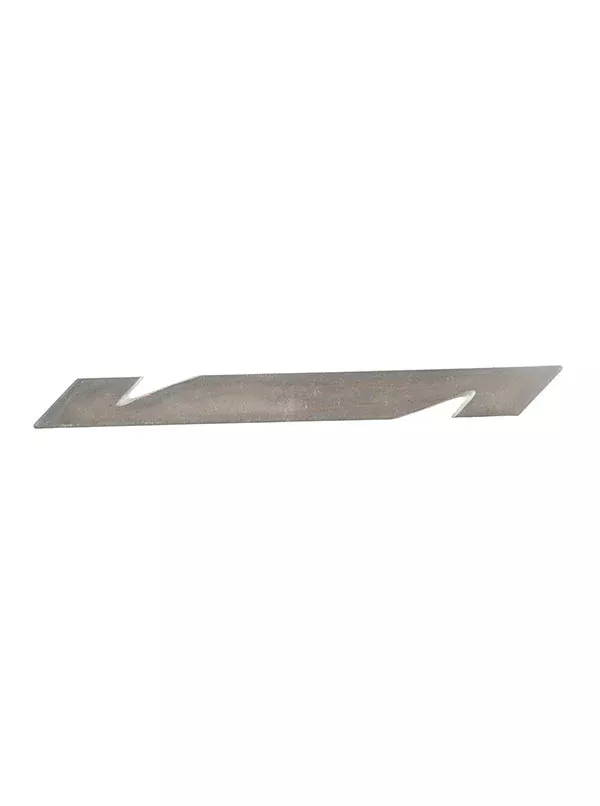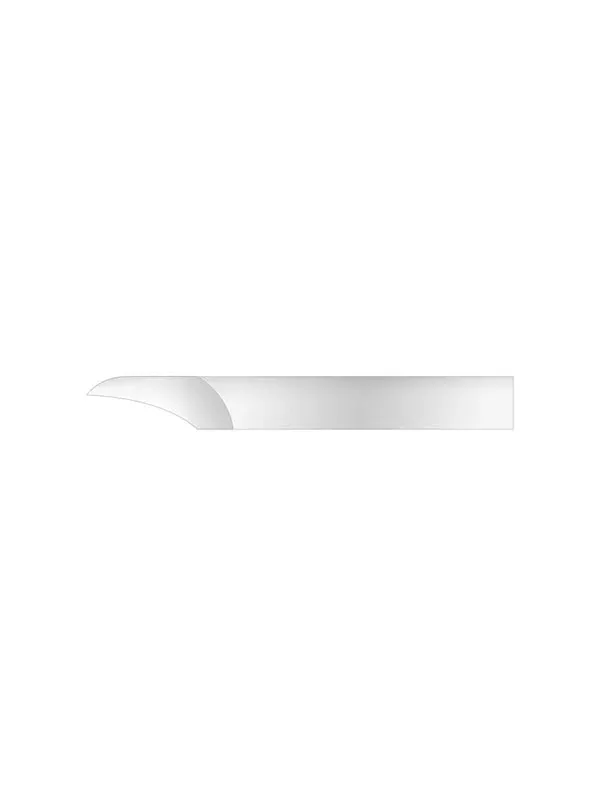
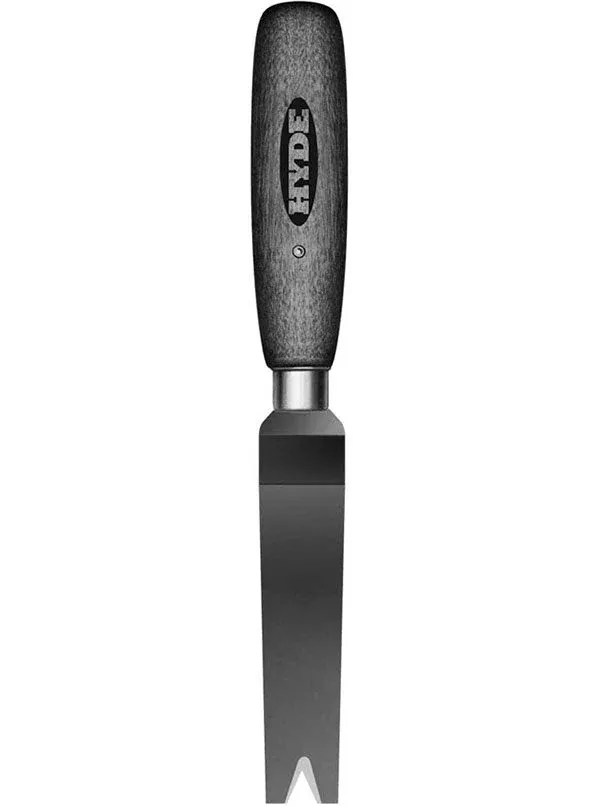
Is this the right tool for your job?
✕CHOOSE A DIFFERENT TOOL WHEN
- Fine, brittle flash better snapped or scored — that crosses to a razor or scoring tool (see 2b).
- High-volume small-part deflashing — a great many small molded parts with fine flash are deflashed faster by cryogenic tumbling or media blasting than by any hand knife; the 66090 is the large-part, short-run, heavy-flash tool by Hyde’s own wording.
- Throughput vent-trimming of production tread rows — that is the five-groove pin trimmer’s swath job (65060); the single notch takes the detail after.
- Flat-only bench work where clearance never matters — a straight V-trim (66030 curved-tip, 66330, 66060) is the simpler right answer when the surface is flat and the hand never fouls it.
- And it is not a repair knife — finishing a healthy part is this line; shaving damaged rubber off an injured casing is the K770 skiver (61350) and reaming a ragged casing cut is the H2T taper point (61260), both other lines.
Jobs this tool does
EXACT JOB METHODS FOR HYDE №66090✓ Job guideChoose Straight vs Offset for Curved WorkOPEN JOB GUIDE →✓ Job guideDeflash Molded Plastic PartsOPEN JOB GUIDE →✓ Job guideHow to Deflash Molded Rubber GoodsOPEN JOB GUIDE →✓ Job guideFinish a Retreaded Tire After CureOPEN JOB GUIDE →
VIEW 3 MORE DOCUMENTED JOBS
✓ Job guideTrim Heavy Flash from Large Molded PartsOPEN JOB GUIDE → ✓ Job guideTrim Mold-Joint Flash from a TireOPEN JOB GUIDE → ✓ Job guideTrim Vent Spews on a Cured TireOPEN JOB GUIDE →
For these jobs—use this instead
THE JOB, THE REASON, AND THE BETTER TOOL✕ Throughput vent-trimming of production tread rowsThat is the five-groove pin trimmer’s swath job (65060); the single notch takes the detail after. BETTER TOOL Offset Pin Vent Trimmer Knife H1357, 5″ 65060 →✕ Flat-only bench work where clearance never mattersA straight V-trim (66030 curved-tip, 66330, 66060) is the simpler right answer when the surface is flat and the hand never fouls it. BETTER TOOL Straight V-Trim Curved Tip Knife H212 66030 →✕ Injured-casing repairAnd it is not a repair knife — finishing a healthy part is this line; shaving damaged rubber off an injured casing is the K770 skiver (61350) and reaming a ragged casing cut is the H2T taper point… BETTER TOOL Flexible Skiver Knife K770, 4″ x 13/16″ 61350 →
How the pros run it
01
Keep the flanks seated; let the notch do all the cutting
The defining error with any V-trim knife is lifting the trailing flank to “help” the cut — that rolls the notch walls into the part face and gouges it, which is the exact failure the geometry exists to prevent. Flat flanks, converging walls doing the shear. Pull the notch along the flash, not into it — the cut is a running one that feeds the fin continuously into the V, not a series of chops. Use the offset as designed: the clearance is there so you can keep the blade flat through a long stroke without dropping your hand onto the work, so hold the wrist steady and let the step in the blade carry the knuckles. Two hands on heavy flash — the .065″ blade holds its plane under real pressure, which is why the line runs this gauge and not a flexing one. Sharpen the notch, not the edge: hone the inside walls of the V with a slim slip stone or fine tapered file following the taper, strop the burr off the outside face, and never true it on a flat bench stone alone — a flat stone rounds the flanks and un-designs the knife (notch-honing is authored trade knowledge; no Hyde maintenance text exists). Wipe the high-carbon blade dry after wet work; it blooms rust where stainless would not.